
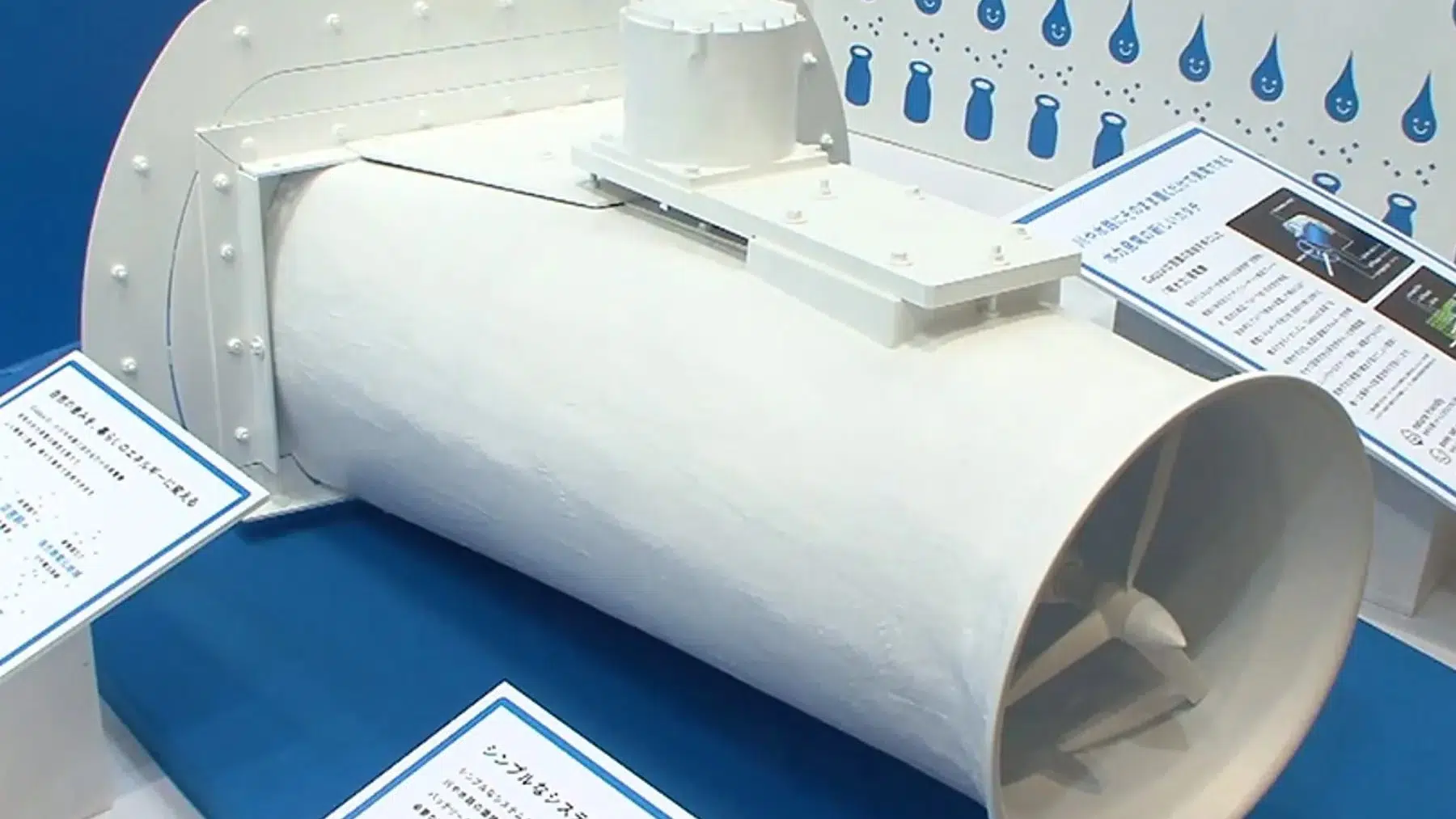
After 2,000 years of hydropower, mankind achieved 250W with water and just a ‘wheel.’ Hydropower, or hydroelectric power, uses the natural flow of water to generate electricity. It’s a renewable energy source that dates back centuries, with early uses like watermills. Modern hydropower plants can be very efficient, achieving up to 90% efficiency in converting water’s energy to electricity, and are a major source of electricity worldwide, with some countries relying heavily on it.
A brief history of hydropower
Humans have been using water to perform work for thousands of years. According to the U.S. Department of Energy, hydropower was already invented 2,000 years ago. The Greeks invented the water wheel to grind wheat into flour more than 2,000 years ago. During the third century B.C., irrigation works were carried out using Archimedes water screws, an invention associated with the Greek engineer Archimedes of Syracuse.
Modern hydroelectric power’s evolution kicked off in the mid-1700s with the work of the French hydraulic and military engineer Bernard Forest de Bélidor. In the 1800s, the development of modern hydropower turbines and the application of hydropower to generate electricity finally occurred. A dynamo driven by a water turbine was used to create arc lighting for a theatre and storefront in Grand Rapids, Michigan, in 1880. This technique resulted in an electric spark in the air between two conductors to create light.
Niagara Falls, New York, got street lighting in 1881 thanks to a dynamo attached to a turbine in a flour mill. The mid-1800s were thus the precursor to our modern hydro turbine. Now, 2,000 years after hydropower was invented, we have achieved hydroelectric power of 250W with just water.
Achieving 250W with just water and a ‘wheel’
Hydropower plants might be the most widely used form of renewable energy worldwide, but it is usually restricted to large-scale commercial installations built around massive dams, as in Nepal’s case. Hydroelectric power is Nepal’s main power source due to the precipitous topography of the Himalayan mountain range and its rich water resources.
Thankfully, an innovative Japanese company called Ibasei shrunk things down and removed the necessity to build dams with its compact hydropower generator called Cappa. The Cappa system is designed to be installed along rivers or waterways.
Cappa’s design has been seen before. It has blades that rotate when water flows through the system, driving a turbine to create electricity. What makes Cappa completely different from usual systems is that it’s encapsulated in a specialized diffuser designed to increase water velocity to a point where it moves over the blades, inevitably resulting in increased electrical output.
The combination of water and just a ‘wheel’ is so much more
According to an Ibasei spokesperson, one Cappa will produce 250W of electricity with a water flow of 2 m/s (6.5 ft/s). When combining five of the systems, they will produce approximately 1 kW, while considering control losses. A Cappa creates 100 V AC electricity at 50/60 Hz, so it can power appliances around the (Japanese) home.
Other benefits of the Cappa system include:
- The system is 100 percent recyclable
- Cappa has an uptime of virtually 100 percent
- Provides power to remote regions and tourist attractions
- It will come in handy in the event of natural disasters, like floods, in particular
- The size is customizable according to the size, width, and speed of the river in which it is installed
Rural areas also have a very low electrification rate and there are still many regions that don’t have access to electricity crucial for many daily life aspects. The hydropower system will not only be beneficial to people in rural and extremely remote regions but will be a valuable resource during emergencies like power outages in flood cases. As a renewable energy source that doesn’t produce air pollutants or greenhouse gas emissions, it also contributes to the global mission of zero-carbon energies.
Read the whole thing?
Get the week's signal, not the noise
Our sharpest reporting on energy, climate and nature — free, once a week.


