

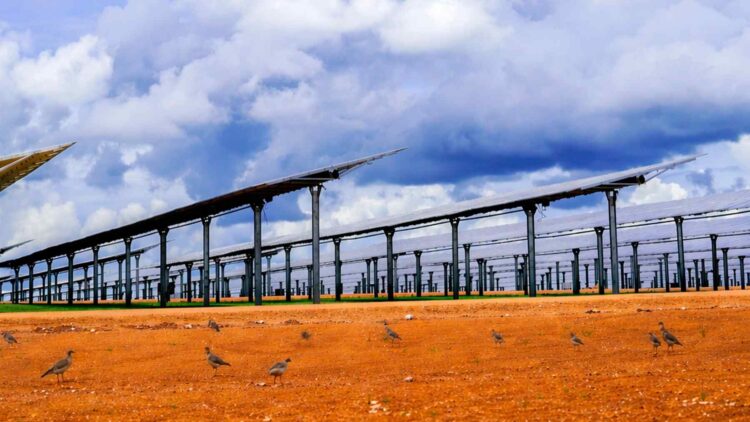
From the air, it looks like salvation.
A vast, shimmering surface stretching across the land. In the middle of extreme heat, it reflects light like water—like a lake waiting to offer relief.
For exhausted birds flying across Australia, that illusion can mean everything.
But when they land, the reality is very different.
And in recent years, that confusion has turned into a growing crisis—so what is really happening to these birds?
How extreme heat is pushing birds to their limits
Australia has always been a harsh environment.
But in recent years, temperatures have reached levels that many species struggle to survive. Heatwaves are lasting longer, arriving more often, and pushing wildlife beyond its limits.
For birds, the impact is immediate.
They rely on access to water and shade to regulate their body temperature. Without it, dehydration and heat stress can become fatal in a matter of hours.
In some regions, mass die-offs have already been recorded.
Thousands—sometimes millions—of birds are lost during extreme heat events.
And as conditions worsen, birds are forced to search farther and harder for relief.
That’s when they start to see something unexpected.
The illusion that is changing their behavior
From high above, solar farms create a visual effect.
Their smooth, reflective surfaces mimic water.
To a bird in flight, the signal is clear.
A place to land. To rest. To cool down.
But when they arrive, there is no water.
This phenomenon, sometimes described as a “lake effect,” is now known to disrupt migration patterns. Birds adjust their routes based on what they think they see, only to encounter something else entirely.
For some, that mistake can be fatal.
But not always.
Because once they land, something else happens.
What birds are actually doing around solar panels
Researchers studying these sites have noticed a pattern.
Birds are not just landing and leaving.
In extreme heat, the shaded ground under solar arrays offers something rare in these environments: relief.
The panels block direct sunlight, lowering the temperature of the soil and creating small pockets of cooler air.
For birds struggling to survive the heat, that shade can make a critical difference.
They rest there. Recover. Wait for temperatures to drop.
In some cases, it’s enough to save them.
So while solar panels can mislead birds from above, they can also provide shelter once the birds are on the ground.
Why this creates both risk and opportunity
The impact of solar farms on birds is not simple.
On one hand, they can disrupt natural behavior, drawing birds away from real water sources and altering migration routes.
On the other hand, they can unintentionally create microhabitats that help some species cope with extreme conditions.
The same structure that causes confusion can also offer protection, according to the study “Solar farms look like lakes to birds – and it’s messing with their migrations,” published by Murdoch University.
That dual effect is what makes this issue difficult to manage.
Because it’s not just about removing risk.
It’s about understanding how animals adapt—and how those adaptations can be supported rather than ignored.
What this reveals about a changing environment
As solar energy continues to expand, interactions like this will become more common.
Not because the technology is flawed.
But because it is being placed into environments that are already under pressure.
Birds are not choosing solar panels because they want to.
They are choosing them because options are disappearing.
Water sources are drying up. Shade is harder to find. Temperatures are rising beyond what many species can handle.
A fragile balance that is still evolving
This situation highlights something important.
Solutions to one problem can create new challenges—but also new opportunities.
For birds in Australia, that change is already visible.
From the sky, panels still look like water. On the ground, they sometimes act as shelter.
And between those two realities, survival now depends on how well species can adapt to a world that is changing faster than ever.