
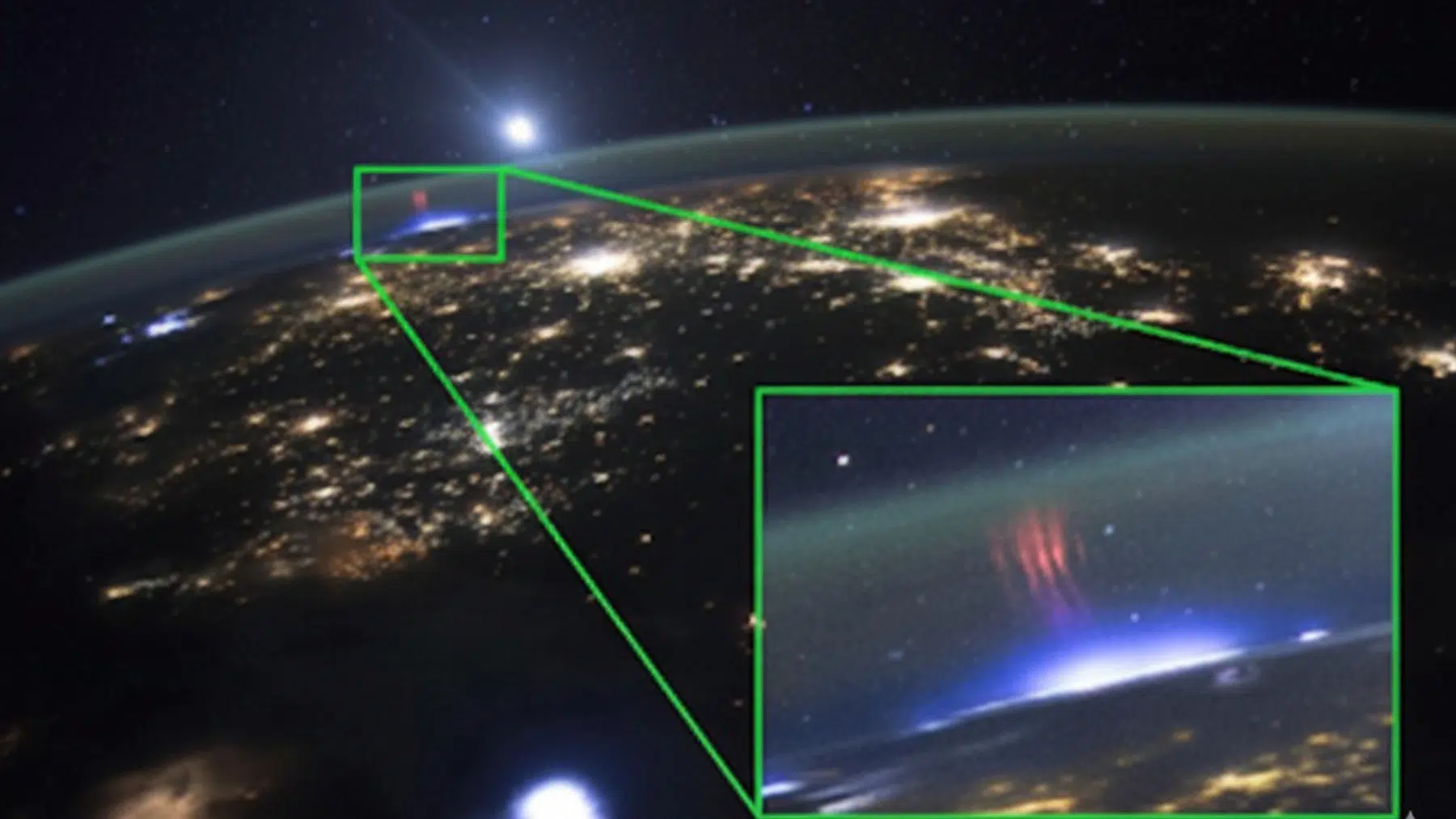
A new image of a lightning storm was captured by an astronaut while in space. What she saw was over 50 miles tall and did not make any noise when it appeared. Nothing that humans have built on Earth over thousands of years has been this big – and it continues to be something that we cannot touch, or even see in some situations. This phenomenon can only be seen through space, and the NASA astronaut Nichole Ayers was the one who witnessed it from a very privileged place: The International Space Station (ISS).
Technological advancements powering our future: But the eyes never fail
In recent years, the advancements in imaging technology have allowed researchers to see deep into the cosmos. Discoveries are made weekly, and some of those are only possible because of the lenses installed in powerful telescopes on Earth and in space. Meanwhile, these are not the only “eyes” we have outside our planet right now. As of early September 2025, there are 14 astronauts in space, on both China’s Tiangong Space Station and the ISS.
Now, this does not mean that whoever is up there can see the same thing as telescopes, just further. In fact, they cannot see much besides Earth, the moon, and our sun. Some planets are so distant that they even appear as small dots among the stars. On the other hand, when it comes to looking at our planet, they have the best vision – and that is what helped Nichole see an electrical storm in Texas from space.
New image from a lightning phenomenon: It’s so fast we can’t see
Nichole Ayers managed to capture a rare type of thunderstorm from the International Space Station — something called a gigantic jet. These events are huge bursts of electricity that shoot straight from the top of a thunderstorm toward the upper atmosphere. Most of the time, they are spotted by chance, either by airline passengers or by cameras set up to watch something else entirely.
They happen when the tops of the storm clouds get so turbulent that lightning can escape upward, creating a bridge from the tops of the clouds (about 20 kilometers high) all the way to the upper atmosphere (about 100 kilometers), carrying a massive electrical charge. Sprites are another type of these high-altitude lightning events. They show up around 50 miles above the ground, forming independently high in the atmosphere following powerful lightning strikes, and usually last a fraction of a second.
It’s a color show most people won’t see
The lightning often glows reddish and forms shapes that resemble jellyfish, columns, or even carrots. Sprites usually follow strong lightning strikes, and sometimes they come with other flashes and electrical phenomena, making the sky above thunderstorms look like a secret light show – similar to what we witness in the heart of the Milky Way.
Because they happen so high above regular thunderstorms, gigantic jets and other high-altitude lightning are hard to study. To get a closer look, the European Space Agency put a monitor on the outside of the space station, which orbits roughly 250 miles above Earth. The data it collects is helping scientists start to untangle the many ways lightning can influence our atmosphere.
Earth hides many secrets: Will we one day figure it out?
These events are part of a hidden world of electrical activity above our storms, a place most of us will never see with our own eyes, but thanks to astronauts like Ayers, we can at least glimpse it from above. And this is just the tip of the iceberg. There are still many hidden secrets on our planet that we were never meant to solve, and some will stay hidden from us forever, or it might take centuries to figure them out.
Read the whole thing?
Get the week's signal, not the noise
Our sharpest reporting on energy, climate and nature — free, once a week.


