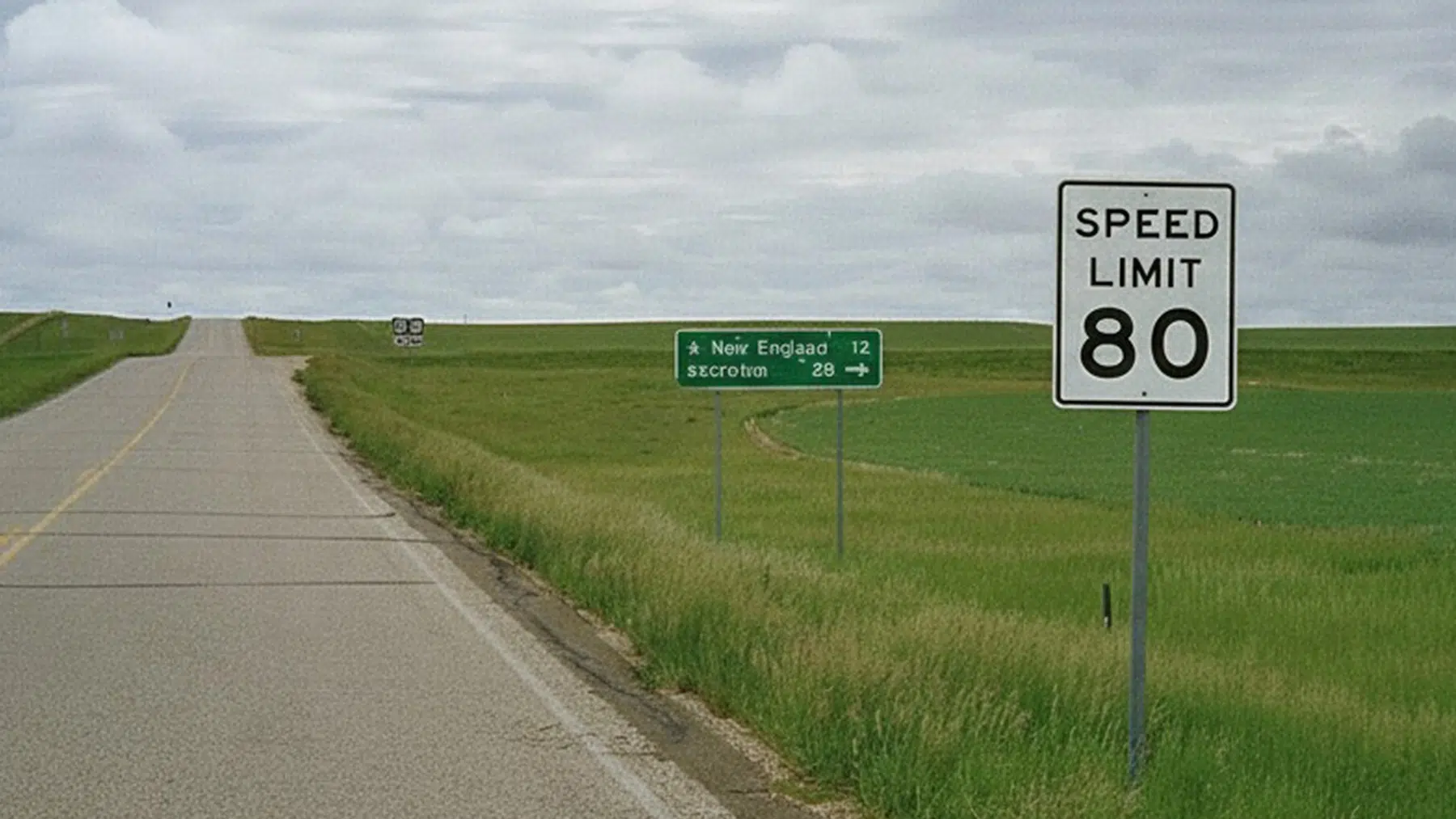
While most states in the country are fighting to lower their speed limits to as low as 25 mph in certain situations, another state is raising the limits to 80 mph on selected highways. The measure took effect August 1 to ensure that all drivers are traveling at a speed at which an accident cannot be caused by someone suddenly slowing down or another driver exceeding the speed limit. This makes North Dakota one of the fastest-paced highways in the country, along with Texas and Montana, Nevada, and more. People should now drive at a faster pace in the state.
Higher or lower speed limits: States have “free will” to choose
Among the reasons why states are battling against high speed limits is the staggering number of traffic accidents related to slow driving. Thousands of incidents occur every year due to the difference in speed between vehicles on highways – sometimes, neither vehicle respects the minimum nor maximum speed of the lane. It is now time for states to take matters into their own hands.
On the other hand, this measure could be tricky if drivers do not pay attention. It is normal for limited regions to have different speed limits than the previous or next section of a highway. Speed variations in some sections of the roads are not a new thing – they have been around for over 100 years. Now, it is time for North Dakota to implement a variation of this measure.
North Dakota is going for 80mph: Check the sections to avoid fines
North Dakota drivers are about to see some changes on the road. According to North Dakota House Bill 1298, on August 1, the speed limit on the state’s interstate highways will increase from 75 mph to 80 mph. However, along with faster driving comes a warning – fines for speeding are also increasing. The new law, signed in May by Gov. Kelly Armstrong, will not apply everywhere. In fact, some stretches will actually have a lower speed limit. Around Dickinson, Grand Forks, Jamestown, Medora, and Valley City, the limit will drop to 70 mph.
Changing the signs will not happen overnight. Crews will begin swapping them out on August 4, a process expected to take about two weeks and cost roughly $427,000 to update nearly 300 signs. Here’s what that means for drivers: On roads posted at 65 mph or higher, fines will be $20, or $5 for each mile over the limit — whichever adds up to more. If drivers go 16 mph or faster above the limit, they will have to pay an additional $20 fee. On other roads, it’s $20 or $3 per mile over – more flexible than the states demanding jail time from infringers.
Authorities are against: No bill has gone through without resistance
Speeding is not a small issue in the state. In 2023, one-third of the 96 fatal crashes in North Dakota involved speed or aggressive driving, according to transportation officials. Another 1,427 people were hurt in crashes linked to the same causes. A 2021 study from the American Automobile Association (AAA) stated that the faster we drive, the higher the risk of severe injury or death when crashes occur. Despite this, much of the U.S. has already pushed speed limits well beyond 70 mph.
Speed limits are different in other states: Texas is leading the change
Currently, 18 states let drivers go 75 mph or faster on certain roads, usually the long rural stretches. Among them are Arizona, Arkansas, Colorado, Kansas, Louisiana, Maine, Michigan, Nebraska, New Mexico, and North Dakota itself. Eight states have gone even further, with top speeds of 80 mph: Idaho, Montana, Nevada, Oklahoma, South Dakota, Texas, Utah, and Wyoming. Texas technically allows speed limits up to 85 mph where the roads are built for it. Meanwhile, others are advocating for lowering the limits to 50mph in some areas.
Read the whole thing?
Get the week's signal, not the noise
Our sharpest reporting on energy, climate and nature — free, once a week.