China has become synonymous with solar energy. The country is a global leader in the industry, but that does not mean that the groundbreakers do not have another trick up their sleeves. In an unexpected twist, the Chinese have managed to make energy fall from the sky. Are you intrigued yet? What happened next is completely unprecedented.
China is making energy fall from the sky
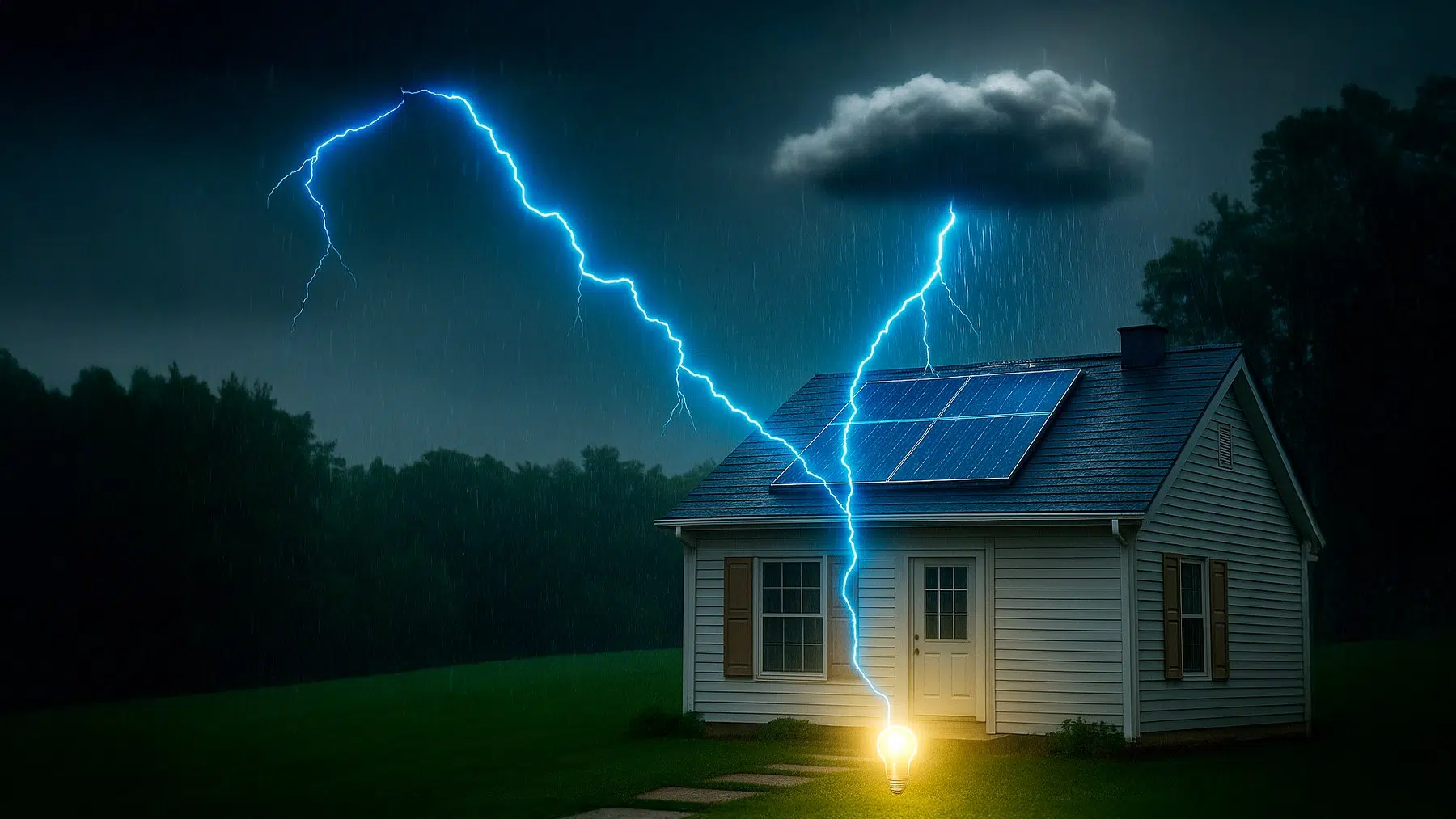
When great minds come together, great things tend to happen. This was the case when some of China’s finest teamed up to engineer a new “solar-like” technology. This innovative team from Tsinghua University engineered a device that harnesses the energy from raindrops falling from the sky. While this technology is not specifically new, the team managed to make a major breakthrough by enhancing the device for large-scale applications.
This breakthrough has the potential to revolutionize renewable power by combining this solar-like technology with small-scale hydropower. The research team’s research was funded by the National Natural Science Foundation of China, and other research contributors included:
- Bin Cao and Liming Wang of the Tsinghua Shenzhen International Graduate School at Tsinghua University
- Zhonghao Zhang of the China Electric Power Research Institute in Beijing
- Zhong Lin Wang of the Beijing Institute of Nanoenergy and Nanosystems at the Chinese Academy of Sciences in Beijing
Converting small raindrops into great power
Have you ever heard of a device called a triboelectric nanogenerator (TENG)? If not, do not fret. A TENG is a device that produces power with a process called liquid-solid contact electrification, after raindrops hit the device’s surface. Thanks to this device, the research team achieved its breakthrough. TENGs have been utilized to capture raindrops’ power for quite some time, and also successfully harvest energy from waves and other forms of liquid-solid triboelectric power generation. Now, its application could change thanks to the research team’s breakthrough.
According to the research team, TENGs have previously achieved power output that was both exceptionally high and instant. Unfortunately, combining the TENGs resulted in a significant decrease in power production. This decrease is due to a technical limitation of droplet-based TENGs (D-TENGs), and when more than one of their panels is connected, the total output decreases. This technical limitation has caused its limited practical application on a large scale.
And we thought traditional solar panels had their limitation. Thankfully, there is a solution. Solar-like bridge array generators, which utilize array lower electrodes to decrease the electrical condenser’s “bad” influence, thus ensuring that each power-producing unit functions independently.
Unprecedented but significant results
TENGs have been utilized for more than a decade, and their benefits include basic structure, affordable engineering, and energy harvesting potential, which is why the renewable energy industry has always been interested. Now, bypassing the electrical condenser’s “bad” influence could boost their popularity as a renewable energy technology even more.
The research team proved that arranging D-TENG panels similarly to solar panel arrays increased efficiency and broadened their application. According to their findings, a raindrop energy harvesting device with an area of 15cm by 15cm has a maximum power output almost five times higher compared to traditional large-area raindrop power of the same size. The device then reaches 200 W/m², indicating its benefits in large-area raindrop power harvesting.
“Referring to the design of solar panels in which multiple solar power generation units are connected in parallel to supply the load, we are proposing a simple and effective method for raindrop energy harvesting.” – Zong Li
The high output results were most definitely unprecedented, and by unlocking this potential, the renewable energy sector could revolutionize in unimaginable ways. This technology could have us bid farewell to traditional solar panels as we know them.
Read the whole thing?
Get the week's signal, not the noise
Our sharpest reporting on energy, climate and nature — free, once a week.