The water off Port St. Joe did not look dangerous.
It looked like any other October morning on the Florida Panhandle.
Then the smell arrived before the fish did.
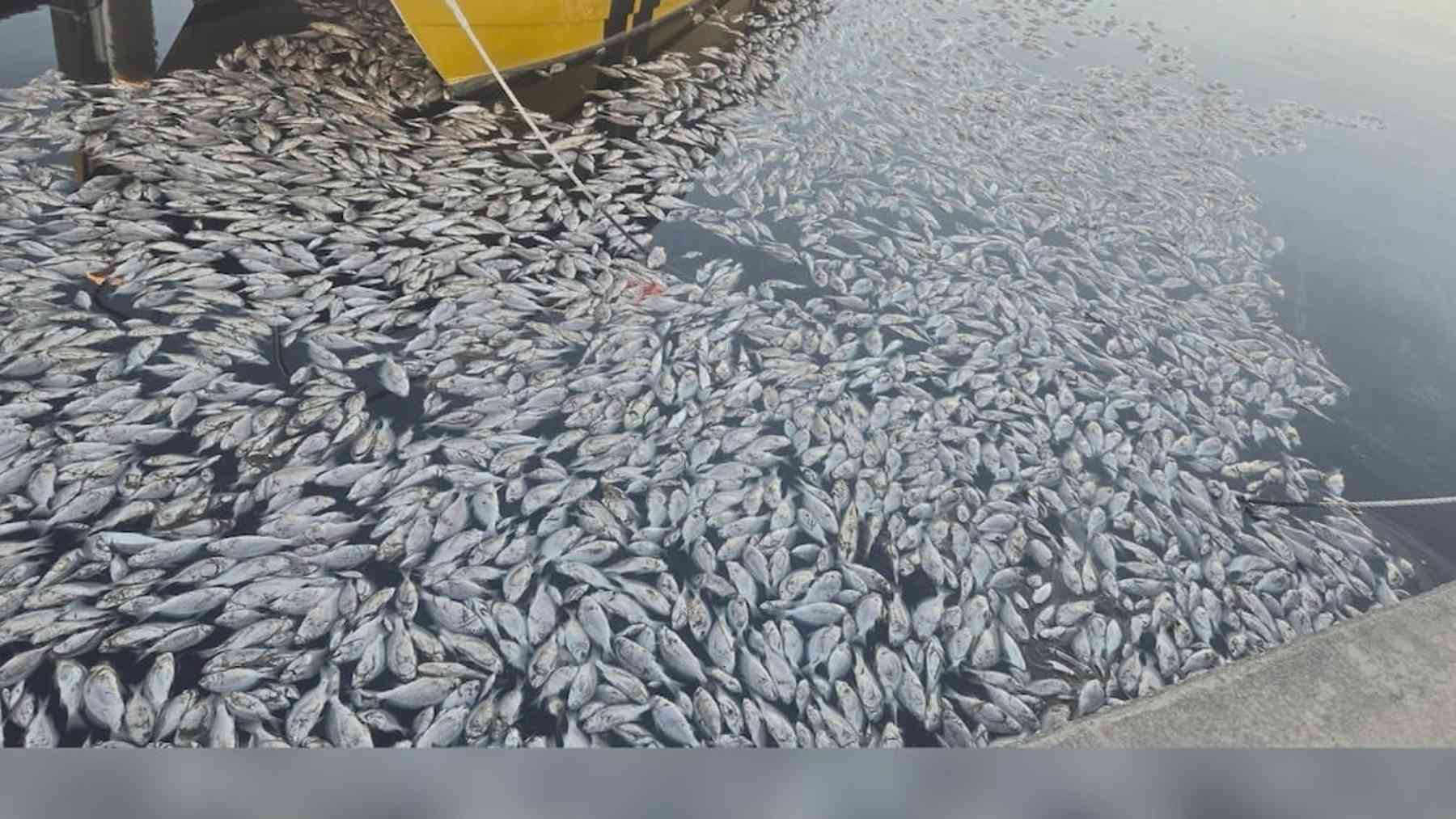
Dead fish began showing up again along St. Joseph Bay.
Nothing in the water had visibly changed.
So what was killing them, in water that still looked clear enough to wade into?
A toxin moves through the gills within hours of contact
The culprit is a single celled organism called Karenia brevis. Health officials describe it as a toxin producing dinoflagellate found in the Gulf of Mexico that makes potent neurotoxins, brevetoxins, harmful to humans, pets, fish and wildlife. The toxin does not have to be swallowed to reach a fish. In fish, uptake occurs through the gills, so the toxin reaches its binding sites directly rather than passing the barriers that slow an ingested dose.
Once inside, it does not attack the stomach or the skin. Brevetoxins bind to voltage gated sodium channels, making the channels more active by shifting activation toward more negative voltages and slowing the process that shuts them off. Those channels are the switches that let nerve cells fire, and jamming them open scrambles the signal traffic a fish depends on.
All of that happens at a scale no beachgoer can see. The water itself can still look ordinary and swimmable, and that mismatch between appearance and content is the whole problem here.
Samples crossed the bloom threshold of 100,000 cells per liter
State monitors sort red tide by concentration, and the dividing lines matter. Background means 1,000 cells per liter or less, while a medium reading means more than 100,000 and up to 1 million cells per liter, a range that brings respiratory irritation, shellfish closures and probable fish kills. The most recent water tests showed medium grade red tide cells in St. Joe Bay.
The state wildlife agency’s latest update put bloom level concentrations above 100,000 cells per liter in Bay and Gulf county waters, with satellite imagery showing elevated chlorophyll offshore of Gulf County. An amount that small is invisible in a cupped handful of seawater. Blooms also move, since red tide typically forms offshore and is carried inshore by winds and currents, which is why one stretch of shoreline can reek while the next looks fine.
Dead fish appeared within days of the first sample
Long before anyone reads a lab report, the bay tells its own story. A county health caution issued in mid October followed a single water sample taken by state biologists on October 14 near St. Joseph Point, southwest of the bay.
By the following week, state wildlife officials had detected the organism in 12 water samples gathered along Florida’s Gulf Coast, with two samples from St. Joseph Bay in Gulf County showing bloom levels above 100,000 cells per liter. Local reports of dead fish and human respiratory irritation surfaced during that same week. That cough and scratchy throat have a physical cause, since wind and wave action can break open the cells and release toxins into the air.
Communities elsewhere document sudden damage the same way, counting what is in front of them first, the way residents did when hail the size of golf balls hit Nebraska. For people who work a bay every day, the lag between seeing the fish and seeing the numbers is the hardest part.
Commissioners approved testing at six sites to trace the cause
Dead fish are showing up again in St. Joseph Bay, and county officials are looking for answers. The Board of County Commissioners approved a proposal from the local estuary program to test the water at six sites, aiming to look past the algae toward what might feed it once it arrives.
A county spokesperson told a local station the commission is “looking at human and cattle as point sources, so seeing if there are any septic tank issues, wastewater,” to see whether any of it is contributing. That link is genuinely contested, since researchers report no direct link between nutrient pollution and the initiation, frequency or severity of these blooms, which generally develop 10 to 40 miles offshore before currents carry them inshore. The state’s own current status reports track those offshore shifts week to week.
The estuary program’s executive director framed the stakes in terms of duration. A higher concentration, she said, is likely to mean a longer stretch of symptoms, because it takes a while for all those cells to die off.
Three to five month blooms return most years without warning
Karenia brevis is not new here. It is present year round at background concentrations of 1,000 cells per liter or less, and blooms occur in the Gulf almost every year, generally in late summer or early fall. Most blooms last three to five months and affect hundreds of square miles.
That is the unpredictable rhythm locals live with. One resident said seeing red tide return after last year has him concerned about what may be changing in the bay, a worry shared by charter captains whose season depends on clean water. Coastal conditions can turn fast anywhere, as they did when ocean overwash shut a North Carolina highway.
For now the guidance from the county health department is unglamorous. Do not harvest or eat shellfish or distressed or dead fish from the area. Finfish caught alive and healthy are safe once filleted with the guts discarded, and fillets rinsed with tap or bottled water, a modest response to an organism nobody can see in a bay that still looks, on most mornings, like nothing at all is wrong.
Read the whole thing?
Get the week's signal, not the noise
Our sharpest reporting on energy, climate and nature — free, once a week.