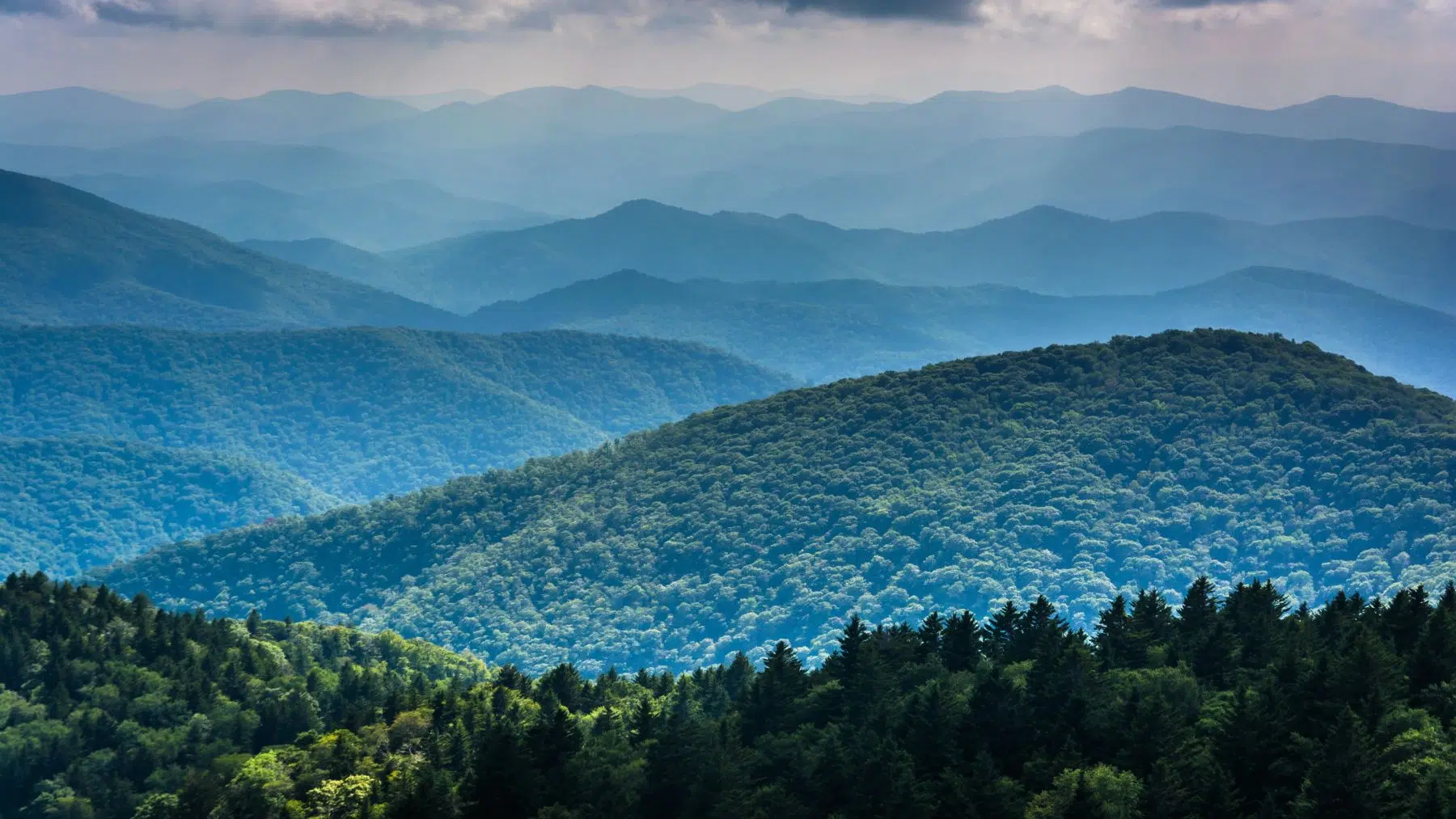
What should have stayed underground is now emerging and making scientists worried about the future. While the Appalachians are not the largest mountains in North America, they are older than the highest, and their rocky formation conceals many secrets that scientists are eager to unravel. One of these is why a hot rock block is moving from New England to New York, causing rivers to heat up to “unnatural” temperatures. While the answer is simpler than it appears, the fact that this is happening in real time could alter the landscape.
Temperature will rise: New York will feel the effects
The concept of a heat block moving underneath the surface with no direct impact is a disturbing reminder that many things could be happening without humans noticing. Now, these pieces of blocks could be given the same attention that geologists give to volcanoes that, in the case of an eruption, could end most life forms on the planet and send us back to the Stone Age.
While this could be alarming, scientists are anticipating the trajectory of what could happen. On the other hand, the Appalachians are not safe from being explored and could be the ground zero for many discoveries in the future. These mountains have been around for millions of years, and they have undergone events that humans would not last long. Now, it’s time to study this giant and see what is hiding underneath.
It’s coming for the Appalachians: How the anomaly works
Deep beneath New England, scientists have spotted something unusual. They call it the Northern Appalachian Anomaly – a blister of hot rock nearly 350 kilometers wide, sitting 200 kilometers below the mountains. The strange part is not just its size, but its origins. A study in Geology suggests that the heat first appeared near the Labrador Sea, between Canada and Greenland, back when Earth’s crust was breaking apart.
The project brought together scientists from Southampton, Germany’s GFZ, and the University of Florence. That alone tells you it’s serious. What makes it more surprising is the Appalachians themselves. They have been geologically “quiet” for almost 180 million years, so this cannot be simply leftover heat.
How the mantle waves affect what is on the surface: It’s a million-year process
Scientists believe this could be why the Appalachians are still standing instead of crumbling away. The heat creeping up from deep in the mantle slowly wears down the heavy roots that keep the land anchored. Once those roots thin, the ground above becomes lighter and starts to lift, almost like a balloon rising when some weight is released. That’s where their new idea comes in – the “mantle wave.”
These waves creep beneath tectonic plates for ages. Along the way, they can trigger volcanoes, shift landscapes (like the Appalachians), and sometimes even carry diamonds up from the depths. By combining seismic scans, with computer models, the team traced this anomaly back to when Greenland split away from Canada, 80 to 90 million years ago.
Something else is happening not too far away: Yellowstone also signaling events
Just like the Appalachians, Yellowstone is one of the places with the most seismic activity on Earth. The steady seismic activity suggests that underground forces are only getting stronger. In the near future, an eruption could harm not only the U.S., but also the entire planet if it is strong enough (and has been giving signs that is well awaken).
Read the whole thing?
Get the week's signal, not the noise
Our sharpest reporting on energy, climate and nature — free, once a week.