Before clean power became centered on sources of energy like wind and solar, a French inventor by the name of Pierre-Simon Girard was fascinated by the idea of using power generated by the sea. In 1799, Girard filed a patent for a device that could use the power of waves to generate clean energy. His idea was never fully realised, but it did plant a seed.
How this vision has shaped new forms of energy based on the power of the ocean
The ocean offers an abundance of kinetic energy and non-stop motion. The world is also covered by oceans, and so accessibility is a strong point of this theory. But developing it has been a challenge. The systems were cumbersome, required extensive maintenance regimes, and the efficiency never warranted the effort this would all require. Early prototypes succumbed to salt corrosion and the unpredictable temperament of the ocean. Wave power, as such, remained an interesting theory but nothing more.
It would seem that a new system has been developed with Girard’s vision at its core. This new system uses wave motion, but in a compact manner. The system is small and still being tested, but it does suggest that we might be a few steps away from harnessing the power of the ocean to generate clean power.
How a floating generator could change clean energy as we know it
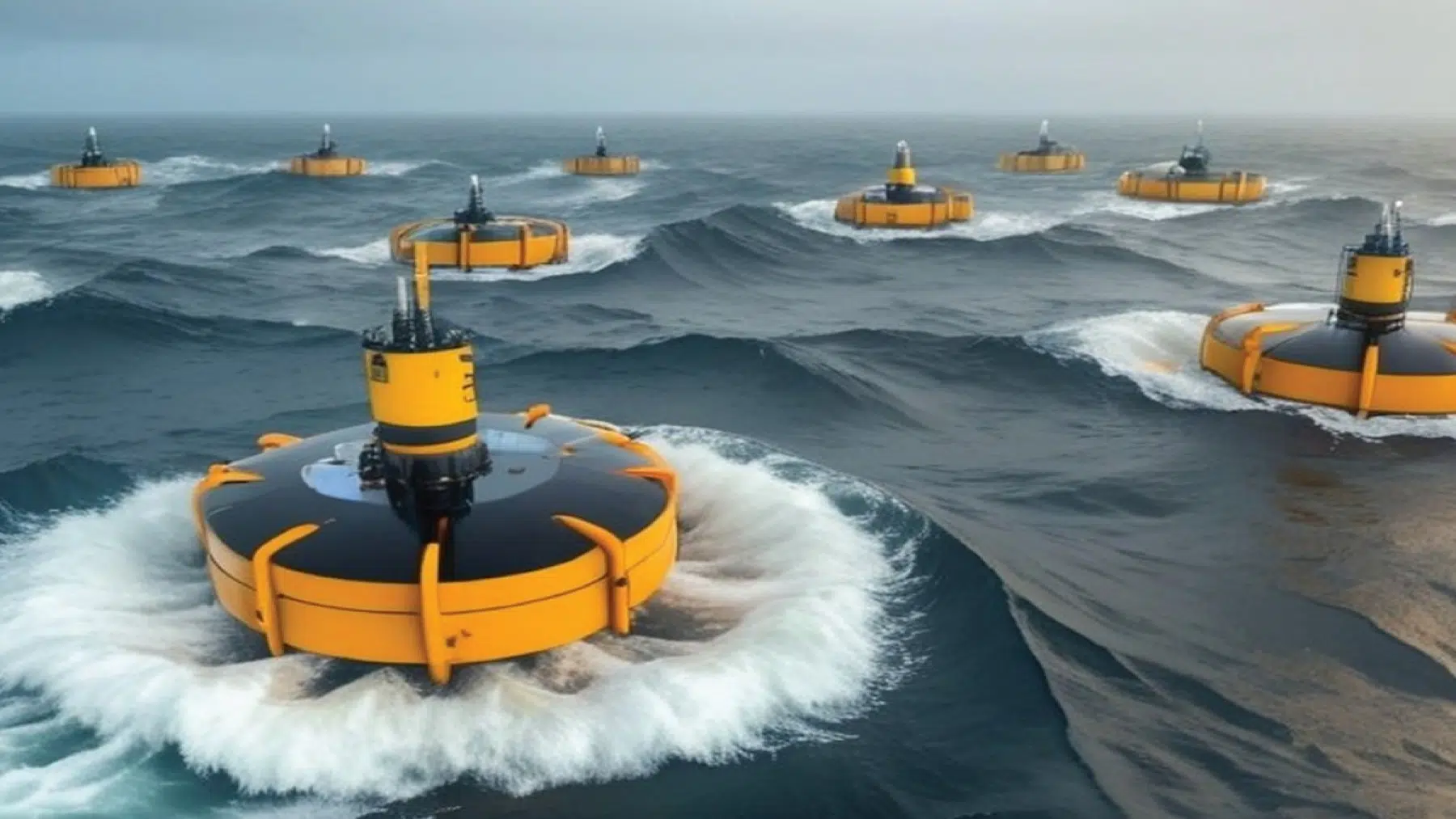
Circle-shaped floating electrostatic generators are said to be able to harvest the motion of the waves. These have been developed by a company in Canada called Voltai. These look like spinning tops, placed on platforms in the sea, and use the side-to-side and up-down motion of the waves to create clean energy. The development of this product is being accelerated, as early testing has shown decent enough data to warrant this.
The motion is turned into electricity thanks to electrostatic mechanisms, which have proved to work better than turbines placed beneath the waves or buoys stretched out across the surface of the water. These generators can be installed on ships or even on docks, and do not require fancy sea anchors. These have also been designed to reduce drag, and Voltai has ranged these generators from 25W to 1kW and beyond, as far as their initial prototypes go.
What these generators could mean for clean energy around the world
As with most clean energy, the central aspect of developing renewable energy systems is to reduce carbon emissions. Shipping and offshore operations are at the center of this when it comes to energy needs in the marine industry. Voltai’s generators do not require the burning of fossil fuels at all, as they rely solely on the motion of the waves.
Investor support is growing, especially with the interest expressed by Invest Nova Scotia, who seem to be drawn in by the idea of generators of this nature. They are light in weight and relatively low cost, which is also appealing. The possibilities are plentiful, as Voltai believes these generators could be used to power small coastal grids, navigation systems, and sensors.
The future looks bright for these wave generators
The implications of this wave generator system are vast. The ocean is an abundant source of energy and one that won’t be diminishing anytime soon. All the more reason to use it in ways like this, especially now that the technology is durable enough to carry this out.
Girard was definitely on to something, and even though this has happened some two centuries after his time, the world still stands to benefit greatly from his initial idea. Better late than never, and of course, the strides taken by Voltai will be watched closely by the world, and this will most certainly be a source of clean energy that will be adopted by other nations.
Read the whole thing?
Get the week's signal, not the noise
Our sharpest reporting on energy, climate and nature — free, once a week.