Yellowstone, a renowned supervolcano, has shown some underground movement for the first time in 160,000 years. Scientists have detected magma moves, which have caught many people’s attention and caused some concern. Experts have expressed that there is no need to worry because nothing will erupt and Yellowstone volcanoes are always evolving; therefore, it is part of the volcanic cycle and activity.
Scientists understand that people have been concerned about Yellowstone erupting and maybe these thoughts have been drawn from movies and books; however, reassurance from the United States Geological Survey (USGS) has made it easier for us to comprehend that Yellowstone’s vast underground magma reservoir has been there for years and this is an opportunity to perceive its geothermal potential instead.
The science of magma movements and heat flow in Yellowstone
Yellowstone is a plateau in the Rocky Mountains that experiences more than six months of snowfall annually. The average yearly temperature is 2.2 °C, just beyond the freezing point of water. Nevertheless, Yellowstone is also a geothermal hot spot, with steam vents recorded as high as 135 °C and hot springs rising at about 92 °C (the boiling temperature of water at Yellowstone’s mean altitude).
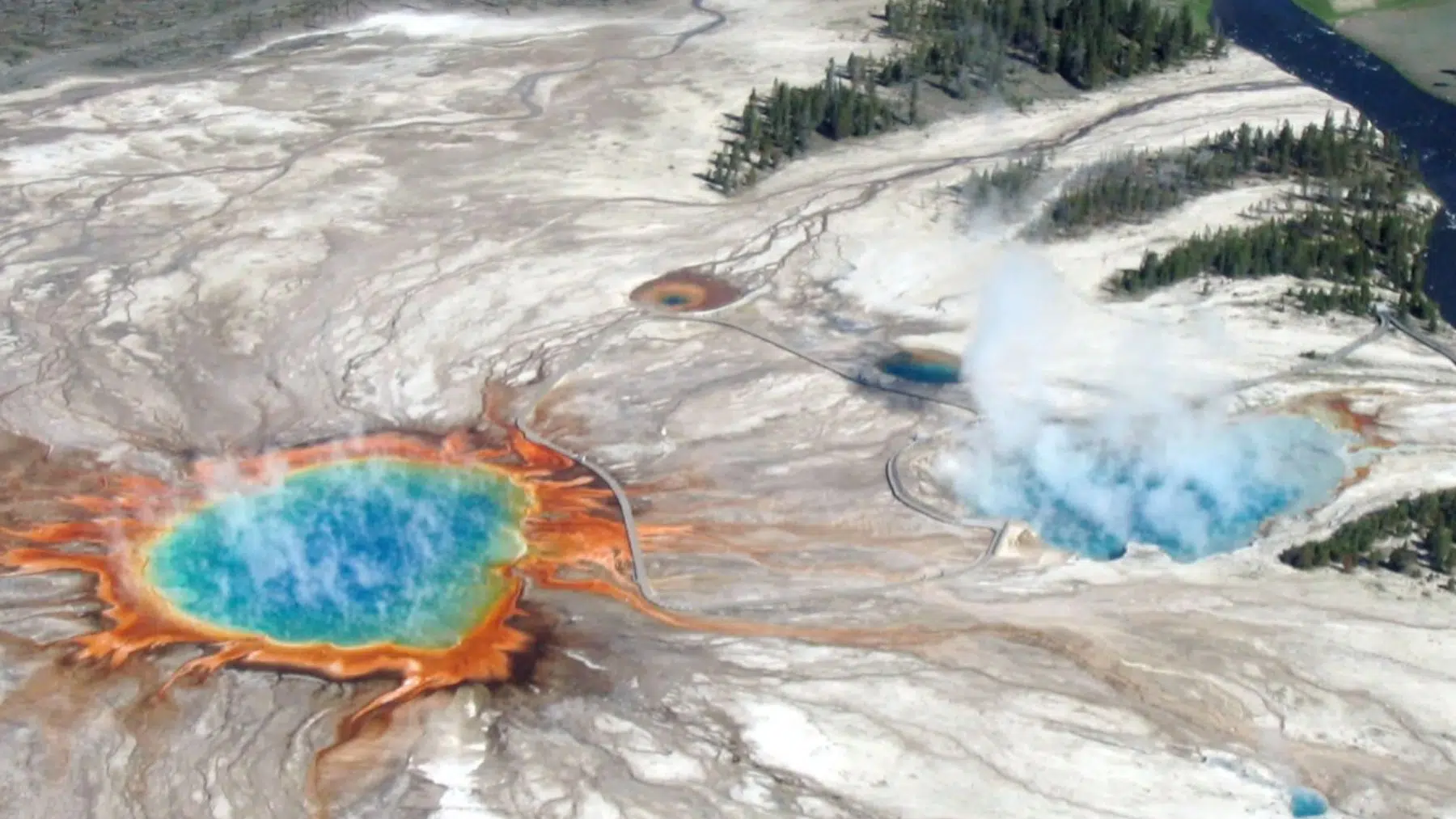
The majority of the park’s terrain is not hotter than any other place in the Rockies because thermal ground makes up only 0.3% of the total land area. This natural process includes the recent discovery of magma movement, which occurs when molten rock slowly moves and interacts with subterranean water reserves. The USGS claims that this movement is a contributing factor to Yellowstone’s well-known hydrothermal features, including the Grand Prismatic Spring and Old Faithful.
To detect variations in heat flow and ground deformation, scientists employ sophisticated monitoring instruments, such as satellite imaging and sensors positioned on the ground. These findings assist scientists in determining if magma is merely shifting its position deeper beneath or rising towards the surface. According to available information, there is no sign that the magma is getting dangerously high.
Making sustainable power from Yellowstone’s energy
In a world that is fishing for ways to obtain renewable energy, Yellowstone is one of the targets. Yellowstone geothermal power is capable of even generating electricity for the entire country, and geothermal energy has been hailed as one of the most sustainable energy resources we can utilise. Although it is still a debatable notion, Yellowstone could potentially provide clean electricity or generate power without harming the environment.
There are places like Iceland where geothermal energy is very common because of the place’s volcanic nature. Therefore, by knocking on the doors of Yellowstone, experts highly believe that businesses and homes can benefit from this initiative and help keep the environment clean by avoiding carbon emission energy and reducing electricity costs for the economy.
Why isn’t it possible to produce electricity from the energy of volcanoes like Yellowstone?
Perhaps the above question contradicts all the positive things I have said about Yellowstone and how the community can benefit. However, having said that, scientists estimate that Yellowstone contains enough geothermal energy to power the entire nation, and it boasts the highest concentration of geysers on the planet.
But according to Liz Cottrell, a geologist at the National Museum of Natural History, harnessing and distributing all that energy is not feasible with current technology. Additionally, the park has been legally shielded against potentially harmful geothermal plants since 1978, when it was designated as a Unesco World Heritage property.
In the 1950s, New Zealand destroyed 240 of the region’s hot springs and 70 geysers when it constructed a geothermal plant close to the Wairakei Basin. Due to its hot fluids’ proximity to the surface and the fact that the entire nation rebuilt its infrastructure on geothermal energy beginning in the 1970s, Iceland was spared this destiny. So, by extracting energy for ourselves, we are damaging the pristine nature of these environments.
Read the whole thing?
Get the week's signal, not the noise
Our sharpest reporting on energy, climate and nature — free, once a week.