Mike Brubaker has been fishing in Kotzebue’s lagoon all his life, as have his family members.
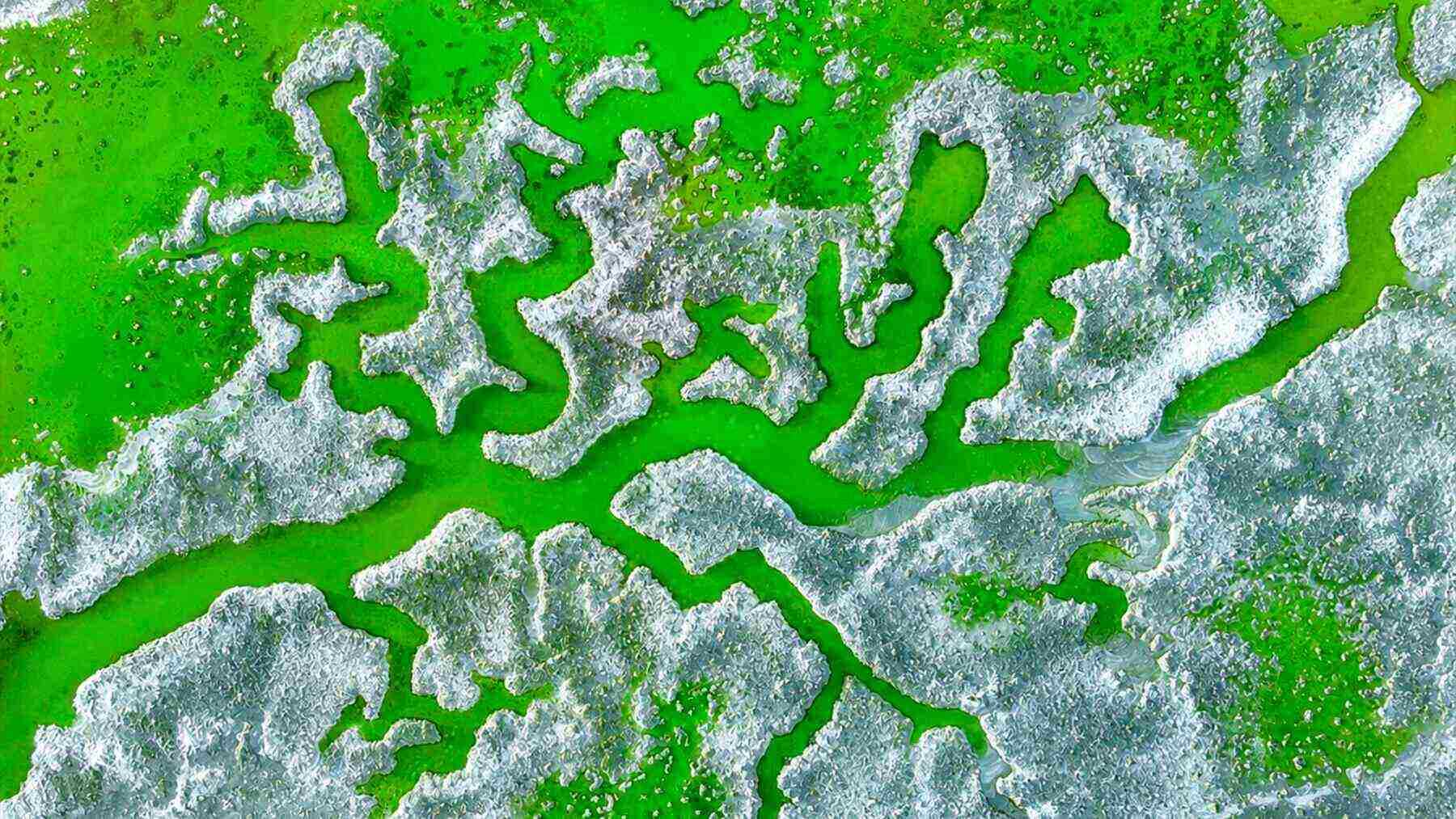
When the water became an unhealthy-looking shade of green in July, he realized – this is not normal.
Not algae green. Instead, it was caused by toxic chemicals that were making fish die.
Other fish appeared healthy; however, they were also poisoned by invisible contaminants.
The town issued warning signs. Some fish species were prohibited for consumption.
No clear explanation was available to researchers at this time.
The question that wouldn’t go away was: Why are Alaska’s waters becoming fluorescent green?
What people in Kotzebue were seeing
Kotzebue is located at the end of a peninsula into the Chukchi Sea.
There live approximately 3200 people who are primarily Inupiat.
For over three thousand years, they have fished there.
They know good water. This green did not appear normal.
The water stretched along miles of coastline within two weeks.
Black spots were visible on some fish.
Test results indicated that toxins existed in concentrations many times higher than safe levels.
Nothing like this had been seen before.
The community restricted certain fish. However, the green color continued to advance.
The danger wasn’t visible at first
Researchers brought equipment used to collect samples from the area. Most of those samples contained toxins that were forty times greater than acceptable safe levels.
The source could not be seen, even under a microscope at first.
Although the problem already existed in the form of toxins present throughout the ecosystem.
Dead sea lions washed ashore. Walruses behaved strangely.
Birds that dined near the bloom crashed to the ground.
Small fish consumed algae, and larger fish then consumed them.
The local residents were now forced to make a decision based on fear and uncertainty:
Stop fishing and lose your food source or keep fishing and risk poisoning your family.
Research from Alaska Sea Grant shows how harmful blooms like this are already affecting coastal ecosystems across the region today.
Researchers began seeing this threat differently over time
Warmth in the water was recognized to trigger algae blooms.
Nutrient availability in the water also played a role. However, this was different.
Warm conditions were not excessive.
Data collected decades ago were reviewed.
Researchers found nothing that would provide insight regarding both the timing and magnitude of this event.
Another factor was entering the equation that previous models were unable to fully account for.
Yet the green kept spreading and the toxicity kept building. Something didn’t add up.
Something was still missing from what they were seeing
The answer existed in the water itself. Microorganisms known as Alexandrium bloomed at an alarming rate. Alexandrium produces saxitoxin — one of the deadliest natural poisons known to man.
One bite can kill you and there is no known antidote.
It had existed in Kotzebue forever.
The Arctic is warming four times faster than the rest of the world.
Thinning and melting of sea ice reduces its ability to block sunlight from reaching the water below. Nutrients released from melting ice support the growth of the bloom.
When will the water begin to harm those who depend upon it?
Traditionally, Iñupiat knowledge includes when and where to fish, and what types of fish should be avoided due to health concerns.
The green has no part in that knowledge base.
Unforeseen and unpredictable, the green arrived unexpectedly and continues to spread unpredictably outward. It could happen again.
Scientists hope to build early warning systems. Give communities time to prepare.
Unfortunately, the speed of environmental change occurring in the Arctic prevents use of previous rules.
What happens next summer when more ice melts and the waters glow brighter?
Read the whole thing?
Get the week's signal, not the noise
Our sharpest reporting on energy, climate and nature — free, once a week.