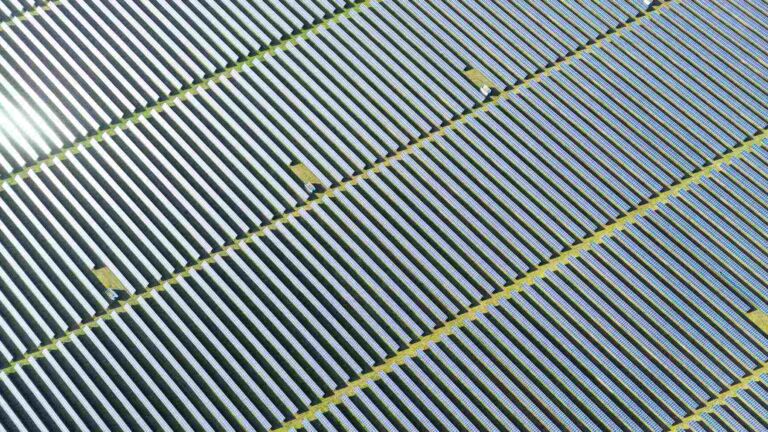
Across the Texas prairie, large stretches of open land have been transformed by solar development.
Large areas of open land are often developed when solar projects move forward.
But one solar development left nearly 1,000 acres completely untouched. The decision had little to do with electricity generation itself. Instead, it was driven by concerns about how birds might interact with the site.
Years of monitoring would eventually reveal something researchers did not expect.
Watching birds around the clock
US Department of Energy Researchers created an artificial intelligence (AI) camera system to capture images of bird behavior surrounding solar panel installations. In contrast to intermittent site visits, the cameras continuously recorded throughout the day.
The total footage gathered at utility-scale solar facilities exceeded 17,000 hours. Birds passing into the monitored zone were automatically detected by the AI system.
Rather than manually reviewing all of the footage, researchers used AI to identify moments that involved birds.
For scientists, the collection of data represented a body of reliable evidence, not individual experiences or observations.
The ability to continually monitor solar generating facilities made it possible to track behaviors that would normally go unrecorded.
From one solar site to seven states
Researchers continued to expand the monitoring process to additional solar facilities located within seven separate states. This greater effort was part of the Avian-Solar Collaborative Research Project. Its goal was to improve our understanding of how birds utilize large-scale solar energy production facilities.
The monitoring process was consistent across all locations, allowing researchers to evaluate differences among various environmental settings. The Department of Energy supported efforts to better understand whether observed patterns persisted under different environmental conditions.
Related work from Argonne National Laboratory has also explored how wildlife interacts with large-scale solar facilities.
The broader effort was intended to determine whether patterns observed at one location also appeared elsewhere.
With each additional series of videos that was evaluated, researchers began to obtain a clearer image of how birds utilized these solar energy production facilities.
Results contrary to what many people expected
Researchers analyzed thousands of instances of bird interaction captured via cameras. Their goal was to determine whether ordinary bird activity differed from actual collisions.
Many birds simply flew above the solar energy production facilities or passed safely between rows of panels.
Other birds quickly landed, foraged, or rested before continuing onward.
What the cameras actually documented
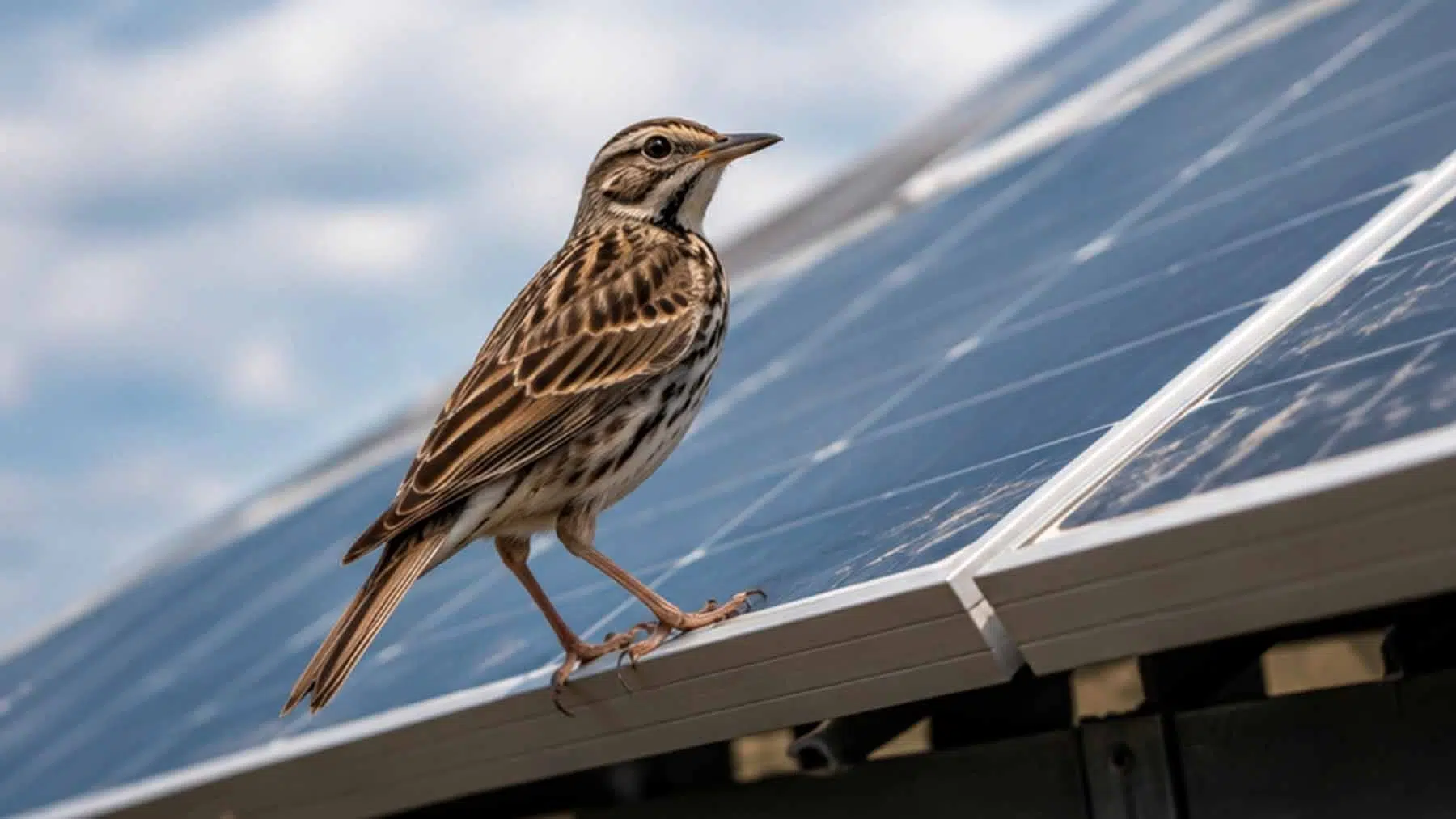
The cameras did not detect a single collision with a solar panel during more than 17,000 hours of footage. Rather, the vast majority of birds perched, hunted, rested, or traveled through the areas with no issues. The findings provided researchers with additional information about how birds interact with solar facilities over extended periods of observation.
Researchers determined that different species exhibited unique characteristics when interacting with solar energy production facilities. Some birds appeared comfortable using these sites during migration or while foraging.
Rather than indicating that solar energy producing facilities posed no risk to birds, the study instead indicated that specific risks do exist.
Knowledge of such risks enables researchers to direct future conservation efforts where they can most effectively benefit wildlife populations.
Due to limitations of manual processing methods, researchers would have needed to spend hundreds, if not thousands, of hours reviewing thousands of hours of video. Systems capable of automated processing enabled researchers to gather more accurate information than typical field studies alone.
Continued growth in U.S.-based renewable energy production will require studies similar to this type to provide developers with greater insight for future planning.
Decisions related to planning and implementation will increasingly rely on observational data that demonstrates continuity rather than assumptions.
Bird activity is not the only factor changing how solar projects are planned.
In Virginia, engineers took a different approach by developing solar panels that followed the landscape instead of reshaping it.
Read the whole thing?
Get the week's signal, not the noise
Our sharpest reporting on energy, climate and nature — free, once a week.