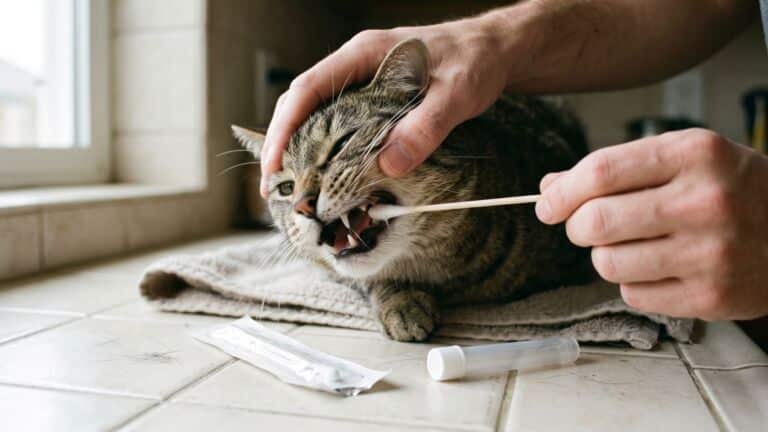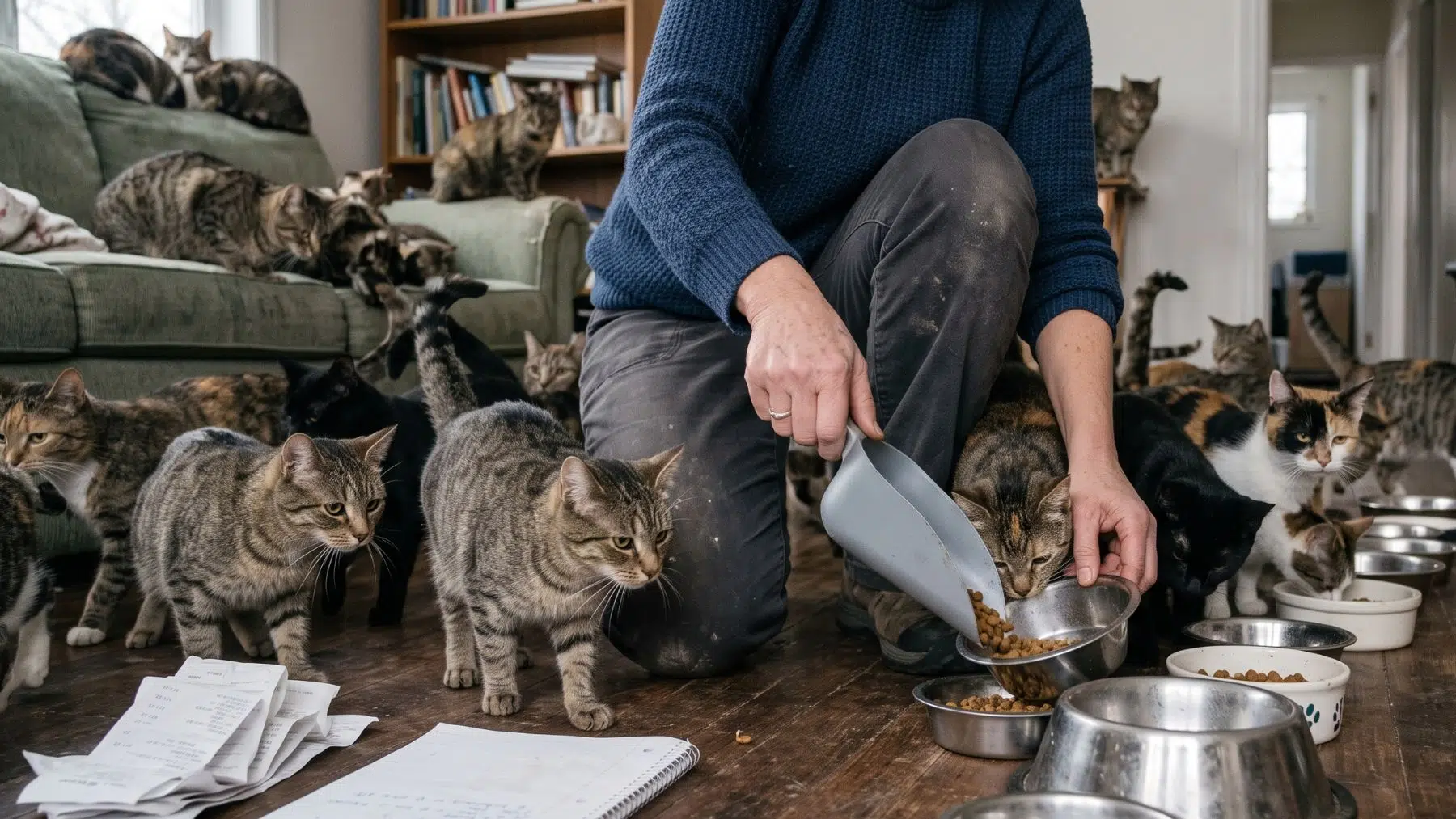
Picture a 1,500 square foot house in Oakland, California.
Now picture 70 feral cats living in it, plus seven that belong to the owner.
There are carriers in the hallway, bowls on every flat surface, and a smell that no amount of paper towels fixes.
The woman paying for all of it was doing it for a charity, not for herself.
So at tax time she wrote the cost down and sent it in.
The IRS threw out every dollar.
What she was actually doing in there
Jan Van Dusen is a former family law attorney.
She volunteered for Fix Our Ferals, a registered charity in the Bay Area that traps feral cats, has them neutered, and returns them.
Trap and neuter work only functions if somebody holds the animals during recovery, and sick or unweaned ones need weeks.
So the cats went where the space was, which was her own house.
Almost none of them were hers. They belonged to the organization or to other rescues.
She paid the vet bills, bought the food, ran the washing machine, and hauled the trash.
For the 2004 tax year she added it up and claimed 12,068 dollars.
The line she used was the one for charitable contributions.
Why the tax agency said no
Cat food is not an obvious charitable gift, and that was the sticking point.
Writing a check to a charity is simple. Buying litter for a charity’s animals in your own kitchen is not.
Because the money never passed through the charity’s hands, the agency treated the whole amount as personal spending and sent her a bill for underpaid tax.
An auditor looking at that return sees a woman who likes cats and spends money on them, which is a hobby and not a donation.
Most people stop right there, because fighting the IRS over twelve thousand dollars costs more than twelve thousand dollars.
She did not stop.
Instead she took it to the United States Tax Court, which is where taxpayers can contest a bill before paying it.
And she went in with the argument that the expenses were never really hers at all.
The rule the judge went back to
The question came down to one line in the tax code.
Section 170 allows a deduction for a charitable contribution, and the regulations have long accepted that an unreimbursed expense counts as a contribution when a volunteer incurs it in service of the charity.
Mileage driven for a food bank is the familiar example.
Nobody had applied it at this scale, to a house full of somebody else’s animals.
Judge Richard Morrison worked through it in a decision released in June 2011.
He found that the foster costs were exactly that kind of unreimbursed expense, and he allowed most of them.
Roughly 90 percent of the veterinary and pet supply spending came through, along with half the utilities and cleaning costs.
The part that cost her money anyway
Then the ruling turned against her, and it turned on paperwork.
For any single contribution of 250 dollars or more, the law requires a written acknowledgment from the charity, obtained at the time.
Van Dusen did not have those letters, as the decision at the court record lays out.
So every expense above that line was disallowed, no matter how legitimate the judge had just found it to be.
A vet bill for a colony of feral cats clears 250 dollars without any effort, which is where most of her total sat.
She won the principle and lost on the receipt, which is a very expensive way to be right.
Tax writers covering the case reduced the lesson to three identical words, as contemporary coverage recorded. Get the letter.
The same gap between doing the right thing and documenting it shows up around a solar site or an offshore project.
What it means for anyone who fosters
Van Dusen v. Commissioner is still the case people cite, and it applies far beyond cats.
If you foster for a registered charity, the food, the litter, the vet bills and a fair share of the utilities can be deductible expenses.
The animals have to belong to the organization rather than to you, and the organization has to be a real registered nonprofit.
You need records, and above 250 dollars you need the letter.
Millions of American households take in rescue cats and dogs every year, and most of them never claim a cent.
What the court decided is that fostering for a charity is not a hobby, whatever it looks like from the doorway.
It decided that a spare room can be charitable infrastructure, which is a strange sentence and a useful one.
Read the whole thing?
Get the week's signal, not the noise
Our sharpest reporting on energy, climate and nature — free, once a week.