The storm formed in the western Pacific Ocean and intensified rapidly. It had sustained winds greater than Force 17 (Beaufort) and gusts greater than 70 m/s over parts of the North China Sea.
This area is home to an estimated 1,345 operational offshore wind turbines.
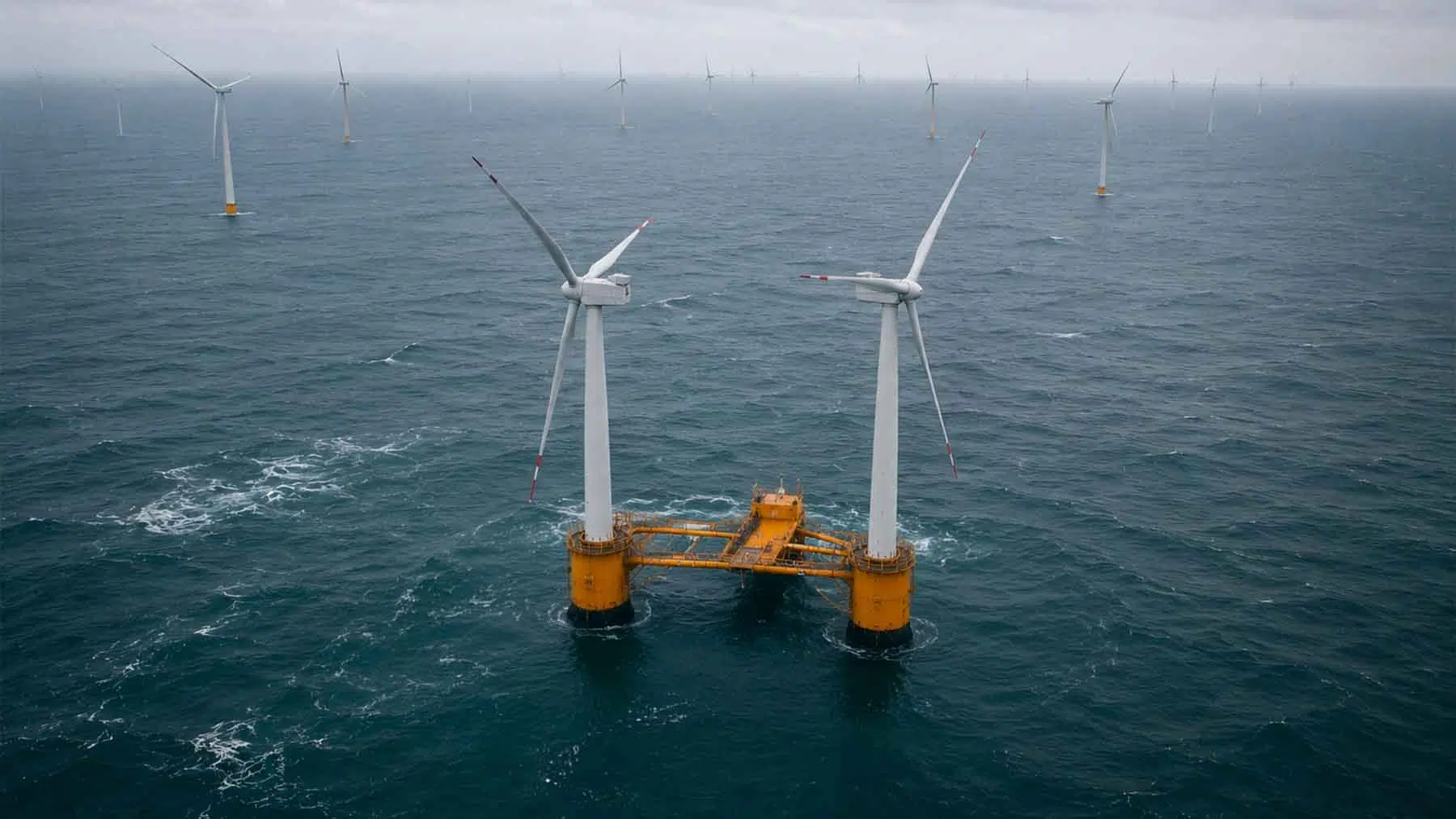
While it was in the direct path of the eyewall during the height of the storm, it apparently rotated through a full circle while remaining aligned with the moving storm.
How did OceanX manage to stay aligned with the moving storm, and what happened after it completed the maneuver?
The best wind resources face the worst storms
Offshore wind farms are vulnerable to storms like Typhoon Ragasa along China’s coastline. Many of China’s best wind resources lie in coastal regions that experience frequent typhoons. Wind farms along China’s coast must cope with both powerful winds and rough seas.
Guangdong province has developed into one of the largest markets for offshore wind energy globally. Nearly 15 percent of all global offshore wind turbines are located within Guangdong province. Local authorities plan to more than double the offshore wind fleet over the next five years.
The same coastal waters that attract offshore wind projects are also exposed to frequent typhoons. Those same waters are subject to numerous typhoons annually, which generate very high wind speeds.
Typhoons produce winds of 74 mph (119 km/h) or higher.
With maximum sustained winds of 150 mph (241 km/h), it caused extensive damage across the south of China.
Some of the strongest wind resources are found in regions that experience typhoons.
Developers must account for those conditions.
More than 1,300 turbines stood in the storm’s path
Ming Yang stated that all 1,345 of its offshore turbines in the North China Sea were affected by Typhoon Ragasa. Some were directly in the storm’s path, while others were impacted indirectly.
According to Ming Yang Smart Energy, the affected installations were distributed across multiple provinces along China’s southern coast. All three provinces mentioned earlier — Guangdong, Hainan, and Guangxi — contained some portion of Ming Yang’s total turbine count.
Turbines were subjected to gusts exceeding 50 m/s.
Areas near the storm’s landfall experienced gusts greater than 70 m/s.
Some of those installations featured advanced offshore platforms, including OceanX.
The storm became a major test for offshore wind structures operating in extreme tropical cyclone conditions. Offshore wind technologies across the affected region were put to the test. Ming Yang stated that all 1,345 installations retained structural integrity throughout the duration of Typhoon Ragasa.
The question was how OceanX maintained alignment with a storm that kept shifting.
A floating platform turned to follow the storm
Ming Yang said OceanX used a single-point mooring system together with aerodynamic weathervane control. The platform yawed continuously throughout Typhoon Ragasa as a result.
As it traveled over different regions of the ocean, it adjusted its position relative to the ever-changing eyewall.
In doing so, it was able to reduce ultimate tower base loads by 40%.
OceanX remained structurally intact throughout the entire duration of Typhoon Ragasa.
What the rotation revealed
OceanX was one of 1,345 installations exposed to Typhoon Ragasa. The platform showed that floating offshore wind systems can adapt to changing storm conditions.
Those same waters continue to attract major offshore wind investment.
Plans already exist to expand offshore wind development in the region.
Future projects will need to operate in waters that remain exposed to powerful typhoons. The southern Chinese coast offers some of the world’s best offshore wind resources while simultaneously exposing itself to recurrent powerful typhoons. Offshore wind development continues to expand in waters exposed to powerful tropical cyclones.
Future projects will need to operate in waters exposed to powerful typhoons, and developers are already pushing floating turbines into deeper sections of the South China Sea.
Read the whole thing?
Get the week's signal, not the noise
Our sharpest reporting on energy, climate and nature — free, once a week.