Vietnamese cocoa processor Trong Duc Cocoa Co. Ltd. is addressing a unique issue annually.
Approximately 5,000 tons of empty cocoa pods remain after harvesting and processing raw cocoa fruit.
Most of each cocoa fruit does not become chocolate. Instead, it becomes waste that must be managed or disposed of.
Those massive mounds of waste may pose environmental challenges for the surrounding processing facility.
5,000 tons of pods created a growing problem
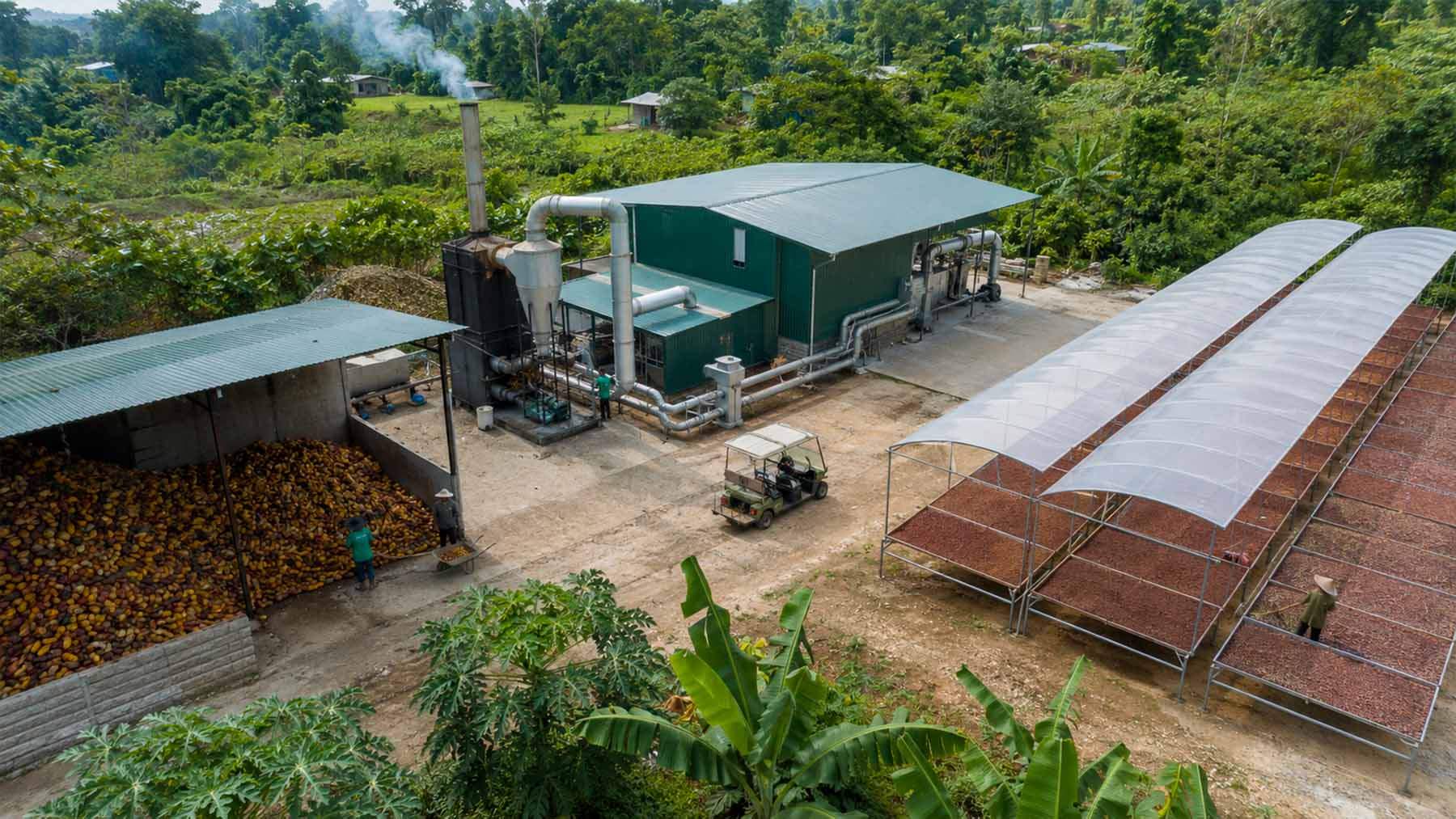
So, at Trong Duc Cocoa Co. Ltd. in southern Vietnam, the discarded cocoa pods no longer just sit there idle. Instead, the company now uses them in its production process.
The project helped Trong Duc turn a major waste problem into an opportunity.
One solution was finding a use for discarded cocoa pods. The company developed a way to turn that waste into something useful.
The details behind the process help explain how the system works.
As Vietnam’s second largest cocoa producer, Trong Duc purchases raw cocoa fruit directly from farmers. Purchasing directly from farmers maintains bean quality, but it also creates large quantities of leftover pod material.
Each harvested cocoa fruit leaves behind a large outer shell after the beans are removed.
Those discarded shells account for most of the fruit’s total weight. Very little of the cocoa fruit is used to make chocolate.
Most of it remains behind once the beans are removed.
For many agricultural businesses, cocoa pod by-products are an expense rather than an opportunity. They occupy valuable space and require labor for handling, storage, or disposal.
Trong Duc began looking for ways to use the cocoa pod material instead of treating it as waste.
Ultimately, the solution developed by Trong Duc is a closed-loop system. It converts cocoa pod material into both a solid fuel and a soil amendment.
Cutting drying time changed more than efficiency
Prior to the new process, approximately 15 days were required to dry cocoa beans during the rainy season. The new drying method has allowed the company to reduce that timeframe to approximately 7 days.
That timeframe is close to that achieved during the dry season.
This new process reduces the potential for developing mold when drying, thus enhancing overall product quality.
The project received support through the European Union-funded SWITCH Asia program.
One of the most challenging aspects associated with drying cocoa beans occurs during Vietnam’s rainy season. During this period of higher humidity, drying time for cocoa beans is extended and the likelihood of mold development increases.
Both factors negatively affect the quality and value of the final dried cocoa beans.
According to Southeast Asia Development Solutions, the improvement brings drying performance much closer to dry-season conditions.
The benefits extend beyond drying cocoa beans
Supporters of the project cite several other advantages associated with this innovative method.
Biochar produced from cocoa pod material has been shown to provide multiple benefits when added back into soils.
Independent testing confirmed that the biochar met quality standards for fixed carbon, ash content, volatile matter, and hydrogen.
The answer lies inside a 1,400°F gasifier
The discarded cocoa pods are shredded and dried before entering a Torch Updraft Gasifier. Temperatures inside the unit can reach 770 degrees Celsius (1,418°F).
Inside the gasifier, the pods are transformed into biochar.
The gasifier produces a smokeless flame and a clean gas that can be used as an energy source.
Rather than allowing that energy to go to waste, the clean gas is used to produce heat for plant operations. That heat is used to dry cocoa beans alongside other heat sources.
The discarded cocoa pods from one batch help dry the next batch of cocoa beans, giving the waste a second use as a heat source.
Read the whole thing?
Get the week's signal, not the noise
Our sharpest reporting on energy, climate and nature — free, once a week.