
Many people believe that the eVTOL is the vehicle of the future and we may see this come to pass in our lifetimes. Naturally, considering its reputation for innovation, it’s speculated that Tesla will be the first company to release a commercial model.
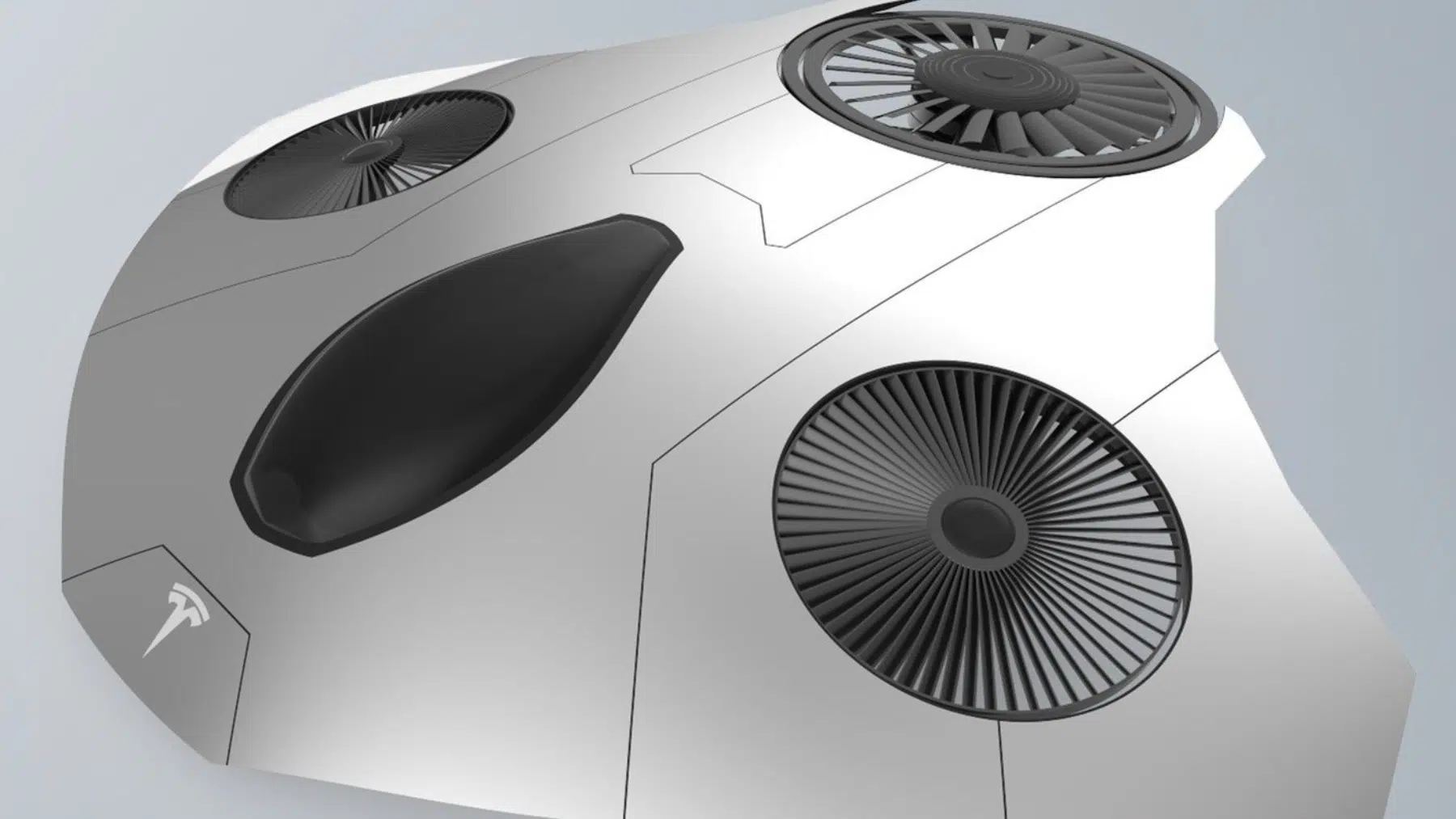
Tesla CEO Elon Musk has hinted at moving into other forms of all-electric transport, making reference to airplanes and boats on more than one occasion. One visionary has created a prototype image of what a Tesla eVTOL could look like and it’s catching attention as the public considers the possibilities.
Visionary designs Tesla Model V prototype and generates public interest
An eVTOL is an electric vertical take-off and landing aircraft; basically, a flying car that doesn’t need a runway to get airborne. The public finds the concept fascinating, not just for innovation but also for eVTOLs’ sustainability and efficiency.
One British industrial designer has produced a prototype concept that’s so well-thought-out that it already looks viable on paper. Tom Abbot-Davies is the man behind the vision, and although he’s named his concept after Tesla and dubbed it the “Tesla Model V,” it has no official connection to the company or Elon Musk.
Abbot-Davies’ design is based on a manta ray, and it’s as wonderfully aesthetic as it is technologically advanced. Aerodynamics are an inherent aspect of any vehicle designed for flight, and just seeing the image of the “Model V” on the screen leads one to believe that it would function perfectly well in the air in real life.
How would the propulsion system on the “Model V” work?
Abbot-Davies has his eVTOL concept all worked out, including the propulsion system. His prototype is envisioned with three ducted fans. Two of these are forward EDF (electric ducted fan) nacelle thrusters, and the third is a rear ducted fan. This system enables the eVTOL to take off vertically and fly horizontally.
Abbot-Davies chose magnesium and titanium for the planned construction of the fuselage and shell, with the underbody manufactured from carbon fiber. The combination of these materials will ensure a lightweight and hardy vehicle, according to the designer.
In terms of the landing gear, Abbot-Davies included a retractable tricycle design that’s intended to make smooth flight-to-ground transitions, and he’s set the passenger capacity at a more practical two or three after his initial single-passenger concept evolved.
Is a Tesla eVTOL on the cards?
The king of electric vehicle innovation, Elon Musk, hasn’t made any firm statements about moving into the development or production of eVTOLs, but one hint about the possibility of vehicles for flight and people are already imagining what he and his Tesla team could dream up.
Tesla electric vehicle sales and the company’s stocks haven’t been performing well recently, especially in China and Europe, which have traditionally been Tesla market strongholds. These may be the factors that push Musk and Tesla’s focus in a new direction of differentiation in the fleet.
After Musk said that Tesla was “stretched pretty thin” when asked about developing a plane, Morgan Stanley analyst Adam Jonas responded:
“In our opinion, that’s a decidedly different type of answer. Is Tesla an aviation/defense-tech company in auto/consumer clothing?”
Elon Musk may have plans we don’t know about yet
A growing sector of flight transport is the zero-emission, unmanned form, which is another viable direction for Tesla if Musk decides to look into flight and opts to avoid manned craft and go for drones instead. It’s expected that these kinds of vehicles will be in mainstream use within the next few decades. Who knows? Musk is known as a maverick with surprises up his sleeve, and Tesla may well be already working on flying craft in secret. The other speculation is that Musk is looking into hydrogen, which may or may not be a true story.
Read the whole thing?
Get the week's signal, not the noise
Our sharpest reporting on energy, climate and nature — free, once a week.


