Many solar farms express themselves through the electricity they produce.
However, there is a different kind of narrative that exists across the surface of the Görlsdorf solar park in eastern Germany.
In February 2026, when the solar farm started producing energy, it brought renewable energy production to what used to be farmland in the municipality of Vierlinden.
At the same time, the solar farm introduced new land management methods and a battery storage component which will be present on the land for many years to come.
More than electricity was planned for the site
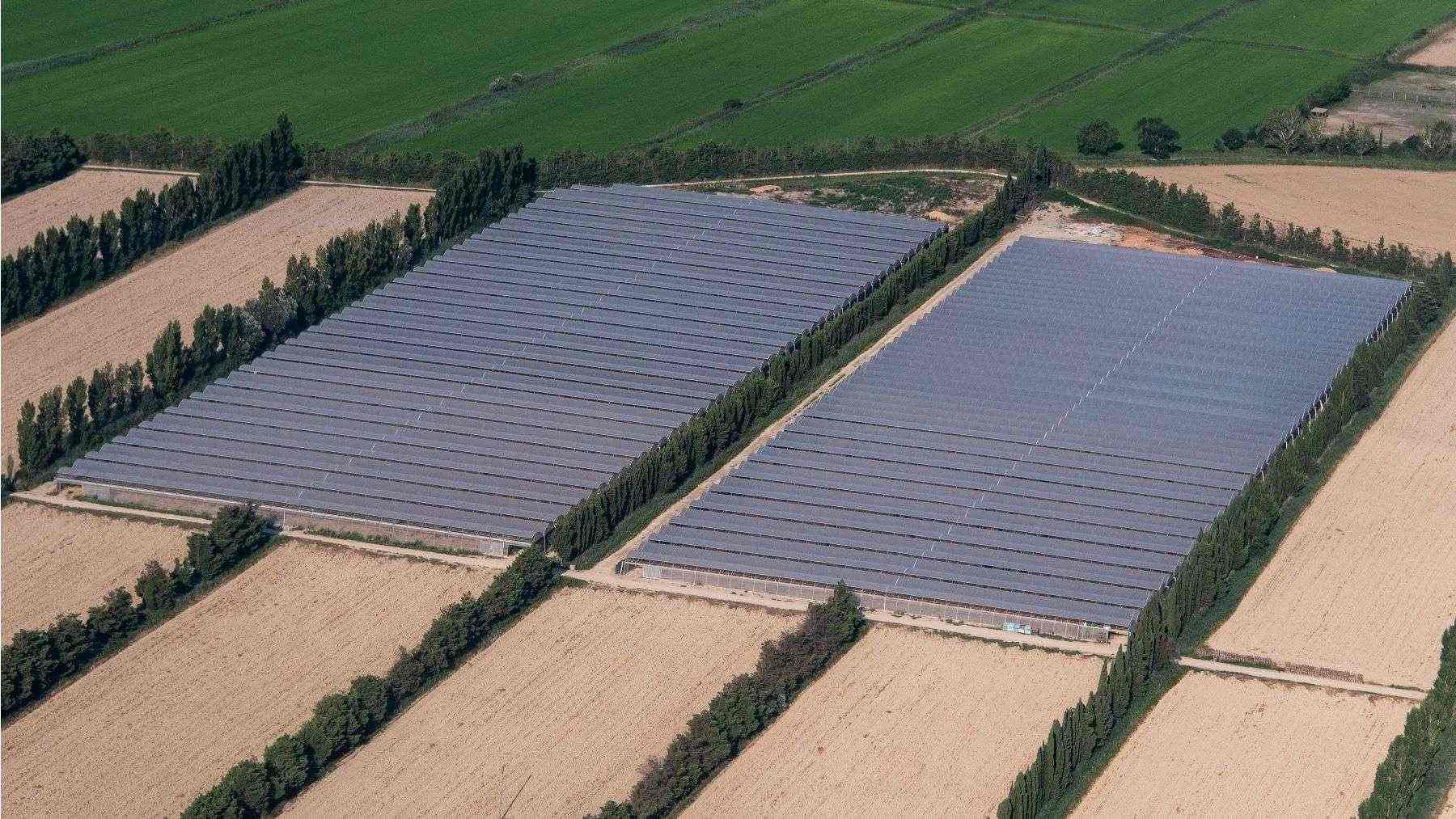
Energy generation was only one part of the plan for the site. Görlsdorf solar park occupies nearly 90.8 hectares of land.
Within that area, approximately 75.7 hectares have been designated for photovoltaic generation.
To generate electricity across such a large site, approximately 143,000 solar modules have been installed throughout the facility.
Together, these modules provide the solar farm with a total peak output of approximately 88 megawatts.
EnBW predicts that the facility will generate approximately 96 million kilowatt-hours of electrical energy each year.
Based upon those projections, the electricity generated at the site is expected to be sufficient for approximately 33,000 three person households.
Electricity production is not the project’s only energy component.
Also included within the facility is a battery storage unit having a capacity of 14 MWh.
The battery storage system operates alongside the solar farm’s generation infrastructure.
Not every hectare was reserved for energy production
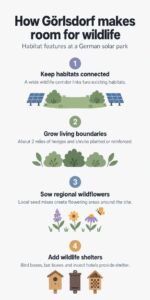
One part of the site was designed specifically for wildlife. One such feature is a wide wildlife corridor running across the site between existing habitat areas.
According to EnBW, approximately 3.3 km (1.9 miles) of hedges, shrubs, flowering areas, and additional habitat features were planted along the wildlife corridors.
Regional seed mixes were utilized to plant the majority of the flowers in this area.
Birdhouses, bat houses, and insect hotels are some examples of additional habitat features incorporated into this project.
These environmental features were incorporated across different parts of the site.
The measures were intended to create travel routes, shelter, and habitat opportunities during operation of the solar farm.
Life continues between the rows of modules
Land under the modules still serves a purpose.
While portions of the property were sealed due to physical constraints related to the installation of modules, large amounts of land remained unsealed.
Grasslands are allowed to grow naturally across much of this land area.
In addition to sheep grazing, this practice is also being used to manage vegetation growth below and above the row spacing of panels.
Agri-photovoltaics and tracking module testing are also being tested in conjunction with managing lands below and above the row spacing of modules.
This method utilizes lands below and above the row spacing of modules for uses beyond solely generating electric energy.
Wartime remnants had to be cleared first
Not all challenges faced by Görlsdorf were related to energy.
The site lies in a battle-scarred region that experienced the Battle of the Seelow Heights in April 1945.
Prior to commencing construction activities at Görlsdorf, significant explosive ordnance clearance (EOC) needed to occur before initiating any construction activities.
Gun positions, weapons, and ammunition totaling several tons were located during operations in 2023.
Additionally, over 100 larger bombs and grenades were discovered within the property boundaries.
Due to safety concerns, some items could not be removed from the site.
Controlled detonations were necessary for the removal of some hazardous materials.
Changes that will remain long after construction
A circular walking path was also developed that connects Görlsdorf to nearby Lake Wermelin.
By the time construction commenced, the landscape and public access routes had changed from their original condition.
The environmental measures introduced across the site are also intended to remain in place for decades.
How those measures perform over time will become clearer through continued observation.
Read the whole thing?
Get the week's signal, not the noise
Our sharpest reporting on energy, climate and nature — free, once a week.