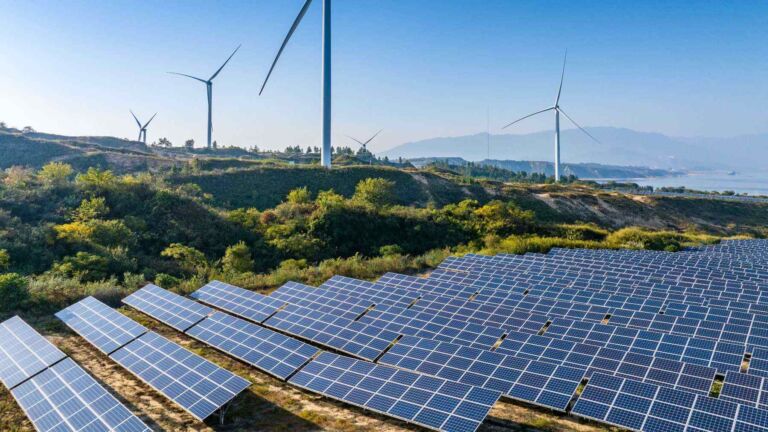
A length of wind turbine blade lies on the ground beside the tower that carried it.
It is longer than a school bus and pale as driftwood.
A vehicle mounted lance drives a jet of water through its shell.
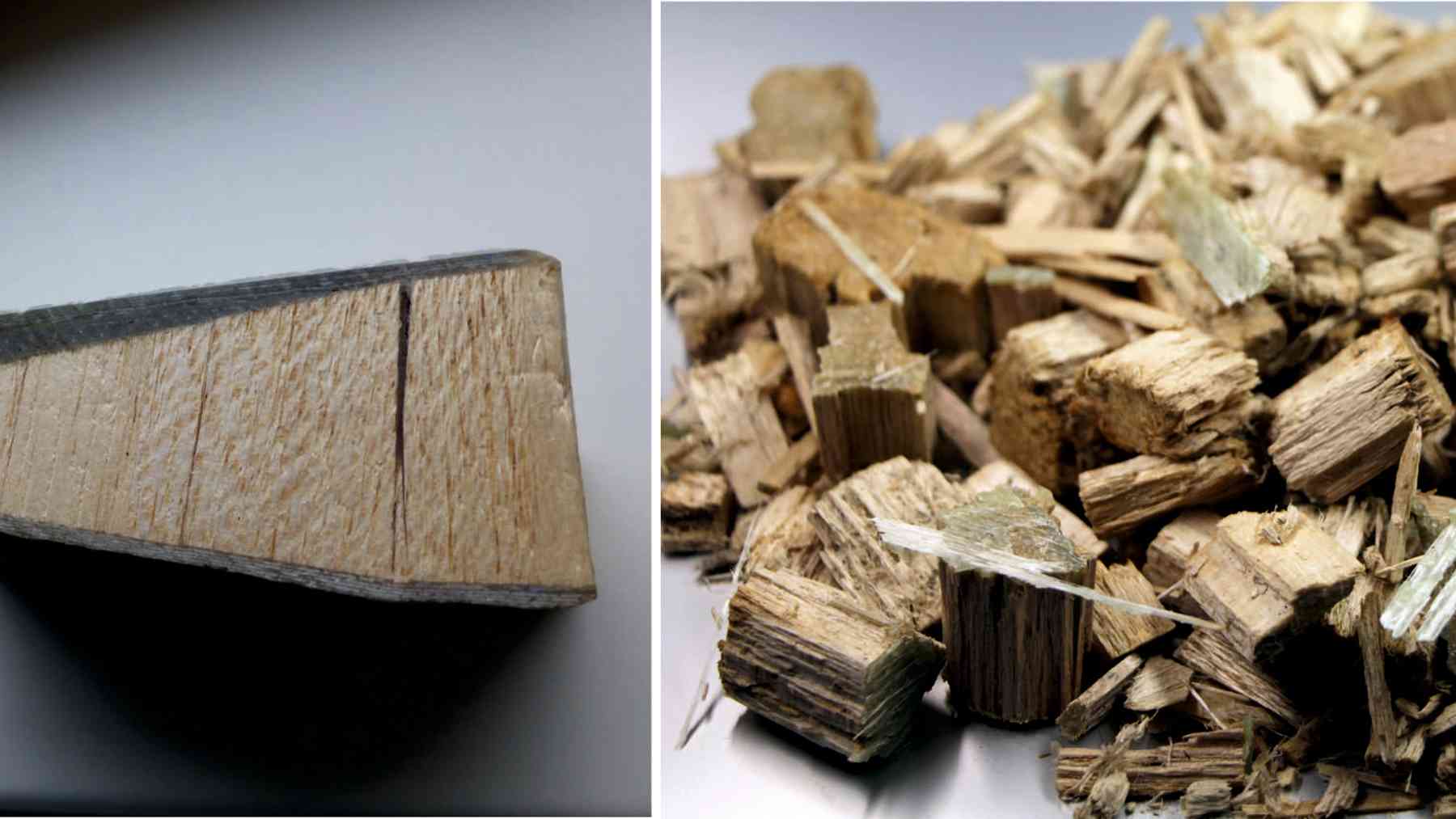
Inside, under layers of hardened resin and fiberglass, is a core of wood so light it floats like cork.
For years that wood had nowhere to go but a cement kiln.
So how do you pull a wood that is glued to glass fiber back out in one piece?
A mismatch in the material does the separating
The trick depends on a basic difference between the two materials bonded inside every blade. Balsa wood is soft and slightly springy under force, while the surrounding glass fiber and resin are rigid and brittle. Engineers at the Fraunhofer Institute for Wood Research built on that mismatch rather than fighting it.
Workers first use a vehicle mounted water jet lance to cut a retired blade into manageable sections right where it comes off the tower. The lance slices each blade into segments roughly 33 to 66 feet long. A mobile shredder then breaks those segments down into fragments about the size of a palm.
The fragments go into an impact mill, where they are set spinning and hurled against metal at high speed. Because the wood gives and the composite shell does not, the composite material then breaks apart because the wood is viscoplastic, while glass fibers and resin are very hard,
project manager Peter Meinlschmidt has explained. The balsa comes free as chips and pieces rather than dust.
One blade yields 1.3 metric tons of recoverable wood
A modern blade is a layered sandwich, and balsa is one of its heavier hidden ingredients. By the project’s own accounting, a 130 foot rotor blade weighing about 26 metric tons is roughly 24 metric tons of glass fiber reinforced plastic, 1.3 metric tons of balsa wood and 0.5 metric tons of metal.
At the wood density assumed there, that works out to around 300 cubic feet of valuable balsa wood inside a single blade, and longer blades hold more.
The scale adds up fast once a wind farm reaches the end of its working life. Germany alone has roughly thirty thousand turbines in operation, and the number of blades coming down keeps climbing.
Insulation mats give the wood a second use after 20 years aloft
Once sorted out from the plastic, the recovered wood does not sit idle. It gets processed into lightweight wood fiber insulation mats suitable for buildings. A separate stream is ground finer and treated with a foaming additive to make a wood foam that works as packaging.
That second use matters because balsa still carries useful properties after roughly twenty years spent at the tip of a blade. It stays remarkably light and pressure resistant, with a low thermal conductivity that makes it a natural insulator once shaped into mats or boards.
Until this process existed, there was no way to recover the wood when old rotor blades were disposed of, so it was burned as a composite material, usually in cement factories. Diverting even part of that volume into buildings instead of furnaces echoes a wider push across the energy sector to stop treating worn out hardware as pure waste, the same logic behind pulling reusable glass fibers out of soaked blade material in a separate lab elsewhere.
A rainforest tree supplies the blade an ocean away from any turbine
The balsa inside a blade usually begins life nowhere near a wind farm. It starts as a fast growing tropical tree native from southern Mexico to southern Brazil, and Ecuador supplies most of the world’s commercial balsa.
Those same flowering trees feed more than the lumber trade. The big flowers open in the late afternoon and hold deep pools of nectar, drawing capuchin monkeys by day and climbing mammals after dark. Pollination was long credited to bats, though fieldwork in Panama points instead to nocturnal kinkajous and olingos, and the question is not fully settled.
Other energy projects are starting to design around wildlife in similar ways. A proposed solar park in Britain includes wide corridors so deer can pass through fencing, and a Massachusetts solar farm was built to protect roughly 90 acres of turtle habitat.
Scaling the process beyond a handful of pilot sites
None of this means every retired blade will be unpacked this neatly anytime soon. The water jet and impact mill route remains a specialized pilot operation, not yet standard practice at every decommissioning site. Separating resin fully from glass fiber for reuse is still its own unsolved puzzle.
Even so, giving balsa a path back into insulation rather than a kiln is a real improvement over the alternative.
A wood that spent two decades keeping a blade light enough to turn in the wind can spend its next stretch keeping a house warm instead, one mat and one dismantled blade at a time.
Read the whole thing?
Get the week's signal, not the noise
Our sharpest reporting on energy, climate and nature — free, once a week.