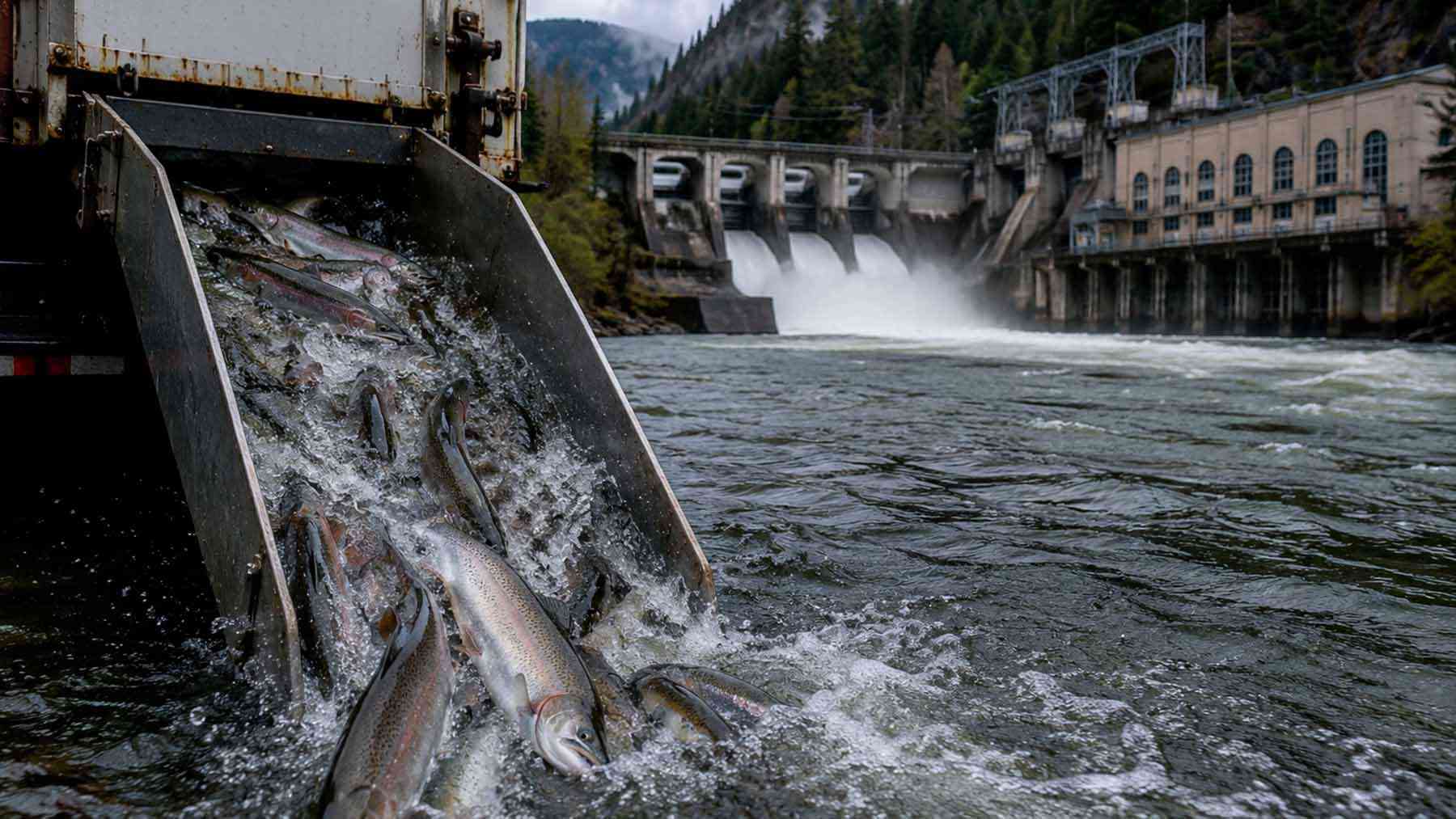
A hopper lifts clear of the river at the foot of a concrete wall.
Inside it, silver fish thrash, each about the length of a forearm.
Workers sort the catch species by species.
The American shad go into a tank of cool, circulated water on the back of a truck.
There is no open route around the dam by water, so these fish will finish the trip by road.
Which raises the obvious question: why can’t they swim it?
A 94 foot wall forces fish onto a truck
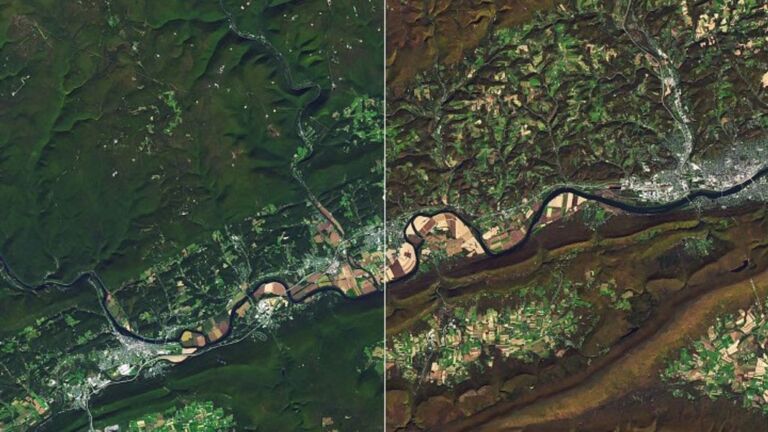
American shad spend most of their lives in the ocean and return to the river where they hatched to spawn. On the Susquehanna, that run meets concrete. Four hydroelectric dams stand between the Chesapeake Bay and the river’s historic spawning reaches, and the lowest of them, Conowingo in Maryland, rises 94 feet.
Engineers answered that wall with mechanical lifts that scoop fish from the tailrace and hoist them over the top. The lifts still collect fish, but they no longer simply tip them into the pool above the dam. Passage operations were changed to keep invasive northern snakehead and blue catfish from spreading upriver.
So every fish entering the Conowingo facilities is now sorted, and the shad and river herring are loaded into trucks instead. The upper dams complicate things further, since the passage facilities at Holtwood and Safe Harbor have not operated since May 2020, leaving the road as the only reliable route into Pennsylvania spawning water.
A 40 mile drive covers what the river cannot
Each spring, crews collect American shad gathering below Conowingo and drive them more than 40 river miles upstream, tanks aerated the whole way. It is close to the method used before the modern lifts existed, revived because volitional passage through the lower river stopped delivering fish in meaningful numbers.
The destinations split in two. Most trucked shad are released above York Haven Dam, near Harrisburg; the rest are stocked at a boat ramp downstream of it, at Columbia Riverfront Park, where they still face the last barrier on their own.
In the most recently reported season, 1,317 shad were stocked above York Haven and 353 below it, a total of 1,670 fish moved by truck rather than by their own fins. That is the whole adult delivery for a river system draining parts of three states.
Nearly 200,000 fish once passed in a single season
The 1,670 figure only makes sense next to history. By 2001, nearly 200,000 adult shad were counted at the Conowingo fish lifts in a single season, the peak of a restoration effort built on hatchery stocking that began in the 1970s and a trap and transport program that ran until 1997. Numbers rose for roughly a decade after the big east lift opened in 1991, then fell and kept falling.
The long term target is far larger. In testimony to Congress, the Interior Department described a restoration plan calling for passage of 2 million American shad above York Haven Dam. The gap between 1,670 and 2 million is not a rounding error.
That testimony also named a likely driver of the slide: studies found that about seven in ten shad attempting to pass Conowingo were blocked, while those that did get through took around two weeks on average. Ending the earlier trucking program, it said, contributed as well.
A 500 fish threshold decides the spring schedule
The program is not a simple on off switch. Under the operating plan at York Haven, staffed fishway operation is to begin four days after 500 adult American shad have been stocked downstream of the project at Columbia Riverfront Park, the signal that enough fish are present to be worth counting.
In 2025 that threshold was never reached. Only 353 shad were stocked there, so the criterion for staffed operation was not met, according to the annual passage summary filed with the Susquehanna River Anadromous Fish Restoration Cooperative. The U.S. Fish and Wildlife Service notes that, starting in 2026, fish counting is no longer conducted at York Haven at all.
A century old collapse still frames each small count
None of this makes a triumphant headline. The Susquehanna shad fishery was already gone before the dam arrived: state records describe a catch that dwindled through the 1910s until, by 1921, there was nothing left to harvest, and Conowingo was completed in 1928.
Elsewhere, taking the barrier out has worked faster. The Nature Conservancy reported in August 2026 that juvenile American shad had been documented above a removed dam site on the Paulins Kill, a Delaware River tributary in New Jersey, for the first time in more than 100 years, after four dams came out and reopened 45 miles of river.
For now, progress on the Susquehanna lives in small numbers counted one netload at a time below a wall never built with a shad in mind. It is not unlike the Sierra foothill river covered earlier this year, or the bucket that tipped into an Oregon creek and carried a native fish back upstream.
Read the whole thing?
Get the week's signal, not the noise
Our sharpest reporting on energy, climate and nature — free, once a week.