
The canyon walls wear a dark band now.
It drops fifteen or twenty feet below the old waterline, and it is made of shells.
Each one is about the size of a fingernail.
There are enough of them to coat mile after mile of exposed sandstone.
None of it belonged there a generation ago.
What turned a few hitchhiking shellfish into a reservoir’s permanent houseguest comes down to one overlooked detail.
A larva too small to see starts the invasion
The culprit is the quagga mussel, a freshwater mollusk native to the Black and Caspian sea drainages that almost certainly reached Lake Powell on a trailered boat hauled from already infested water. Its larval stage, called a veliger, is nearly invisible and drifts freely in the water column for three to four weeks before it finds something hard to grab. That drifting window is why larvae can slip past boat ramp inspectors, riding along in engine water, live wells and bilges.
Once a veliger settles, it anchors itself with sticky threads and starts building a shell. A single mussel is harmless enough.
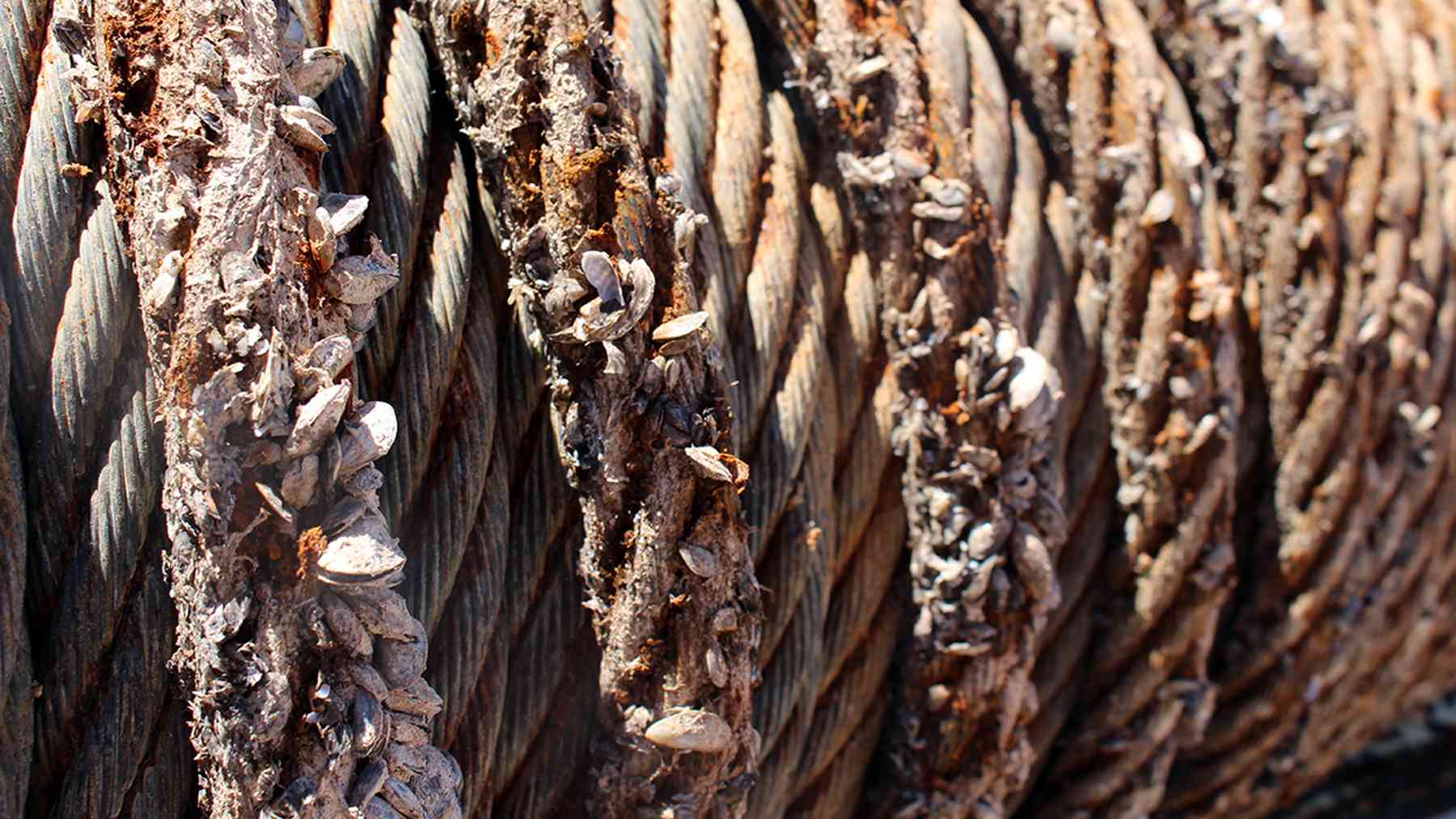
But a mature female can release up to a million eggs a year, and her offspring will settle on almost anything submerged, from canyon walls and marina pilings to the inside of a dam’s plumbing. Mussels that die in place leave the shells behind, so the crust keeps thickening even where the animals do not.
So the question was never whether a handful of mussels could cause trouble. It was how fast an invisible larva could turn an entire reservoir into a self spreading colony.
Four mussels on one boat seeded a lakewide colony in 3 years
The first adults turned up when a local marine services business found four of them on a boat pulled for service. Divers went looking and removed more than 400 mussels from marinas in the southern end of the lake, plus roughly 800 more from canyon walls near the mouth of Wahweap Bay.
What followed was not a slow creep. Within about three years, mussels were present in nearly all parts of a reservoir that runs 186 miles long with roughly 1,960 miles of shoreline at full pool, clinging to moored boats, marina structures, the lake bottom and submerged rock.
A lake once defended by inspections and hot water washdowns had become unrecognizable underwater. Shells kept piling onto hardware nobody expected to need scrubbing, turning routine maintenance into a much bigger job.
Removal now takes hot water at 3,000 pounds of pressure
Scraping shells off by hand barely dents the problem once a colony matures. A huge underwater control gate pulled from Lake Powell for cleaning came up coated in a shell crust 2 to 3 inches thick, closer to armor than fouling.
The timeline behind that crust is short. Veligers were first confirmed in late 2012 through routine water samples taken near Glen Canyon Dam and Antelope Point, adults were reported in March 2013, and by 2016 the entire lake was colonized.
Elsewhere on the reservoir, mussels layer by the hundreds onto buoys, docks and boat hulls. Lake officials have described removal as a job for 140 degree water at about 3,000 pounds of pressure, an industrial wash rather than a hose down, and decontamination of a single boat and trailer takes roughly 45 minutes.
The dam has escaped the worst damage after 8 extra workdays
Despite the shell counts out on the lake, Glen Canyon Dam has not seen the catastrophic fouling that invasive mussels have caused at other water and power facilities. Shells turn up in nooks and crannies of the structure and in parts of the plumbing, but the Bureau of Reclamation has put the added burden at roughly eight extra days of work for two people.
Part of the reason may be simple hydraulics. Dreissenid mussels settle readily in slack water along a dock or a canyon wall and poorly where currents run fast, which is the condition inside penstocks and turbines, though no single factor has been established as the explanation for the dam’s lighter load.
Crews at hydropower plants in other states face the same chore on submerged intake gates, where buildup gets scraped away on a regular schedule. They keep watch the way monitoring equipment tracks barnacle fouling on offshore cables, where the same slow creep of shellfish wears on hardware nobody designed for it.
A lake that will stay mussel colonized for good
There is no realistic plan to eliminate quagga mussels from Lake Powell now that they have spread through nearly every arm of it. Management has shifted from prevention to containment, keeping the mussels from being carried to other waters while living alongside them here.
That shift matters because the mussels do more than foul gates. Each one can filter upward of a liter of water a day, stripping plankton that other species depend on, and dead shells pile into sharp beds along shorelines that used to be bare sandstone and soft mud. Wildlife officials warn that those shells can cut bare feet, so water shoes have become standard gear at the shoreline.
Nobody knows where the colony’s growth will level off. But the turbines keep spinning and the power keeps flowing, and the fight has moved from keeping mussels out to managing what they leave behind.
Read the whole thing?
Get the week's signal, not the noise
Our sharpest reporting on energy, climate and nature — free, once a week.


