The pond behind the dam in Durham, New Hampshire drained down to bare mud this past summer.
Timber pilings that had sat underwater for more than a century poked up through the muck.
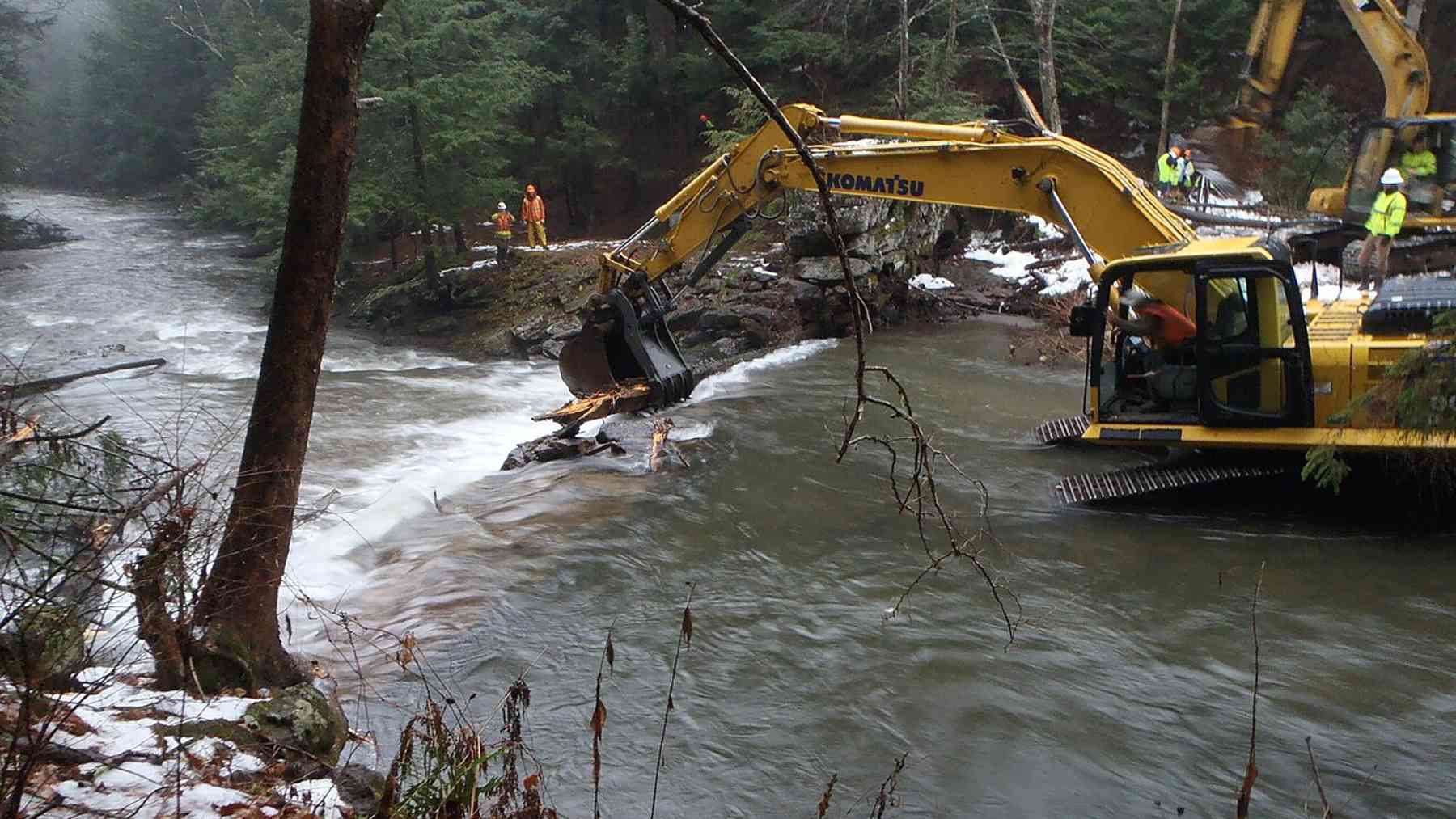
By midsummer, crews were cutting the concrete apart section by section.
For generations, this stretch of the Oyster River had been cut in two.
A baffled steel and timber fish ladder bolted to one abutment was supposed to soften that.
So which fish actually gains now that the wall is gone?
Why the faster water favors one herring over the other
River herring is a catch all term for two fish, the alewife and the blueback herring, and they do not want the same kind of water. In its assessment of the project, state wildlife officials said a faster stream flow following the dam removal will likely favor blueback herring over alewives. That is a projection rather than a measured outcome, and the first few runs will be the test of it.
The mix in this river was already lopsided. Fish and Game considers the Oyster primarily a blueback herring run, though alewives have been observed in the fish ladder at Mill Pond.
Removing the wall does not hand the river to one species outright. It swaps a narrow chute of stacked pools for a channel moving at the river’s own speed, and fish now migrate naturally instead of by ladder.
A concrete wall that split a tidal river from its fresh water
Picture a nine and a half acre millpond held behind a concrete wall roughly 140 feet long and 13 feet tall, built in what engineers call an Ambursen style, with a slanted upstream face carried on evenly spaced buttresses. The structure combined a spillway, a set of gated outlets and the fish ladder at one abutment, and it separated the Oyster River’s freshwater reaches from the tidal water feeding Great Bay.
That split shaped everything downstream. The river drains roughly 21 square miles, and its water was once impounded to power saw and textile mills. Long after the mills stopped, the dam stayed.
Its age was part of the argument over its fate. It was the earliest known Ambursen dam in New Hampshire and the only one left intact in the state, a historic weight that helps explain why the decision took so long to settle. Town voters eventually approved removal by a margin of better than two to one.
Counts at the ladder fell from a peak above 157,000 fish
None of this is guesswork. State crews tallied herring climbing the ladder each spring, and the trend ran one way. The river herring count at the ladder has declined since its peak of 157,024 fish in 1992.
The blueback picture is the starker one. Twenty years ago the Oyster supported a productive blueback run with counts exceeding 100,000, and only a few thousand are counted there each spring now, according to state fisheries data. Commercial landings of river herring have dropped by about 95 percent since 1950, and the nearby Taylor River run has fallen below 100 fish.
Officials expect the reopened river to behave differently from here. Removal is projected to improve access to roughly two miles of habitat in the lower river, a modest stretch but a meaningful fraction of a drainage only 21 square miles wide.
Demolition ran through the summer and into the autumn
Contractors drew the pond down in late June, then worked through the heat. The concrete proved unexpectedly fragile, crumbling with a chalk like consistency as the arch sections were cut, and the dam breach and fish ladder demolition were finished by the end of July. Channel construction and downstream boulder placement carried on from there into the fall.
The schedule followed dry season water levels and migration windows, much like the seasonal planning behind long running coastal fieldwork such as the underwater species surveys run around offshore structures. One cell of the old dam was set aside for preservation as a nod to its history.
The town administrator has said this will be the first time the river has run free since colonial settlers first dammed it, more than 400 years ago. Not everyone agreed on the way there. A local historical group argued the case for removal had been presented unevenly, and noted that a larger water supply dam remains upstream.
The next few spring runs will test the prediction
So the dam is down, but the river still has to prove the projection right. Herring runs swing hard from year to year with rainfall, water temperature and ocean conditions far from Durham, so one strong or weak spring will not settle the question.
Read the whole thing?
Get the week's signal, not the noise
Our sharpest reporting on energy, climate and nature — free, once a week.