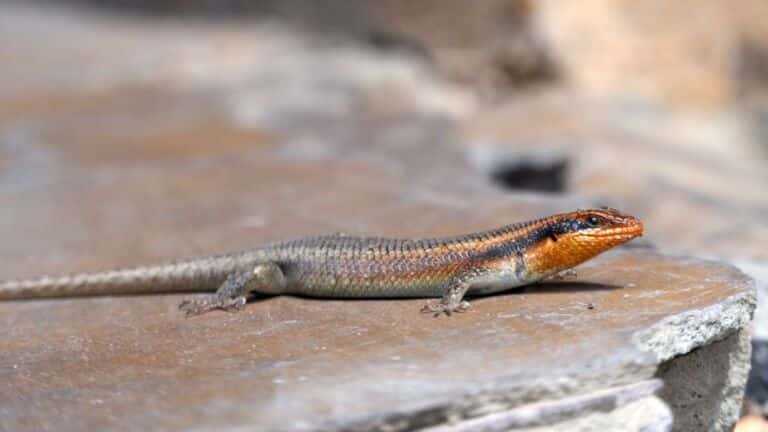
Although the gecko had existed in southern Thailand for decades, no one knew about it.
Years ago, people took photographs of it. Researchers saw it too.
But most believed the gecko was a member of a species they had already discovered. However, a closer look revealed differences from others of the same species.
On the back of the gecko was a group of four white, rounded dots. They resembled a scattering of little white stars in a blue sky.
Eventually, this unique pattern led to bigger news for the research team.
The research team finally viewed the gecko as representing a species that had never been named.
The unique pattern was the first clue
The unique pattern created by the large white spots was the first sign.
The large white spots were so noticeable that they separated the gecko from many of its relative species.
Each spot was big, round, and very light compared to the rest of the gecko’s body.
There were no black lines or black spots cutting through the pattern.
Instead, there were four groups of large white spots along the gecko’s back.
The species was named Gehyra astrosyzygia, from the Greek words for “stars” and “alignments.”
A gecko was being seen right under everyone’s noses
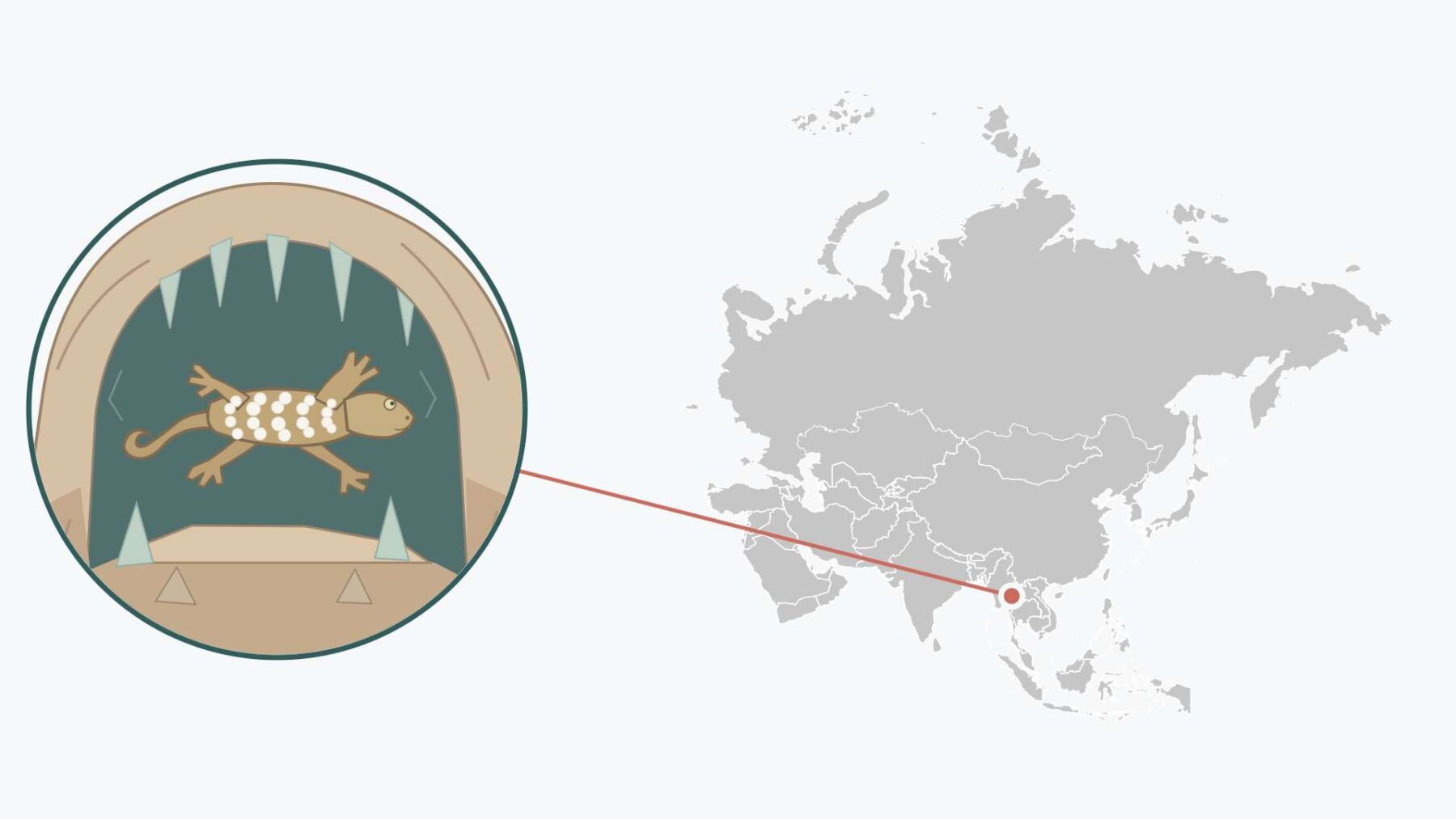
It was documented for the first time formally from Phra Khayang Cave in Southern Thailand.
Several aspects of the gecko were misunderstood at first. Photographs of the gecko had also appeared on citizen-science platforms.
Those observations helped demonstrate that the gecko had been encountered on multiple occasions before it was formally recognized.
Many of those submissions were incorrect in identifying the animal as Gehyra angusticaudata.
The white spots were only the beginning
The large white spots alone were not enough to confirm a new species.
All available data points were examined, including toe length, pore location, scale size and virtually every aspect of the tail, including its shape, according to the species description published in Zootaxa.
A unique combination of physical characteristics had never been observed in any other recognized Southeast Asian Gehyra.
The presence of basal webs on the toes further distinguished it from its closest relatives.
Maybe living in limestone influenced the gecko’s evolution
The newly identified species lives in limestone areas across the Thai Peninsula.
These types of areas function like small “islands” and isolate populations from one area to another.
Over time, genetically isolated populations develop through genetic drift because they receive no new genes from other populations.
Small variations in morphology will accumulate over generations and lead to significant variation between once-similar populations. Eventually, this variation leads to an entirely new species.
The gecko joins a growing number of limestone-associated species identified in the region.
They even studied the inside of the skull
The cranium was documented in extensive osteological detail.
Examining the skull allowed scientists to compare features that are often difficult to evaluate from external appearance alone.
Skull structure is frequently useful as an additional line of evidence when comparing very closely related animals.
In this instance, it helped differentiate the new species from its relatives.
The skeletal evidence supported the conclusion that the gecko was distinct from other recognized members of the genus.
This might be the tip of something bigger
Limestone habitats in the region continue to reveal unusual species. Not all of them would necessarily be completely unknown to science.
Some of them might already have been captured photographically. Some might already be preserved in collections.
Others are likely still undiscovered and are continuing to live hidden in caves and rocky outcrops.
Discoveries such as Gehyra astrosyzygia suggest that these landscapes may still contain animals waiting to be formally recognized.
Read the whole thing?
Get the week's signal, not the noise
Our sharpest reporting on energy, climate and nature — free, once a week.