

At first glance, small teeth may seem insignificant.
However, a few well-preserved fossils have caused us to reconsider life in the ancient Arctic.
While it is not surprising to find mammals in this area, some are related to ancestors that originated in Asia much earlier than anticipated.
This shows that the arctic was not an evolutionary dead-end and seems to have been a center for mixing and adaptation.
Today we only have small fragments of these animals, yet they reveal a surprising amount.
Different diets reduced competition for limited resources
The shape of the teeth is important, as it tells us what type of diet they had.
Small variations in the cusp patterns and tooth surface can help give us clues as to the different diets.
The recently discovered mammals are part of an extinct group known as multituberculates.
Some of them likely had mostly herbivorous diets whereas others probably ate some insects, which helps to reduce direct competition.
Several similar species can exist in the same environment due to the different diets.
Being able to eat a variety of things may have helped these mammals survive harsh conditions since food sources would not always be predictable in the ancient north.
It is quite remarkable how nature always carves out a niche when things get tough.
Life near the top of the ancient northern world
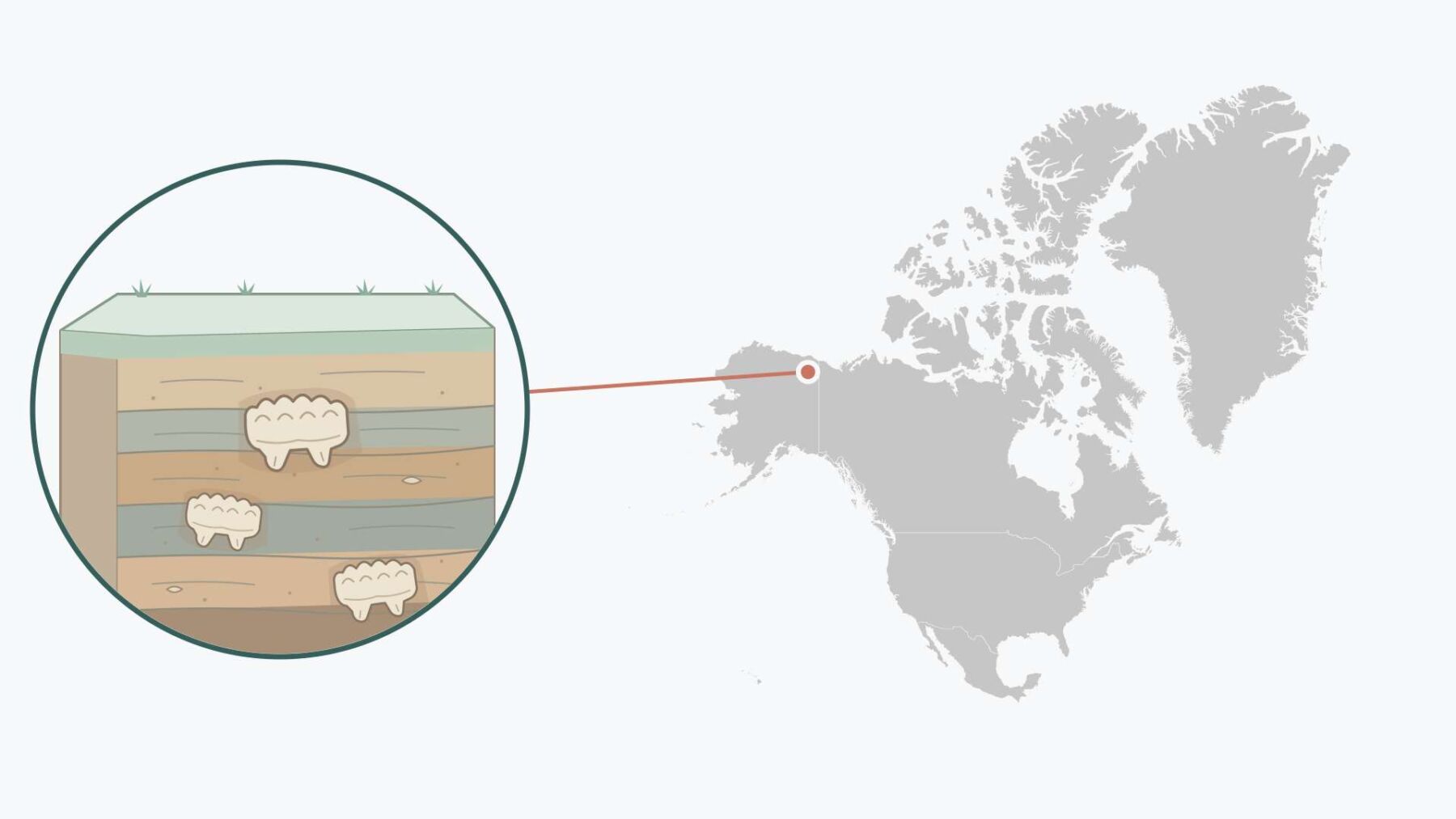
These fossils are contained within the Prince Creek Formation. The formation is located in the Arctic Circle.
Surprisingly, despite its high-latitude location, it had an incredible level of productivity.
Three new mammalian species have been identified from the fossils.
These species include Camurodon borealis, Qayaqgruk peregrinus, and Kaniqsiqcosmodon polaris. All three species thrived in a harsh environment.
Ancient fossil remains provide previously unknown associations
Each species represents one of the first examples of a unique group of polar mammals.
Fossil evidence shows that some ancestors originated in what is now modern-day Mongolia, as described by the University of Colorado Boulder.
East Asia and North America were connected much earlier than most people would think. This occurred approximately ninety-two (92) million years ago, according to findings published in the Proceedings of the National Academy of Sciences.
Looking closely at the data, the timeline shifts dramatically.
Surviving remains tell only part of the wider story
Many mammals from the past do not have much left.
Small bones are easily broken, and so we often do not have much of them.
The teeth have given us quite a lot of information in this case. As they are made from strong enamel, they can survive.
However, they are better for showing us what they ate and their relationships. We do not know anything about whole sections of these animals.
Piecing together the wider ecosystem is much harder.
Harsh conditions filtered which animals ultimately survived
The teeth show us there was transcontinental movement.
With long, dark winters and not much in the way of food, it wasn’t possible for every animal to survive.
The mammals that survived had traits which would be advantageous in this environment.
Multituberculates survived for over 100 million years and survived the mass extinction which caused non-avian dinosaurs to go extinct.
That suggests they were extremely hardy. They may have had advantages that meant they survived when others didn’t.
One larger evolutionary puzzle remains unresolved
More studies are being done to understand the impact of the Arctic region and its role in contributing to and maintaining biodiversity.
The teeth show that there was transcontinental movement as well as unique species living in the polar regions. We don’t know how many other lineages used this route.
Although every new fossil can change what we know, at present the best insight we have is from only a few teeth from the Arctic.
Read the whole thing?
Get the week's signal, not the noise
Our sharpest reporting on energy, climate and nature — free, once a week.


