Mars has been in the imagination of NASA for decades due to its similarity with Earth and the distance between the Sun and the Red Planet, enough to generate heat for possible life forms hiding on the planet. On the other hand, what is basic for life to propagate does not appear so far: water in a liquid state on Mars. Some discoveries argue that there are water pockets deep underground, but the radars attached to the rovers on Mars can only see a few meters. Meanwhile, on the surface, the mission is moving in another direction.
New mission for the Perseverance on Mars
One of the main reasons why NASA continues to study Mars is its proximity to Earth (400 million kilometers away). The trip to the planet takes about seven to 10 months with current propulsion methods, and so far, only rovers have been sent there to collect samples from the surface. The maximum time a robot has stayed activated is over 14 years, like the Opportunity.
One of the things that keeps NASA from sending astronauts and scientists to Mars is the trip back to Earth. The rovers sent there can’t return because the technology has not been developed yet to accommodate the trip, one of the reasons NASA and China have been fighting for the South Pole of the moon.
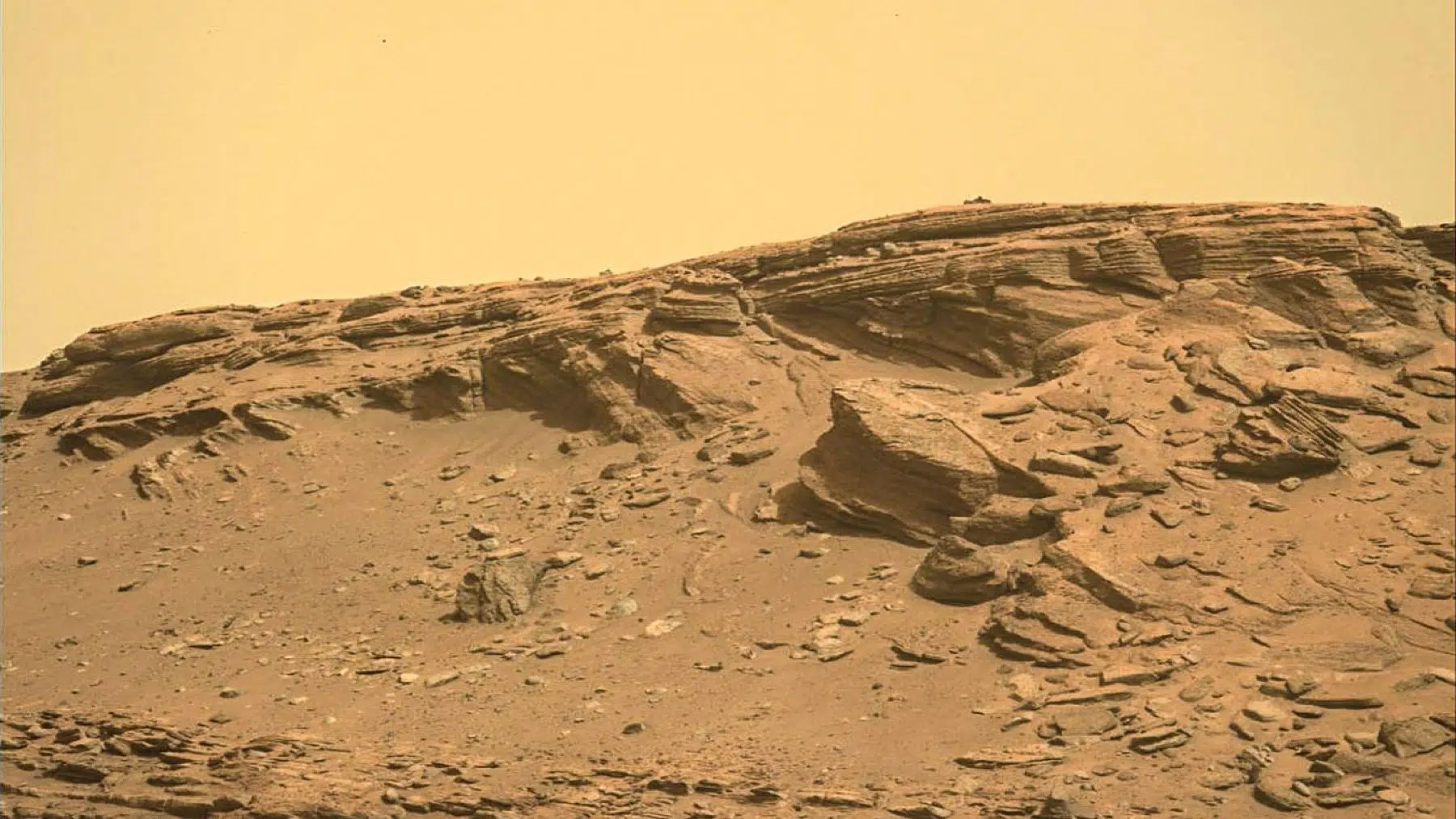
Only six rovers have been sent to the red planet so far, and the most recent one, Perseverance, just started to explore a new area called Krokodillen, where some of the oldest rocks on Mars are located. This region was set to be explored for a long time because it’s at the limit of the Jezero Crater, where the rover spent around 5 months studying the area, and now will move on to new horizons.
The location was named after a mountain ridge on the island of Prins Karls Forland, Norway, that resembles the Martian area yet to be explored. An early investigation revealed the presence of clays in the region, and there can only be clays if there’s liquid water to form them. If the rover finds more of it in other areas, that might hint that the planet had abundant liquid water in the past.
NASA’s rover is almost out of space
The rover arrived in Mars in 2021, and cannot come back to Earth, but it’s collecting samples and sealing them into its containers, so that scientists can, eventually, launch a mission to retrieve and actually get their hands on the rocks. Currently, 26 containers are filled – one remains unsealed – and there are only seven containers left in total. Which means from now on, NASA will have to choose wisely what they are adding to the inventory.
The one that remains unsealed because NASA is deciding whether it’s worth keeping a sample that contains spherules, a probable evidence of meteorite impact, or open the spot for whatever they find at Krokodillen that has bigger probability of containing traces of organic life.
It all comes down to finding water on Mars
The focal point for all Martian missions is to find water in a liquid state. In the universe, it’s common to find water in solid and gas states, but liquid water has not been found on Mars. Mars is the only planet that has a structure similar to Earth’s, and if they find water there, it would be a major step towards looking for any kind of organic life. The new ground Perseverance is covering might be rich in olivine and carbonate minerals. On Earth, carbonate is formed through a reaction between rock and dissolved carbon dioxide in liquid water.
Read the whole thing?
Get the week's signal, not the noise
Our sharpest reporting on energy, climate and nature — free, once a week.