Although solar energy has long been praised as a crucial tool in the battle against climate change, concerns over its effects on the environment are frequently raised. According to a groundbreaking Chinese study, installing solar panels over deserts not only produces clean electricity but also restores delicate ecosystems. This finding may change our understanding of massive solar farms.
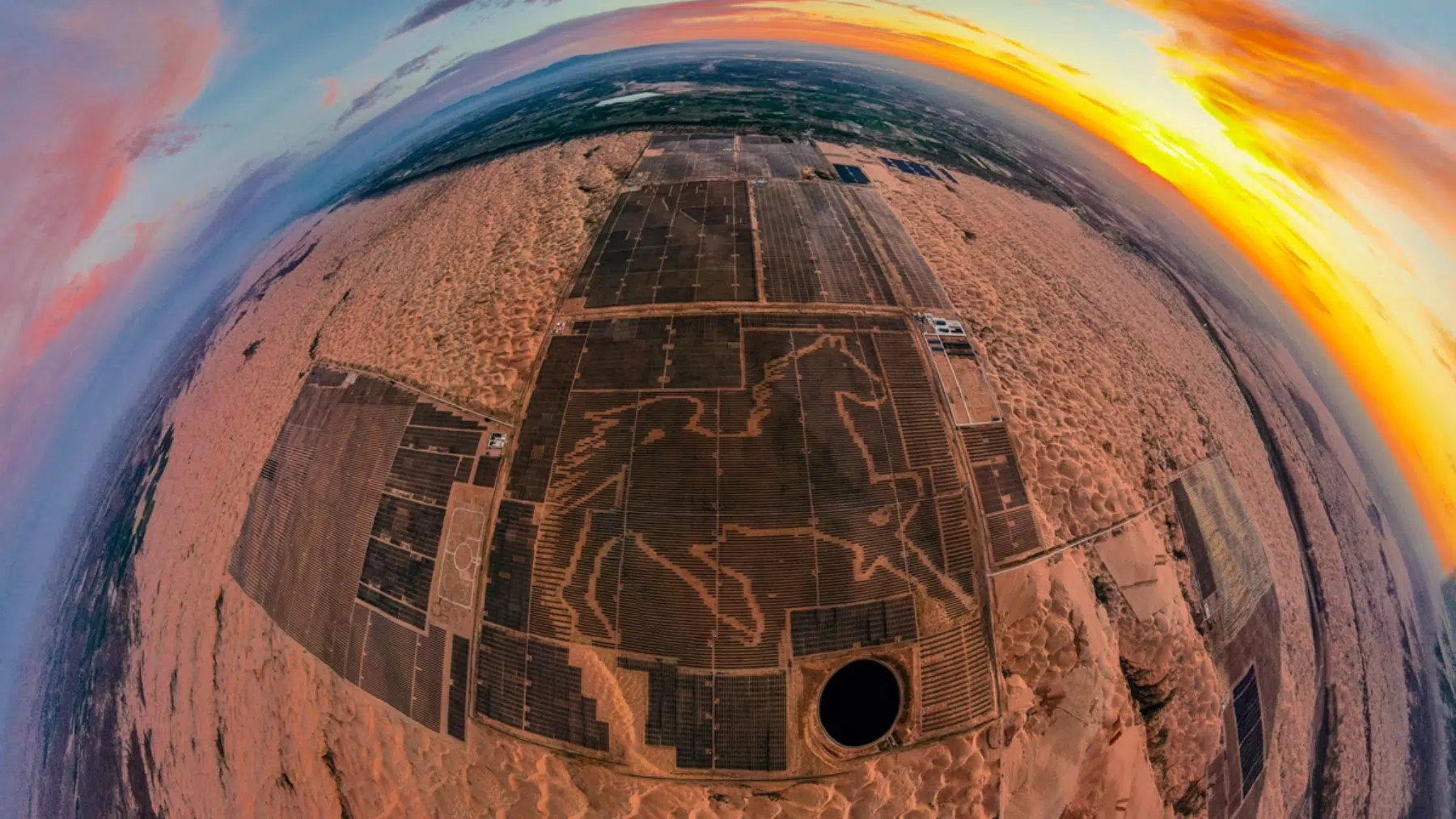
China has installed around 200,000 solar panels in a desert as part of a one-gigawatt renewable energy facility. The goal was to utilise enough sunlight to power the area and implement renewable energy resources as another way to save the environment from harm. Researchers set out to examine whether such a large-scale installation would prove ecologically beneficial or damaging.
The Project’s overarching goal: Creating power in deserts
China’s solar desert project planned to collect vast natural energy from the sun to generate renewable energy. The idea of covering the desert was perceived as victorious and they felt like they could utilise this dryland for something even better and more efficient. Millions of homes and businesses could have been powered by the substantial amounts of electricity that these solar arrays could provide.
Having said that, although the engineering and innovation part of it became successful and accomplished, some observers worried that a desert is a very fragile type of natural land with tender ecosystems, and that extensive human involvement, building, digging, and extractions to install solar panels could harm the natural balance of the desert.
The environmental repercussions: How solar panels changed the desert
The effect on the ecosystem of the desert was one of the most important questions researchers sought to answer. Solar panels change surface temperatures by absorbing sunlight, which alters the local microclimate. Scientists wanted to understand whether this would upset vegetation and natural species — or whether it might actually benefit them.
China’s research shows solar panel installations improve the soil quality of the desert
According to an article by Foster (2025) in Glass Almanac, an extensive investigation of the Gonghe Photovoltaic Park in Qinghai Province, a gigantic one-gigawatt solar facility in the Talatan Desert, was carried out by a group of experts from Xi’an University of Technology. Their research, which was published in Scientific Reports, casts doubt on the idea that large-scale solar farms harm the environment.
Rather, it was discovered that these installations enhanced vegetation growth, improved soil quality, and produced a more hospitable microclimate. The researchers learnt a lot about how solar panels might improve dry environments by looking at 57 environmental factors, such as temperature, humidity, biodiversity, and soil composition.
Areas beneath the solar panels scored a 0.4393 ecological health rating, compared to 0.2858 and 0.2802 for transitional zones and the surrounding desert, respectively. The panels provide shade that lowers soil temperature and evaporation rates, increasing humidity and promoting vegetation growth — a process that also supports microorganisms and enriches the desert’s ecosystem.
Lessons Learnt: Juggling the preservation of ecosystems with renewable energy
China’s desert solar panel project has taught us that building such renewable energy inventions should not only be about how we will benefit from it or how much power will be generated without considering that sustainability goes both ways. We should cater to the environment and ensure that by implementing renewable energy, we are not harming the environment at the same time.
Although the results are encouraging, the researchers advise against drawing hasty judgements. In order to fully comprehend the complex interactions between solar farms and nearby ecosystems, they stress the necessity of doing long-term research. Large-scale solar installations will optimise advantages while minimising potential drawbacks if these effects are tracked over time.
Selecting a spot carefully is also essential. Determining the best sites for these installations will ensure that solar energy development stays in line with environmental objectives by balancing energy production with sustainable environmental practices. This has shown us that technology and nature need to work together to avoid straining the other.
Read the whole thing?
Get the week's signal, not the noise
Our sharpest reporting on energy, climate and nature — free, once a week.