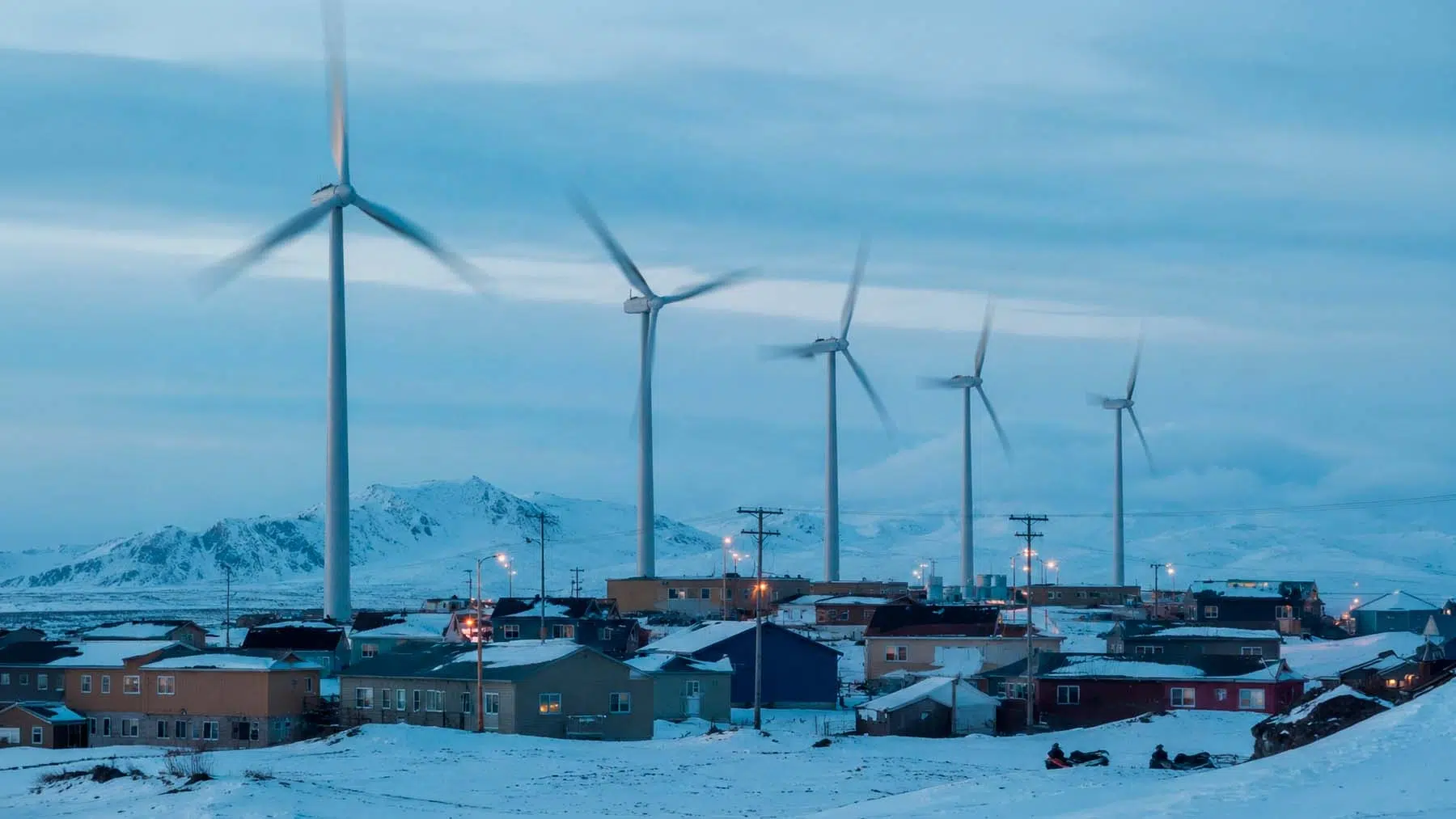
Wind turbines are usually built to solve an energy problem. But in one remote Alaska village, they created a completely different challenge.
Electricity cannot simply be stored until it is needed unless it passes through a storage system or gets distributed through a larger electrical network.
Kongiganak Village faced a different situation because it was not connected to a wider power grid.
Instead of allowing that excess electricity to go unused, the community searched for a way to make every kilowatt count.
But first, why did producing more clean electricity create another challenge?
Why did producing too much electricity become a problem?
Kongiganak Village does not have access to the same larger electrical grid networks as New York City.
For many years, the primary source of electricity for the village came from diesel generators. Whenever the wind was strong enough for the turbines to operate at full capacity, the need for diesel fuel decreased.
Occasionally, however, they produced more electricity than the homes, schools, and community buildings could consume.
If Kongiganak Village were connected to a larger electrical grid network, the excess electricity could be transmitted elsewhere. Because the village operates independently, that option was unavailable.
Engineers managing the project did not want to shut down the turbines and waste clean energy.
At the same time, keeping the turbines operating meant finding another use for the surplus electricity.
The challenge was no longer producing electricity. It was finding somewhere for that electricity to go.
Engineers were unwilling to let that excess electricity simply go to waste. The hybrid energy system allowed Kongiganak Village to decrease its reliance upon diesel fuel and maximize its usage of renewable resources.
Although the hybrid energy system improved their situation, one question remained.
What happened when the wind generated more electricity than the village needed?
The answer wasn’t another battery
The village had solved one problem by producing renewable electricity. Now it faced another.
According to the Department of Energy, Kongiganak Village developed a hybrid energy system combining wind power with traditional diesel generation.
Because of Alaska’s harsh environment, every upgrade must withstand changing conditions.
It must also perform reliably year-round.
Engineers focused on creating a solution that could work within the village itself and withstand Alaska’s difficult conditions. Rather than looking elsewhere, they focused on resources already available within the community.
The unexpected place where the extra energy went
Kongiganak Village found a way to make use of surplus wind energy without building a large battery storage system.
The University of Alaska Fairbanks explains that the village solved the problem by converting surplus electricity into heat during Alaska’s long, cold winters.
Unlike many communities that rely on large battery banks, Kongiganak Village used specially designed electric thermal storage heaters inside each home. These units provided a practical solution without requiring the space and investment needed for large storage systems.
When turbines produced excess electricity, the electric thermal storage heaters converted it into usable heat.
How did they store the extra energy inside homes?
Inside each unit was a dense ceramic brick designed to capture and store that heat for hours. When residents required heat for their homes, the previously stored heat would slowly release into their living spaces.
Using excess energy to warm homes during Alaska’s winters also reduced Kongiganak Village’s reliance on diesel fuel. Therefore, they were maximizing the benefits from every strong gust of wind.
Kongiganak Village did not build a new storage system but repurposed household heaters as part of its renewable energy system.
The wind that powers their village continues to contribute value beyond mere electricity production.
The village showed that renewable energy does not always need a larger grid or bigger batteries to create value.
Sometimes, the solution can already exist inside the places that need it most.
Read the whole thing?
Get the week's signal, not the noise
Our sharpest reporting on energy, climate and nature — free, once a week.