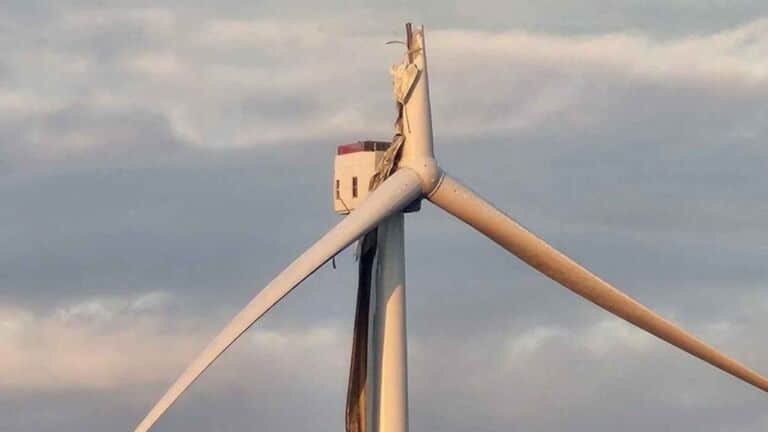
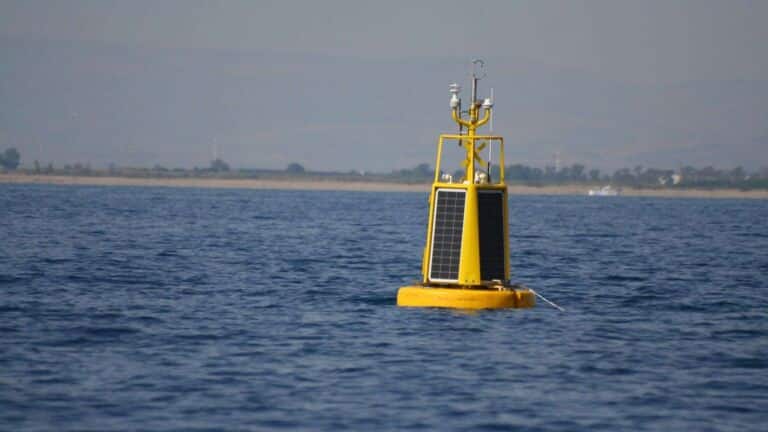
America’s first offshore wind project was hardly welcomed with open arms.
Skeptics’ greatest fear was that local fisheries and ecosystems would be destroyed.
A groundbreaking seven-year study was carried out to find out if this was true. Nearly a million marine animals were tracked, and the final data shocked everyone.
The turbines didn’t end up ruining the ecosystem. It was the opposite.
How did a massive green energy project accidentally become a thriving underwater paradise?
A high-stakes experiment: Why America’s first offshore wind farm caused waves
The stakes couldn’t have been higher when the Block Island Wind Farm was built in 2016.
As the first offshore wind farm in United States waters, it was a major gamble.
In the early days of turbine deployment, no one knew what the long-term effects on marine life would be.
It was an exciting time for the clean energy industry, but an anxious time for fishermen and environmentalists.
What if the heavy construction noise drove all the sea life away permanently? How would electromagnetic fields from cables disrupt the seabed? What effect would the movement of the blades have?
A massive monitoring effort was launched in response. The area was tracked from 2012 (four years pre-construction) to 2019 (three years post-construction).
To make sure the data was rock-solid, researchers compared the wind farm site to separate control areas.
What was the reality under the waves?
7 years of study delivered a surprising verdict
A definitive answer came to light after seven years of intense data recording. To everyone’s amazement, the BIWF had no long-term negative effects on marine populations.
These surprising results weren’t based on lucky guesswork.
Over the course of the monthly trawl surveys, more than 750,000 fish and invertebrates were analyzed. The number of species looked at was an incredible 71.
The picture painted by the results was rather reassuring. Consistently each month, nothing worrying came up in the data.
The levels of overall abundance, total biomass, and species composition of bottom-dwelling fish remained steady.

The anxiety over a collapsed ecosystem simply never materialized, proving that offshore wind farms and marine life could coexist—and even thrive.
The study didn’t just reveal that the numbers remained stable. Another unexpected development around the farm emerged.
Wind turbines’ hidden nature: Accidental reefs and population explosions
The biggest surprise in the research was how the turbine pylons changed the environment for the better, as reported by Virginians for Offshore Wind.
This goes beyond the aim of simply “do no harm.”
The man-made steel structures were transformed into thriving artificial reefs, becoming magnets for marine life.
The development of the reef is a chain reaction that begins with a solid surface. Blue mussels and macroalgae are the ones to colonize by attaching to the submerged sections of infrastructure.
The Oceanography Society says this burst of growth attracts other animals higher up the food chain, and so it goes, right up to apex predators like seals.
For the Block Island Wind Farm, it was black sea bass that totally changed their ways.
They began clustering around the foundations to feed instead of roaming far wider areas like they used to.
The proof was in their stomachs. Researchers scrutinizing the stomach contents of bass that were caught found evidence of the mussel clusters from the turbines.
It was clear that they were gorging on the wind farm buffets, no longer expending energy looking for sparser meals further apart.
What we need to take away from the BIWF is profound. Marine habitats don’t merely have to coexist with wind farms. They can actually reinforce one another.
Read the whole thing?
Get the week's signal, not the noise
Our sharpest reporting on energy, climate and nature — free, once a week.