

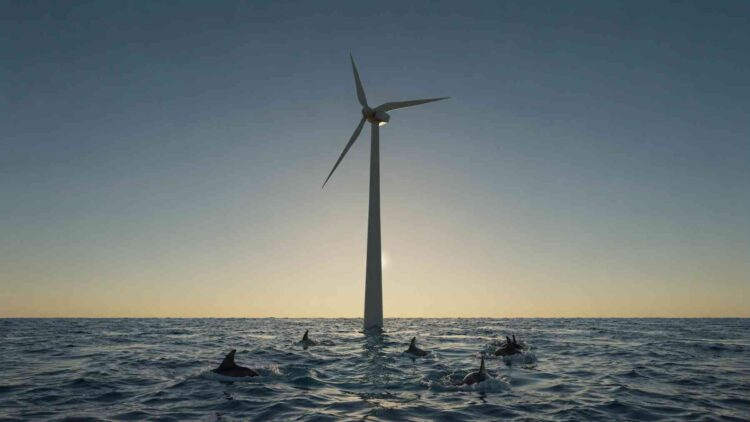
In the depths of the Baltic Sea, an acoustic revolution is playing out.
Wind turbines towering over the horizon are going about the business of delivering clean energy to millions. The loud construction phase has passed.
It looks like a flawless triumph of green energy, with nature and technology coexisting in harmony.
But far beneath the frigid waves, a chilling mystery is surfacing. Why has the world’s most successful green energy project suddenly gone eerily quiet?
How a green energy triumph drove out the locals
The Baltic Sea is not a friendly place to be. The waters are freezing and choppy, and the weather is fierce. Yet this is exactly where wind turbines want to be.
Long before any of them arrived, this stretch of water belonged to the harbor porpoises. Shy and rarely seen, they had crossed it for generations, hunting and calling softly to one another in a private language of clicks.
So developers raised a massive wind farm here, 72 turbines spread across nearly ten square miles of open water, and it was hailed as a model of clean power.
The construction phase created the usual havoc. The original residents of the area, the elusive harbor porpoises, were driven away by the relentless hammering, and at the time that was waved off as a negligible side effect. Almost no one stopped to ask what months of underwater pounding might do to an animal that lives entirely by sound.
It is not clear what they used the area for, whether foraging, breeding, or transit, but once the noise stopped, some of the porpoises returned.
The clean energy started flowing as planned in 2003, and the future looked bright. A green power triumph for all, with minimal disruption, right?
A presence, but a silence
Researchers knew a population this sensitive needed watching over the long run. They anchored specialized acoustic recorders to the seafloor to capture the porpoises’ familiar echolocation clicks.
But devastatingly, across the whole site and for miles around, the recordings came back silent, reported the Porpoise Conservation Society.
And it did not pass. The silence stretched on for ten long years. Year after year, the recorders listened, and year after year they caught nothing but the low groan of the turbines and the wash of the sea. What had happened to all the porpoises?
Researchers wondered if dwindling food was to blame. But it turned out the reefs grown around the turbine bases were thriving.
Slowly the porpoises’ presence crept back, from 11 to 29 percent of former levels. But something vital was still missing, according to the Pacific Northwest National Laboratory.
The unseen turmoil beneath the waves
Scientists were baffled by a riddle in the data. The porpoises had returned to the area, yet they made almost no sound at all. It was as if the animals had agreed, all at once, to stop speaking. Researchers checked the equipment, then checked it again. The silence was real.
The food was not the problem. All the other life on the reefs was thriving. So only one explanation was left, and it was a worrying one.
The harbor porpoises had chosen complete silence rather than compete with the constant, low frequency drone of the turbines. To be heard at all, a porpoise would have had to call into a wall of noise that never stopped, so it simply stopped calling.
When sound is sight
For a harbor porpoise, sound is sight. It uses echolocation, honed over thousands of years of evolution, to find its way through the world. Its clicks bounce off the seabed, off a fish, off a passing rock, and paint a picture of everything around it in the dark.
By falling silent, the porpoises of this wind farm have effectively been left blind, drifting through their own habitat unable to read it. Imagine knowing every corner of your home, then waking one morning unable to see a single one. That is the quiet price written into this patch of clean water.
This exposes one of the hidden costs of the offshore wind boom. And it is not only porpoises. Whales, too, are being harmed by underwater noise.
This is not a case of clean energy being bad for the planet. But there are real consequences that take decades to become clear. In our race to save the world with engineering marvels, we have to learn to listen more closely to the oceans.
Our climate solutions cannot come at the cost of harming the very creatures we are trying to protect. The porpoises cannot tell us what they have lost, and so their long silence has had to say it for them. As we build tomorrow, how do we balance saving the planet and the fragile lives already living on it?