
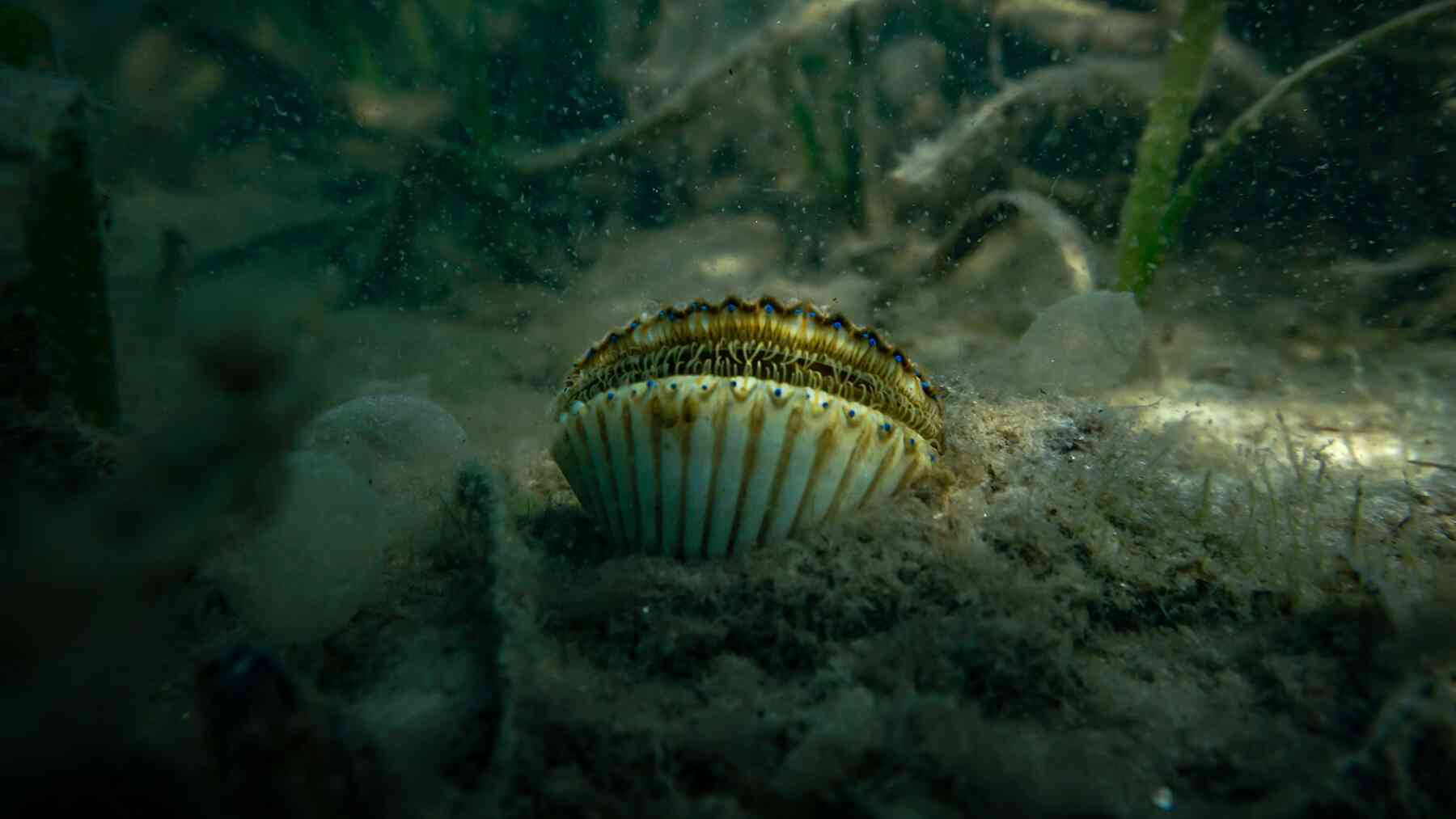
Off the Gulf Coast of Florida, a vast underwater prairie stretches across the seafloor — seagrass meadows that have quietly sheltered sea turtles, manatees, and countless fish for thousands of years. While nearly 30% of the world’s seagrass has vanished since 1879, something along this stretch of coastline appears to have held.
How scientists could possibly know that — and what it might mean for one of the ocean’s most vital and threatened ecosystems — is a harder question than it sounds.
A world losing its underwater meadows
Seagrass meadows rank among the ocean’s most productive ecosystems, and also among its most imperiled. Nearly 30% of global seagrass coverage has disappeared since 1879, with losses accelerating to an estimated 7% per year between 1990 and 2009. These meadows cover only 0.2% of the ocean floor, yet they account for roughly 50% of all marine carbon burial.
The stakes are especially high in Florida. More than 80% of fish caught by commercial and recreational anglers in the state spend some part of their lives in seagrass beds, and the meadows reduce nearshore wave energy by up to 40%. Losing them is not just an ecological problem — it is a practical one, felt in fishing harvests and eroding shorelines alike.
The problem with measuring ecosystem health
Before scientists can protect an ecosystem, they need to know what a healthy version of it looks like. Most systematic biological data postdates the Industrial Revolution, leaving researchers with at most 50 to 100 years of reliable observations to work from.
Humans have been altering ecosystems far longer than they have been recording them. What looks like a baseline today may already reflect centuries of degradation — a distorted starting point sometimes called the “shifting baseline” problem, which makes it genuinely difficult to set meaningful restoration targets. Conservation paleobiology emerged to address exactly this gap, reconstructing ecosystems before large-scale human disturbance began. The particular challenge with seagrass is that it leaves almost nothing behind. Soft tissue decomposes quickly and does not fossilize well.
Shells as silent witnesses
Seagrass meadows shelter a dense community of mollusks — oysters, clams, snails, scallops — whose shells accumulate on the seafloor over centuries and break down extremely slowly. Previous research by the same team established that mollusk diversity is tightly coupled to seagrass ecosystem health. Where mollusks thrive, the broader community likely does too.
Researchers sampled 21 sites across six estuaries along Florida’s Nature Coast, from the Steinhatchee River in the north to the Weeki Wachee in the south. Scuba divers used PVC pipe hoses to suction up seafloor sediment, which was then sieved and sorted at the surface. For every live bivalve or snail recovered, thousands of dead specimens turned up — ancient material accumulated across centuries. Identifying and counting all of it took the team several years.
What the fossils revealed
Mollusk diversity along the Nature Coast has not changed significantly over several millennia — including the most recent era, when human activity has left its mark on even remote environments. The seagrass ecosystem, by extension, appears to have remained largely intact.
That finding makes Florida’s Nature Coast the largest known seagrass refugium in the Gulf of Mexico. The watersheds feeding this coastline have relatively little development, which keeps nutrient runoff — the primary driver of algal blooms that suffocate seagrass — low. The area was formally designated an aquatic preserve in 2020, adding legal protection to what nature had already managed to hold together.
A benchmark — and a warning
The intact Nature Coast beds now offer something rare: a reliable ecological baseline. Because the fossil record confirms stability over millennia, scientists can use these meadows as a reference point for restoring degraded seagrass elsewhere in Florida and beyond.
The contrast with nearby areas is striking. Just 50 miles to the south, Tampa Bay lost 46% of its seagrass between 1950 and 1980 as the city’s population more than doubled. Recovery efforts have produced partial results, though recent assessments show the gains remain uneven.
Climate change introduces threats that land-use protections alone cannot address. Range-shifting fish species moving northward may eat seagrass directly or consume the grazers that keep seagrass leaves clean. The Nature Coast’s millennia of resilience offer genuine reason for optimism — but whether that resilience holds will depend on how well scientists, managers, and policymakers use this rare refugium before the pressures closing in from south and sea reach its edge.
Read the whole thing?
Get the week's signal, not the noise
Our sharpest reporting on energy, climate and nature — free, once a week.


