
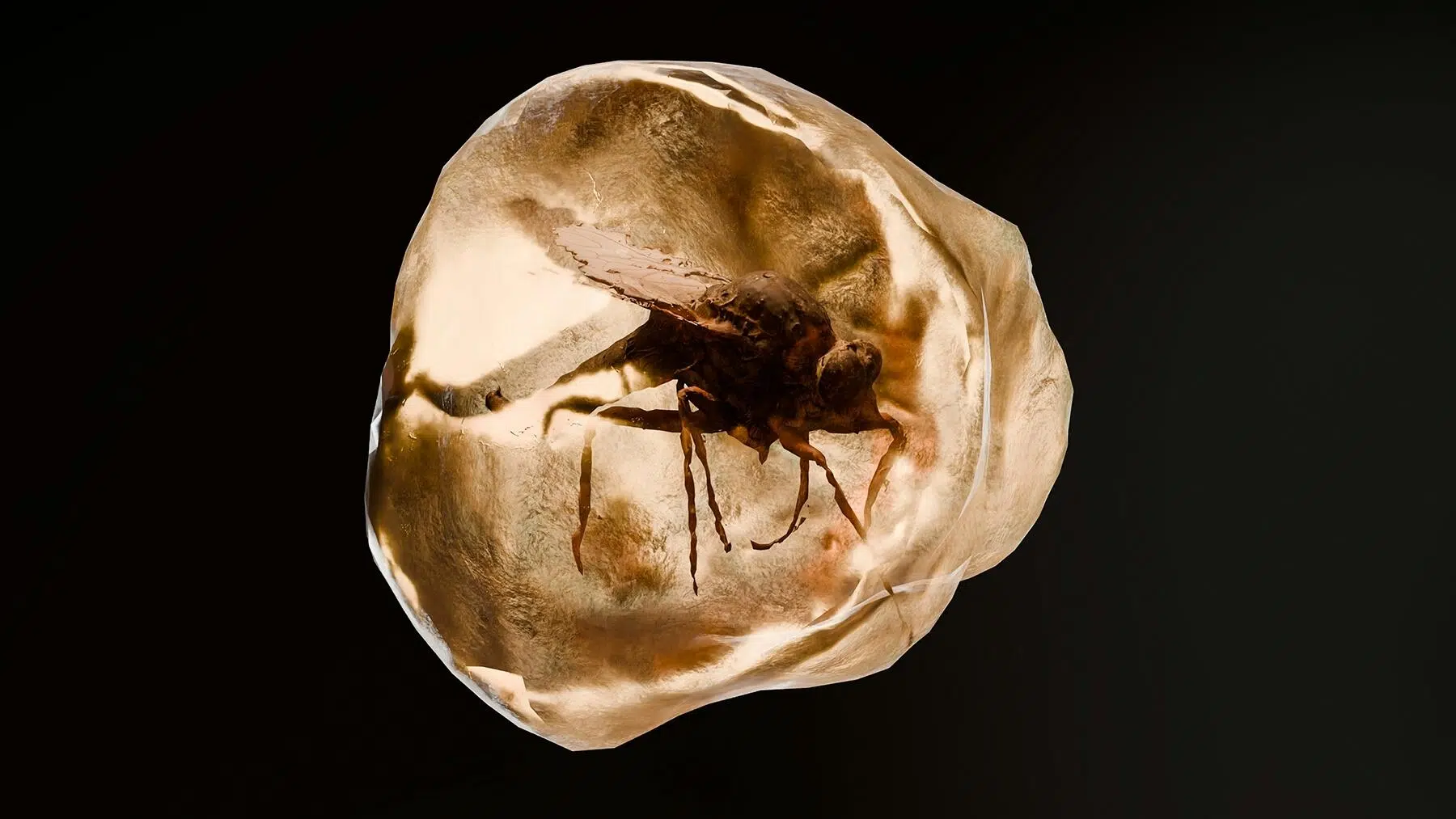
Fossils are often discovered as fragments: a bone, a tooth, a faint imprint in stone. But every so often, nature preserves something so complete that it feels almost untouched by time. That is what researchers have just uncovered in northern Spain — a tiny living being, sealed away for over 100 million years, offering a rare glimpse into life long before humans, modern animals, or today’s forests existed.
Why fossil discoveries still matter today
While the ancient Greeks certainly discovered their fair share of fossilised bones and skeletons, they usually associated them with mythical creatures and didn’t have a formal scientific way to study them. Only in the late 18th century did paleontology begin to emerge as a scientific field, with the understanding of stratigraphy (the study of rock layers) and the concept of extinction.
Moving on to the 19th century, paleontology became a respected profession that was taught in universities, and experts in the field were born. When paleontology was still in its infancy, there were nowhere near as many advanced methods for collecting and dating fossils, whereas today, researchers can employ tools such as CT scanning, isotopic analysis, and computer modeling, among others.
Currently, fossils are still being found all over the world, with recent findings in areas such as Peru, Italy, the UK, Texas, and now Cantabria in Spain. Researchers just discovered something older than the Amazon rainforest itself— and the way it was preserved has really gotten people talking.
A 100-million-year-old creature was found preserved in this
A team of researchers working in the El Soplao cave in Cantabria, Spain, has found a new fossilised species that no one has ever seen before. This area is famous for its paleontological finds, especially due to the amber that so readily preserves these fossils. It is within this type of resin that the new wasp species, the Cretevania orgonomecorum, was recently found.
The fragment of amber that this wasp was found in dates back about 105 million years, placing the species in the Cretaceous period and offering new insights about the diversity of insects at that time. The species actually led to a revision of the classification of ‘Cretevania‘, the genus of extinct genus of wasps in the family Evaniidae.
According to an article by Mada Martínez:
“The discovery brings attention back to the Cantabrian subsoil, where, among many other surprising things, there is the Soplao amber deposit, announced in 2008 and with more than 1,500 documented fossil inclusions and thirty species described so far.”
The scientists who found this fossil have published their findings in the scientific journal Palaeoentomology, and explain:
“This group could act as a ‘guide fossil’ for dating Cretaceous deposits, given its wide distribution and diversity.”
How does this new species compare to others?
The Cretevania orgonomecorum is characterised by pretty unique features, which is what makes the discovery so noteworthy— it is quite a bit larger in size and has specific anatomical features unique to its species, including the antennae structure and pattern of the wing veins.
While other researchers are looking to space, the co-author of the study, Enrique Peñalver, who is a researcher at the Geological and Mining Institute of Spain (IGME-CSIC), expresses how important the finding is here on earth, showing:
“The extraordinary paleontological richness of Spanish amber.”
This finding is historic not just due to the discovery of an entire new species, but due to the fact that now, there are new diagnostic characteristics by which to classify further findings. Furthermore, the rich fossil quality of the Cantabrian region can once again be appreciated, on par with the Peruvian desert landscape that has also yielded some incredible fossil discoveries.
Read the whole thing?
Get the week's signal, not the noise
Our sharpest reporting on energy, climate and nature — free, once a week.


