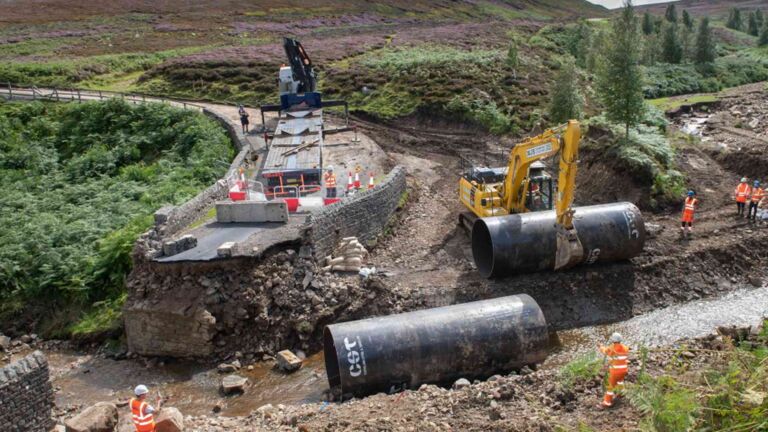
Workers preparing routes for Australia’s massive Snowy Hydro 2.0 project expected rock, soil, and engineering surveys.
Instead, archaeologists started pulling stone objects from the Alpine ground one after another.
The numbers kept climbing. Campsites appeared. Ancient fireplaces surfaced beneath layers of sediment.
Then the dates arrived. Some traces of human activity stretched back almost 20,000 years into the Ice Age.
How has the discovery forced researchers to rethink what they thought they knew about the region?
Why Snowy Hydro 2.0 exposed a hidden Ice Age world
Snowy Hydro 2.0 construction inside Kosciuszko National Park triggered mandatory heritage surveys before heavy machinery arrived.
Digging uncovered a dense, multi-layered archaeological record. Tool fragments sat just inches below alpine grass and deep within ancient soil layers.
Excavators found stone flakes mixed with charcoal from ancient hearths.
These tool clusters sat on sheltered ridges, out of the piercing wind.
This proved humans returned to these exact spots for millennia.
Carbon-14 dating pushed this human occupation back 20,000 years to the peak of the last Ice Age.
Back then, glaciers capped nearby peaks. Freezing winds cut across barren, snow-covered ridges year-round.
Prevailing archaeological theory claimed humans completely avoided these brutal alpine zones during colder periods.
This evidence shatters that theory, proving humans conquered Australia’s harshest environments far earlier than anyone believed.
Thousands of stone objects rewrite Alpine history
Crews expanded their search zones as the artifact count ballooned to 38,000 items.
The cache included sharp scrapers, heavy grinding stones, and debris from tool manufacturing.
Microscopic testing showed some stone originated hundreds of miles away. This proves extensive trade and travel networks across southeastern Australia.
Highly nutritious Bogong moths swarmed the peaks each summer, acting as a predictable superfood that triggered seasonal migrations into the high country.
The artifacts prove people did not just pass through; they settled.
They were stopping, cooking, repairing equipment, and staying long enough to leave dense archaeological layers behind.
Excavated hearths contained thick charcoal layers from repeated, long-term fires.
That hinted at long travel routes through southeastern Australia.
Southern Ngarigo traditional owners worked directly alongside scientists at the Snowy Hydro 2.0 site. Their oral histories of ancient mountain travel aligned perfectly with the physical evidence emerging from the mud.
Whose settlement was hidden beneath the Snowy Mountains project site
The settlement belonged to Aboriginal communities living and traveling through the Australian Alps thousands of years ago.
That became the major revelation behind the excavation.
For decades, many archaeologists assumed Ice Age conditions made long-term alpine occupation unlikely.
The Snowy Mountains discoveries challenged that directly.
People were already adapting to the region during one of the coldest periods of recent human history.
The 38,000 artifacts explained part of how they managed it.
Many were everyday tools.
Some cut meat or hides.
Others shaped wood or processed plant material.
Large numbers of stone flakes came from tool repairs carried out beside campfires.
Researchers also uncovered evidence showing people repeatedly returned to the same areas over long periods. The mountains were not avoided.
They were part of a lived landscape.
Why the discovery upends Australia’s archaeological timeline
These findings fundamentally shift our understanding of ancient movement through Australia’s alpine regions.
Human communities conquered harsh mountain environments thousands of years earlier than experts believed possible.
This radically redraws the broader timeline of Aboriginal adaptation and resilience across the continent.
What began as a routine green-energy engineering survey exposed a dense, prehistoric record of survival hidden beneath the Snowy Mountains.
Human life that was hidden for nearly 20,000 years.
It proves that these freezing peaks were never a barrier to humans, but a cherished, lived landscape.
What other ancient secrets are still waiting to be uncovered beneath the soil we walk on today?
Read the whole thing?
Get the week's signal, not the noise
Our sharpest reporting on energy, climate and nature — free, once a week.