
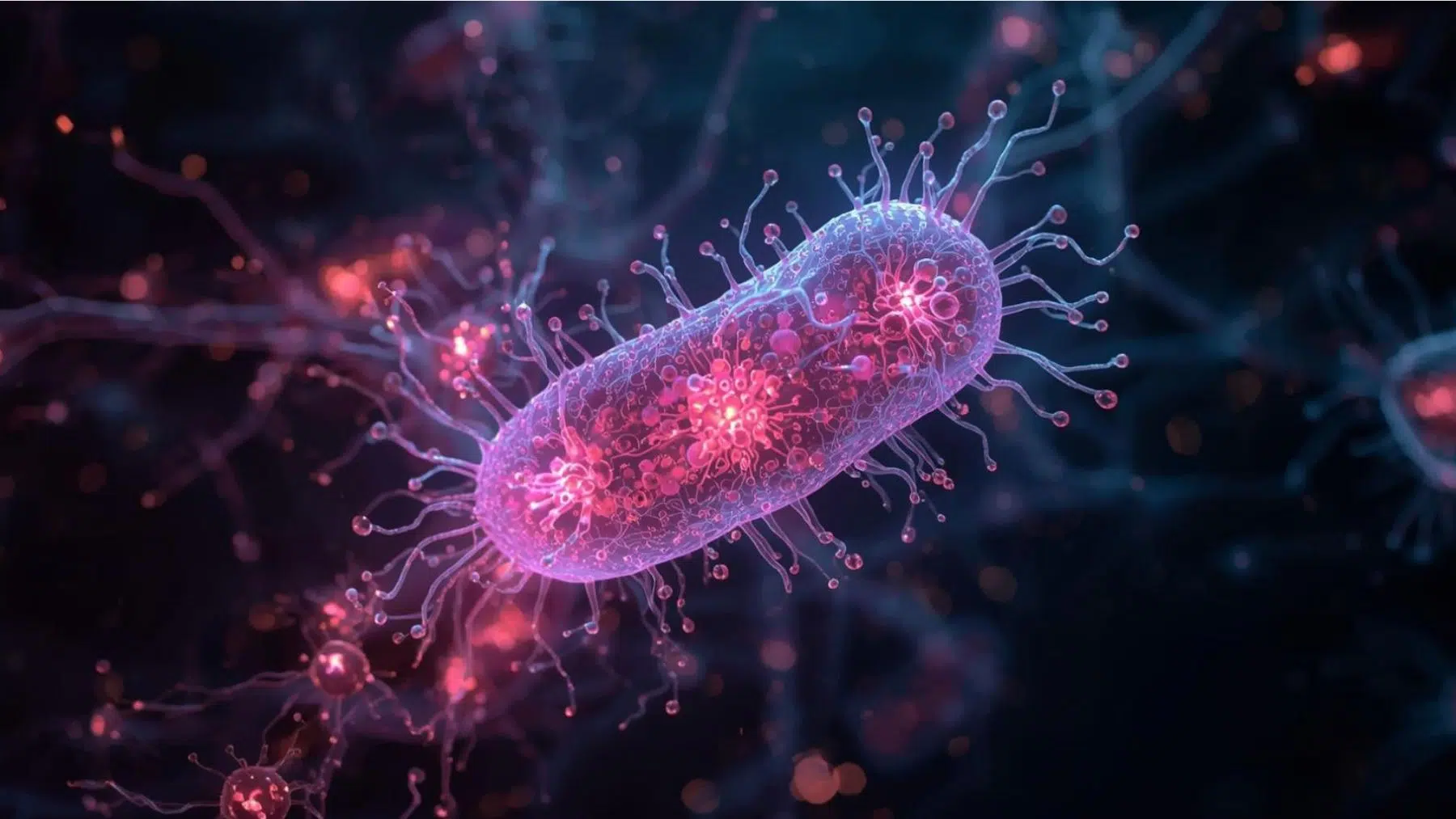
Bacteria are usually seen as boring. Tiny blobs. Always blamed for infections. Not exactly the stars of science. But here comes the surprise: bacteria are secretly chatting with each other. Not with words or sounds, but with electricity. And yes, it looks a bit like how our brain works — just much, much smaller.
Small bacteria big surprises
Bacteria are some of the smallest living things on Earth. They have no brain, no nerves, and no thoughts. For a long time, scientists believed bacteria simply reacted to their environment like machines. Something changes, they respond. End of story. That idea turned out to be wrong.
When bacteria live together in large groups, they behave differently. Whole colonies suddenly slow down or speed up at the same time. Some stop growing, others continue. This strange coordination made scientists curious. How can millions of tiny cells act together without a leader or control center? The answer was hiding in plain sight.
Electricity where no one expected it
In the human brain, cells communicate using electrical signals. These signals travel quickly and help us think, move, and react. No one expected to find anything similar in bacteria. But scientists did.
Using special sensors, researchers measured electrical activity inside bacterial colonies. They saw waves of electricity moving from one cell to another. These signals weren’t random. They followed patterns and reacted to changes like food shortages. This behavior was described in a peer-reviewed scientific study published in Nature, which revealed how bacterial cells send electrical signals across their communities.
The most surprising part is how familiar it looks. The signals move and spread in ways that strongly resemble basic brain activity — just without thoughts, feelings, or awareness. It’s biology, not magic.
The truth behind the “thinking bacteria”
At this point, it’s tempting to say bacteria can think. But that’s not really true. This is the big twist of the story.
What’s actually happening is much simpler. The electrical signals are mostly about sharing information on food. When nutrients become scarce, some bacteria send electrical signals through the colony. These signals tell others to slow down or change how they use energy.
This helps the entire group survive longer. Instead of fighting each other for food, the bacteria cooperate. Millions of simple cells act together like one organized system. It’s teamwork, not thinking.
Why this discovery matters to all of us
This discovery changes how scientists see life itself. First, it shows that brain-like communication doesn’t need a brain. Electrical signaling may be one of the oldest tools in biology. Brains may have copied bacteria, not the other way around.
Second, this matters for medicine. Many serious infections involve bacterial communities that are hard to kill with antibiotics. If doctors learn how to interrupt bacterial electrical signals, new treatments could become possible.
Finally, it reminds us of something important. Intelligence and complex behavior don’t always look the way we expect. Sometimes, even the smallest and simplest organisms can surprise us. Bacteria may be tiny, but they are not dumb.
Read the whole thing?
Get the week's signal, not the noise
Our sharpest reporting on energy, climate and nature — free, once a week.


