The largest lake in California was accidental.
The Salton Sea was once a playground for Hollywood stars. But now, it’s a toxic wasteland that’s been steadily drying up for decades.
The landscape may look apocalyptic, but there’s a subterranean reservoir underneath that holds a multibillion-dollar fortune in minerals.
There’s a massive rush on to drill for lithium in the deep brine. But it’s not just battery power that the tech giants are after.
What else is lying in the brine?
How an accident created California’s biggest lake
In 1905, a Colorado River irrigation canal breached. Millions of gallons of water flooded a desert sink 228 feet below sea level.
That’s how California’s largest lake, the Salton Sea, came to be.
In the 1950s, the area was a booming resort town with celebs like Frank Sinatra and the Beach Boys hanging out in the water.
Those days are long over.
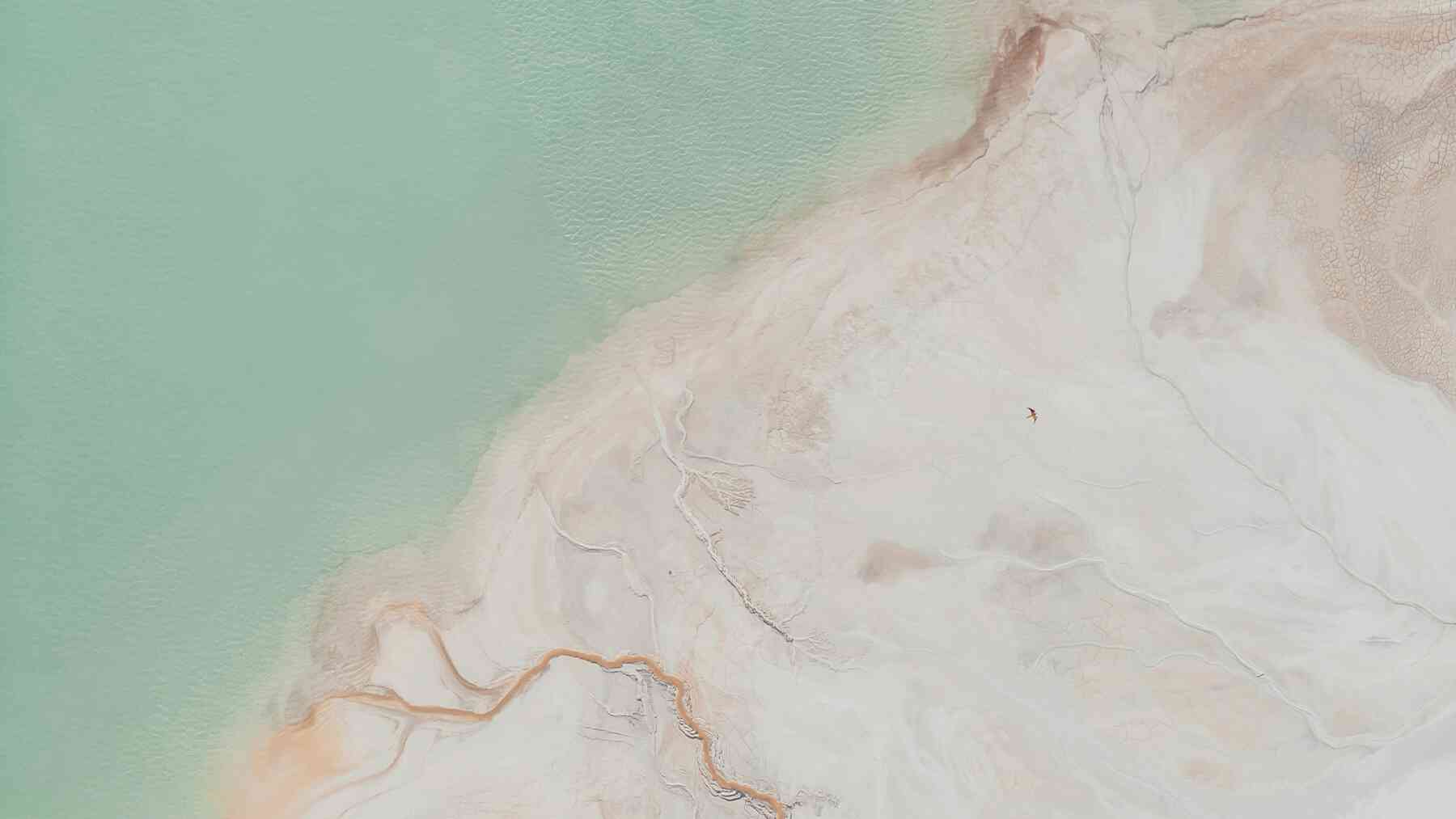
Shifting politics around water and rising temperatures have evaporated a third of the lake. The water is now twice as salty as the Pacific Ocean.
There are now 39 square miles of exposed lakebed scraped raw by wind. And it’s toxic. This dust causes severe asthma in local towns like Calipatria.
Yet, the south end of the lake is alive with escaping steam causing bubbling mud pots. There are cracks in the Earth’s crust that release 700-degree Fahrenheit fluid.
It looks like something off the surface of the moon. What else sits in the land other than super hot, pressurized water?
$540 billion in mineral treasure
The deposits under the died-up Salton Sea are valued at $540 billion. Officials have nicknamed the region the Saudi Arabia of lithium.
The Department of Energy estimates the basin holds 3,400 kilotons of the metal. Enough to power 375 million electric vehicles.
Now, an engineering race is underway. Major players like Energy Source Minerals are already drilling, processing a staggering 50,000 gallons of brine each minute.
But the operational reality is harsh.
The fluid is highly acidic, corrosive, and incredibly hot. Geologists compare the extraction process to trying to drink from a fire hose.
Advanced filtration systems isolate the lithium, turning the thick, rust-colored brine into a clear liquid. Yet, that distinct rusty color hints at a dense cocktail of other concentrated elements left behind in the mix.
The industry is planning to intercept the hidden material, but can they access the full payload?
More than a lithium rush: The stakes are high
The reason behind the thick, rust-colored brine has become clear. What other minerals are available for harvesting?
The deep-earth payload contains huge, commercially viable concentrations of manganese and zinc.
This isn’t just a lithium rush. It is a multi-metal extraction bonus.
The strategic stakes are high. Drawing manganese and zinc directly from the geothermal fluid alongside lithium could rewrite American mineral independence.
It allows immediate recovery without traditional, destructive mining.
The local human impact has to be considered
Community leaders like Luis Olmedo of Comite Civico del Valle are fighting to ensure locals aren’t left behind.
The region is one of the poorest in the nation and the locals have to live with a strong sulfur smell and severe air pollution.
Advocates demand that profits from this $540-billion-dollar bonanza fund the cleanup of the exposed lakebed. They want stable, long-term infrastructure jobs for residents who have endured empty promises for decades.
If these companies can successfully scale this direct extraction technology, they will do more than just power the EV transition.
They will clean up a toxic wasteland and redefine how we harvest raw materials from the earth.
The ultimate question is whether this green treasure will finally save the valley.
Read the whole thing?
Get the week's signal, not the noise
Our sharpest reporting on energy, climate and nature — free, once a week.