
China has long been at the center of technological change, from mobile phones and battery manufacturing to its expansive automotive sector. In its drive to find cleaner ways to generate and use energy, the country has experimented with basic elements like air and hydrogen for decades. Today, advances in technology have made it possible to build energy storage systems capable of powering an entire city for days, as hybrid sources are coming into the market with the China Southern Power Grid (CSG) creation.
China is leading the way to new energy sources
The automotive industry offers a glimpse into this shift. What began as a focus on reducing emissions through hybrid cars — combining combustion engines with electric motors — has evolved into fully electric vehicles. Now, with growing pressure to reach carbon neutrality, hydrogen and other alternatives are reshaping the future of transportation.
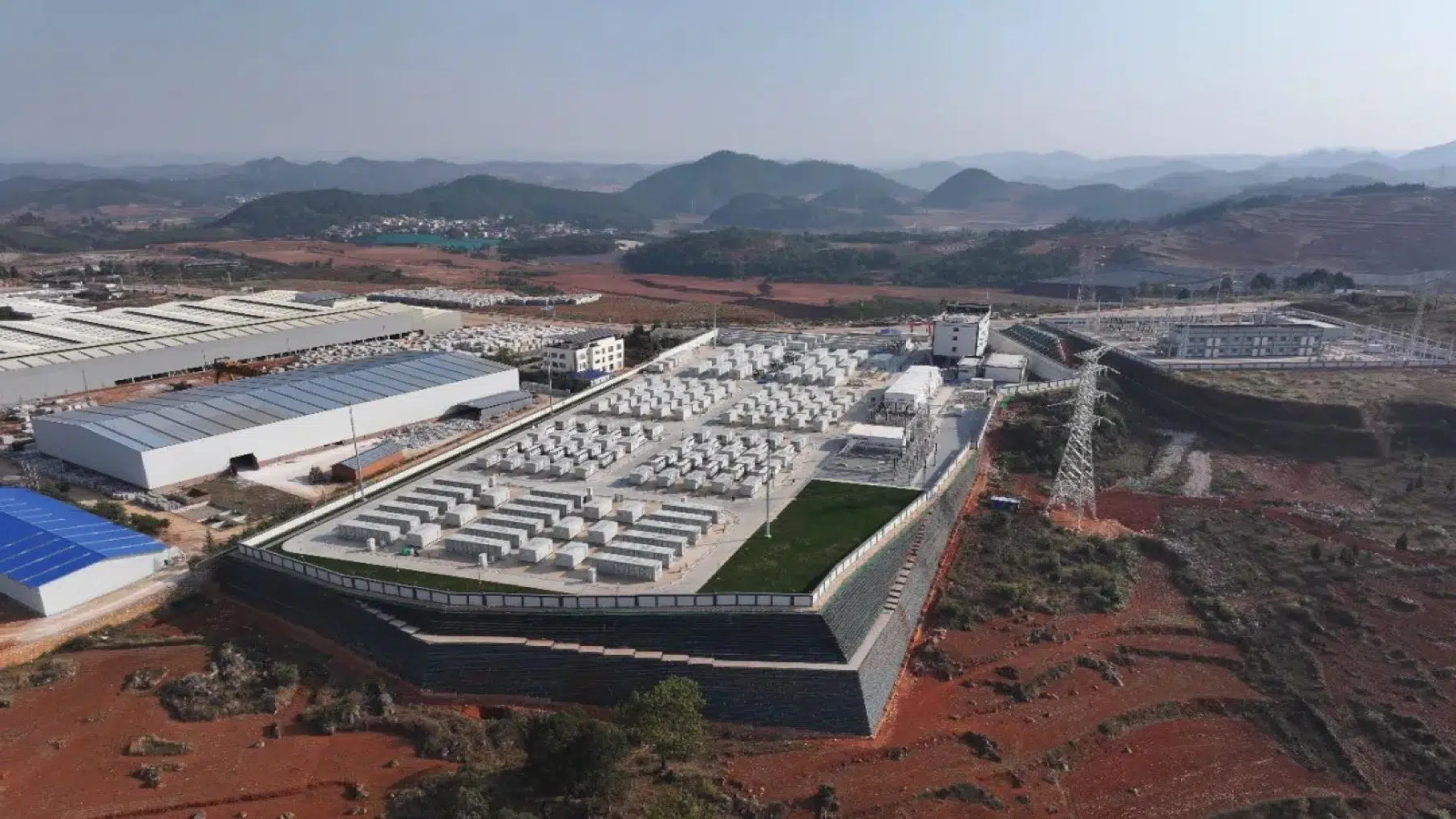
But can the same approach work for powering homes and communities? The answer may come from the China Southern Power Grid, which has just unveiled a new energy storage project designed to do exactly that. The China-based company announced on May 26 that it has brought online the Baochi Energy Storage Station in Wenshan, Yunnan.
New energy storage station opening
This site is a national pilot project and the first large-scale hybrid lithium–sodium battery energy storage facility in the country. It is also the first in the world to use a grid-forming sodium‑ion battery system. Built with an investment of more than CNY 460 million (about $63.8 million) and spanning roughly 33,000 square meters, the Baochi plant has an installed capacity of 200 MW and a storage capacity of 400 MWh.
The site operates on a dual daily charge–discharge cycle, allowing it to regulate roughly 580 GWh per year — enough to supply about 270,000 households. According to Science and Technology Daily, nearly 98% of the energy it stores comes from renewable sources. The facility is connected to more than 30 wind and solar farms across the province, making it a vital tool for balancing fluctuations in clean energy generation and supporting the grid’s reliability.
The hybrid source of energy
The plant’s lithium–sodium hybrid design is meant to offer longer cycle life, faster response times, and stable performance across a temperature range of -20°C to 45°C. The use of sodium‑ion technology also takes advantage of China’s abundant sodium reserves, making it a cost‑effective solution for large‑scale energy storage, the Global Times explained.
Covering about 50 mu (3.3 hectares) — roughly the area of five football fields — Baochi can run two full charge–discharge cycles per day. In total, it can deliver roughly 580 GWh per year, which is enough to cover the annual energy needs of approximately 270,000 homes.
At the heart of the site is China’s first high‑capacity sodium‑ion battery array, which operates roughly six times faster than traditional lithium‑ion batteries. The hybrid design allows for a quick and flexible response to shifts in supply and demand, making it ideal for managing the variability of wind and solar generation.
Most of the power comes from renewable sources
With roughly 70% of Yunnan’s electricity now coming from renewable sources, the Baochi site has become a key piece of the region’s grid. According to Wu Bin, who serves as the deputy manager for the Baochi Energy Storage Station project, the facility is designed to support more than 30 wind and solar farms across the province.
Its lithium–sodium hybrid design not only improves the stability of integrating renewables into the grid, but also positions the site to play a larger role in future energy market trading. The site is also seen as a model for other regions in China with high shares of renewables, where it can help deliver stable, reliable, clean energy from remote installations located in the desert and Gobi areas.
Our coverage of events affecting companies is purely informative and descriptive. Under no circumstances does it seek to promote an opinion or create a trend, nor can it be taken as investment advice or a recommendation of any kind.
Read the whole thing?
Get the week's signal, not the noise
Our sharpest reporting on energy, climate and nature — free, once a week.


