Far below the turmoil of the North Sea surface, the ocean floor is being transformed.
A multimillion-euro engineering revolution sees massive turbines doing more than just harvesting the wind. Their foundations are shaking up the ecological reality, triggering major efforts to revive a marine empire.
The ultimate success of this environmental rescue mission comes down to a bizarre, labor-intensive secret hidden in the project budget.
Why did scientists have to go on a cleaning mission first?
How clean power has transformed the architecture of the North Sea
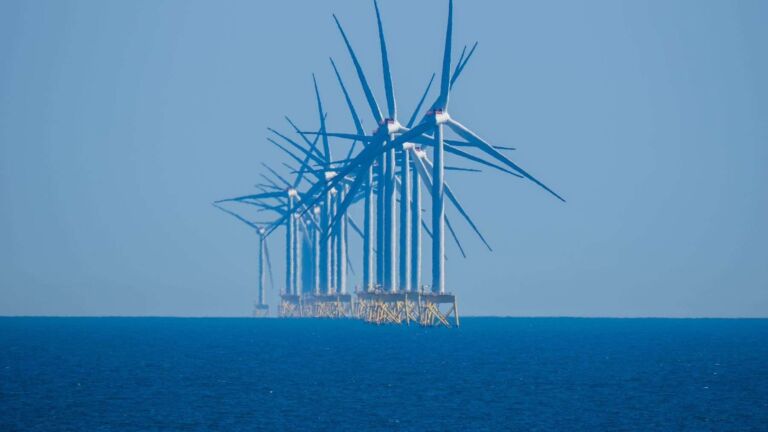
The offshore wind sector is booming, and the wild North Sea offers the ideal conditions for wind energy farming.
Massive installations of towering turbines have sprung up over the last few years as the world races to undo the damage caused by burning fossil fuels.
The Borkum Riffgrund 2 wind farm in the German North Sea is just one of the many recent huge-scale undertakings.
With a significant 450 MW capacity, the project has an extensive footprint.
36 massive steel monopiles and couplings are carrying the weight of the infrastructure. Along with the turbines comes a major physical transformation of the soft sea bed.
Engineers have a plan to prevent powerful ocean currents from eroding the sediment around the foundations.
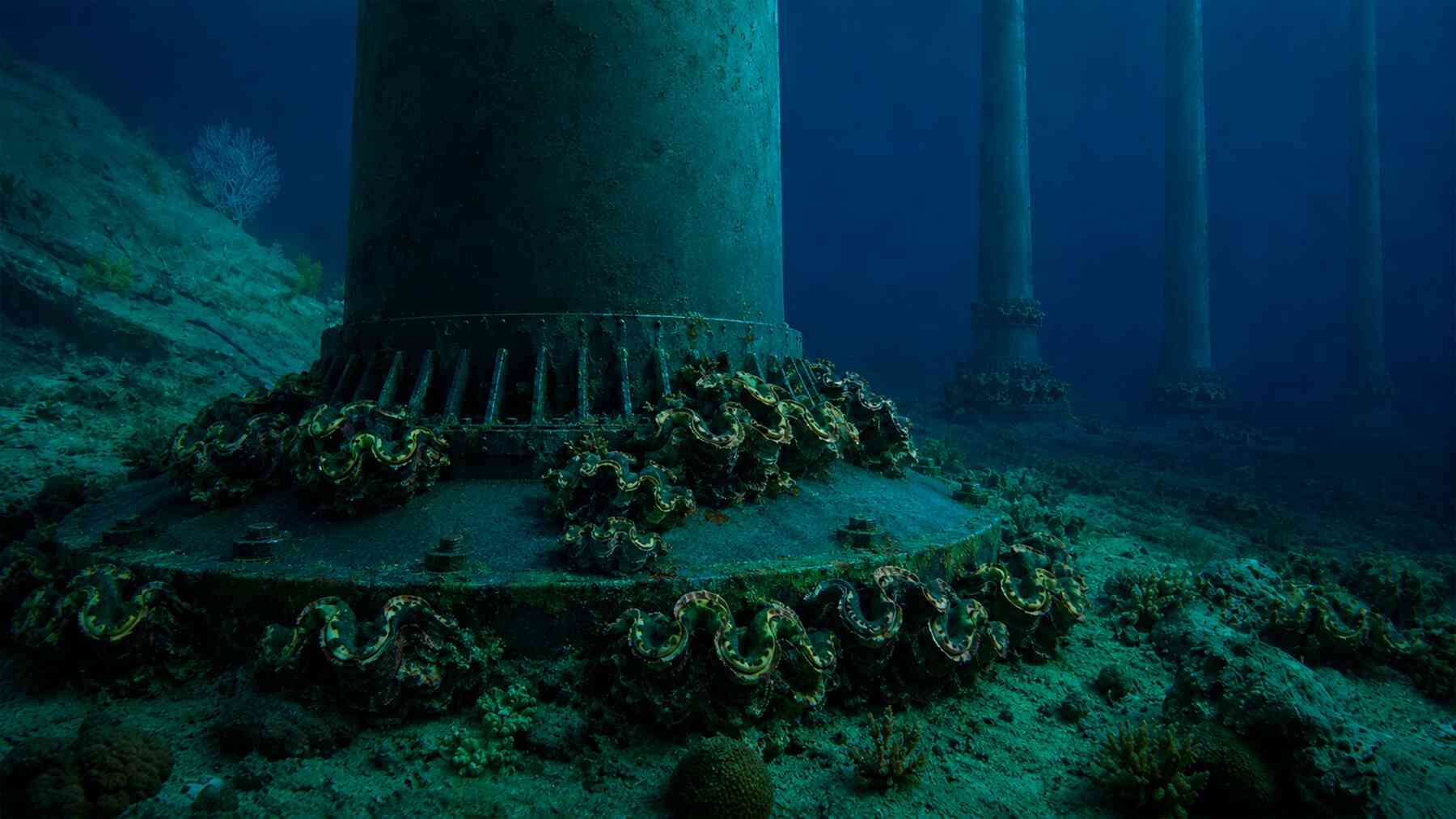
The ingenious strategy is called scour protection. Engineers dump tons of rock material around the bases of the turbines.
These multimillion-Euro structures are intended for generating clean electricity. But they also accidentally create extensive, artificial habitats on the seabed. Now, this has caught the attention of an entirely different sector.
A multimillion-Euro gamble in the name of marine restoration
Along with clever engineering come the considerable biological and financial challenges of marine restoration.
One of the species that has suffered under overexploitation and habitat destruction is the European flat oyster (Ostrea edulis). It once thrived in the North Sea, covering vast expanses. But now, it’s under threat.
A golden opportunity for conservation has presented itself because bottom-trawl fishing is banned inside the boundaries of wind farms.
With an operational lifespan of around 30 years, this effectively leaves the seabed undisturbed for all that time. Conservationists want to capitalize on this, and the European flat oyster is the target for rescue.
A study by Aquatic Living Resources (2025) explains that marine restoration takes a lot of capital. There are nine deployment options to conserve the oyster, ranging in complexity and cost from €100,000 ($115,000) to well past €300,000 ($350,000).
This is detailed in the study “Economic viability assessment of European flat oyster restoration on offshore windfarm infrastructure,” published in Aquatic Living Resources.
The highest cost is not the ships or the materials; it’s labor. There are intense legal protocols and quarantine requirements. And this is before the water has even been touched.
A secret protocol behind biosecurity
It sounds like lunacy to scrub an ocean oyster. But this is the secret to reviving the population around North Sea wind farms.
It’s all because of Bonamia ostrea, a microscopic parasite that’s deadly to flat oysters. It’s capable of completely decimating populations.
Clean, hatchery-bred baby oysters are incredibly scarce. But restoration projects still have to source adult oysters from wild beds outside the area.
Now we’re faced with a major biosecurity roadblock.
Teams aiming for an import permit have to follow a strict Alien Invasive Species (AIS) protocol. This means workers literally have to wash every single oyster by hand.
First, they’re rinsed in fresh water, then bathed in a sodium hypochlorite solution to get rid of pathogens and invasive pests before being dropped into the sea.
The budget is eaten by labor
This is a significant bottleneck, taking up more than 50% of the entire project’s labor budget.
But the data-driven payoff is huge.
By combining “spat settled on shells” with loose adults on the seafloor and adding extra substrate, ecosystem design wins.
The model shows it slashes the time to reach a self-sustaining population of 20,000 oysters down to just 8 to 10 years.
Clean-energy hubs double as thriving, wild bio-filters, and this is the kind of effort the world needs to undo green-versus-green damage.
Read the whole thing?
Get the week's signal, not the noise
Our sharpest reporting on energy, climate and nature — free, once a week.