Not everything in the universe can be seen. Sometimes, we can only hear things and identify some waves coming from deep space with the telescopes that scientists have developed to make these different types of readings. Sounds, images, shock waves – almost everything known to man can be identified with the right tools pointing to the right spot in the cosmos. On the other hand, discoveries are also made by mistakes and casualties, just like when NASA’s Fermi and ESA’s Integral got the same reading in different formats.
How do scientists identify a new phenomenon in the universe?
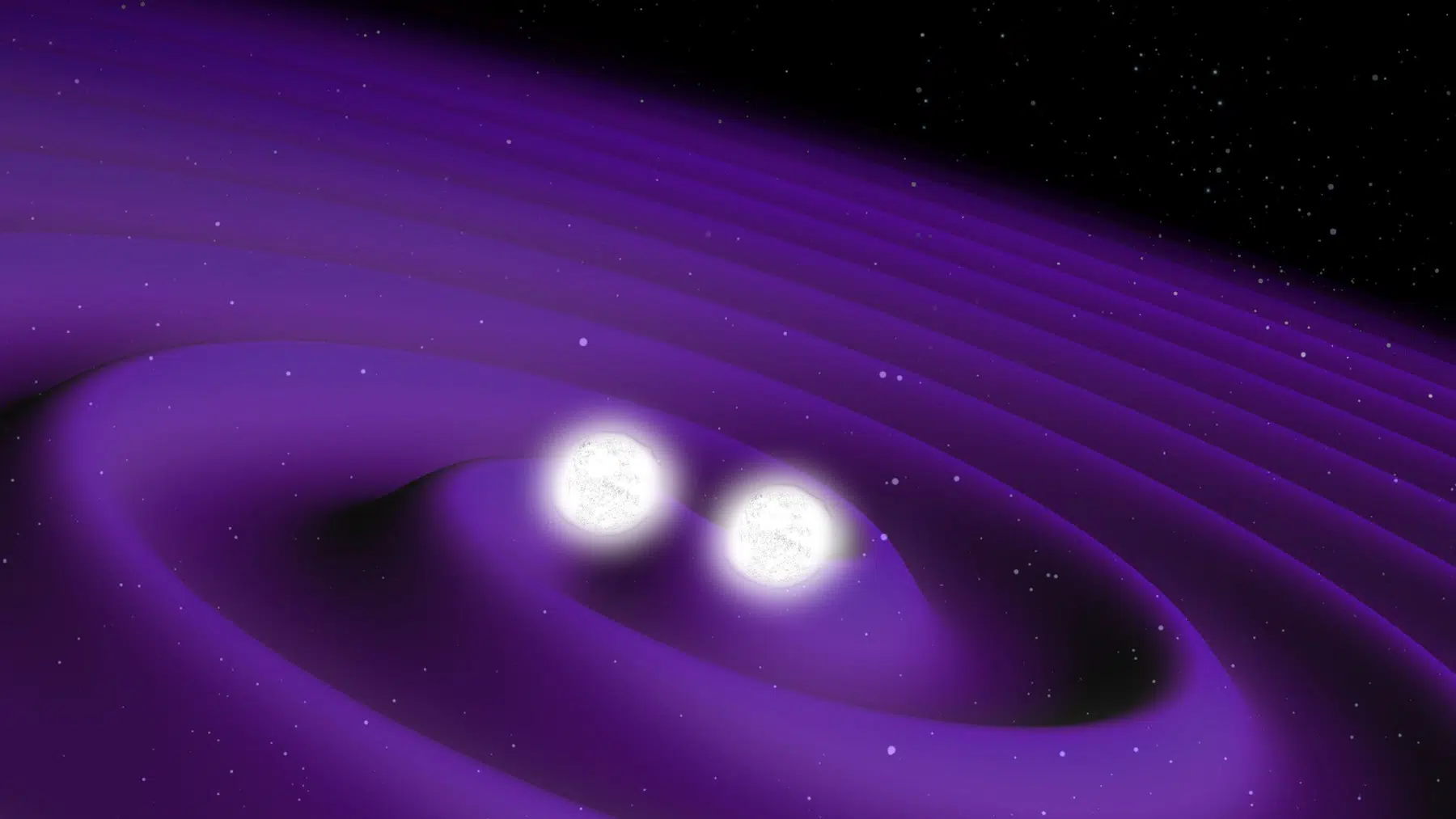
The chances of a cosmic object or phenomenon being identified with the help of two or more telescopes pointing to the same area are significantly bigger. In 2017, NASA’s Fermi and ESA’s Integral received two types of readings from the same region, as both were looking, while not knowing, at two neutron stars colliding. NASA’s Fermi detected a short burst of gamma rays, while ESA’s Integral also detected gamma rays from the event — alongside LIGO and Virgo, which detected the gravitational waves.
On the other hand, the vacuum in space has no air or molecules to carry sound from one point to another – this way, different types of waves can be interpreted as the sound of something happening in the universe. With that in mind, scientists recently proposed a new way to listen to the cosmos, potentially opening a new window onto ripples traveling through space.
Superconducting magnets in the search for Dark Matter
New findings published in Physical Review Letters show that superconducting magnets – the kind used in dark matter research – might actually work well as detectors for gravitational waves too. If this works as expected, it could open up a whole new frequency range for picking up these ripples in space.
The idea builds on something proposed back in the 1960s when physicist Joseph Weber came up with a way to detect gravitational waves using large metal cylinders. These would vibrate slightly when a wave passed through – but only if the cosmic wave matched the cylinder’s natural frequency. Outside of that, they didn’t pick up much.
This new study takes that concept and twists it. Instead of giant metal bars, researchers suggest using DC magnets like “magnetic Weber bars” that might pick up cosmic waves in frequency ranges we’ve had trouble accessing before — like between kilohertz and megahertz.
Everything has to be perfect to detect the cosmic waves
One of the researchers, Dr. Sebastian Ellis from the University of Geneva, spoke to Phys.org about the work, which he did alongside Valerie Domcke (CERN) and Nicholas Rodd (Lawrence Berkeley Lab). He explained that the old method worked well only when the cosmic wave and the bar were “in tune” – kind of like hitting the right key on a piano.
But if the cosmic wave was even slightly off, the whole system missed it. This new magnet-based idea gets around that. Superconducting magnets store a huge amount of magnetic energy — way more than traditional systems using electric energy.
How does the device work?
When gravitational radiation passes through a superconducting magnet, it causes incredibly tiny vibrations. These shake up the structure ever so slightly – a bit like how LIGO picks up the tiniest motions in its mirrors. That motion then changes the magnetic field inside the magnet. Scientists can detect those changes with a tool called a SQUID – short for Superconducting Quantum Interference Device.
By putting a loop near the end of the magnet (like a small magnetic antenna), researchers can catch these faint magnetic shifts. That gives them a direct reading – turning a gravitational wave into an electromagnetic signal. The approach skips some of the complex steps older detectors need. Instead of converting mechanical signals into electromagnetic ones, this system gives you a clean electromagnetic signal right away
Read the whole thing?
Get the week's signal, not the noise
Our sharpest reporting on energy, climate and nature — free, once a week.