
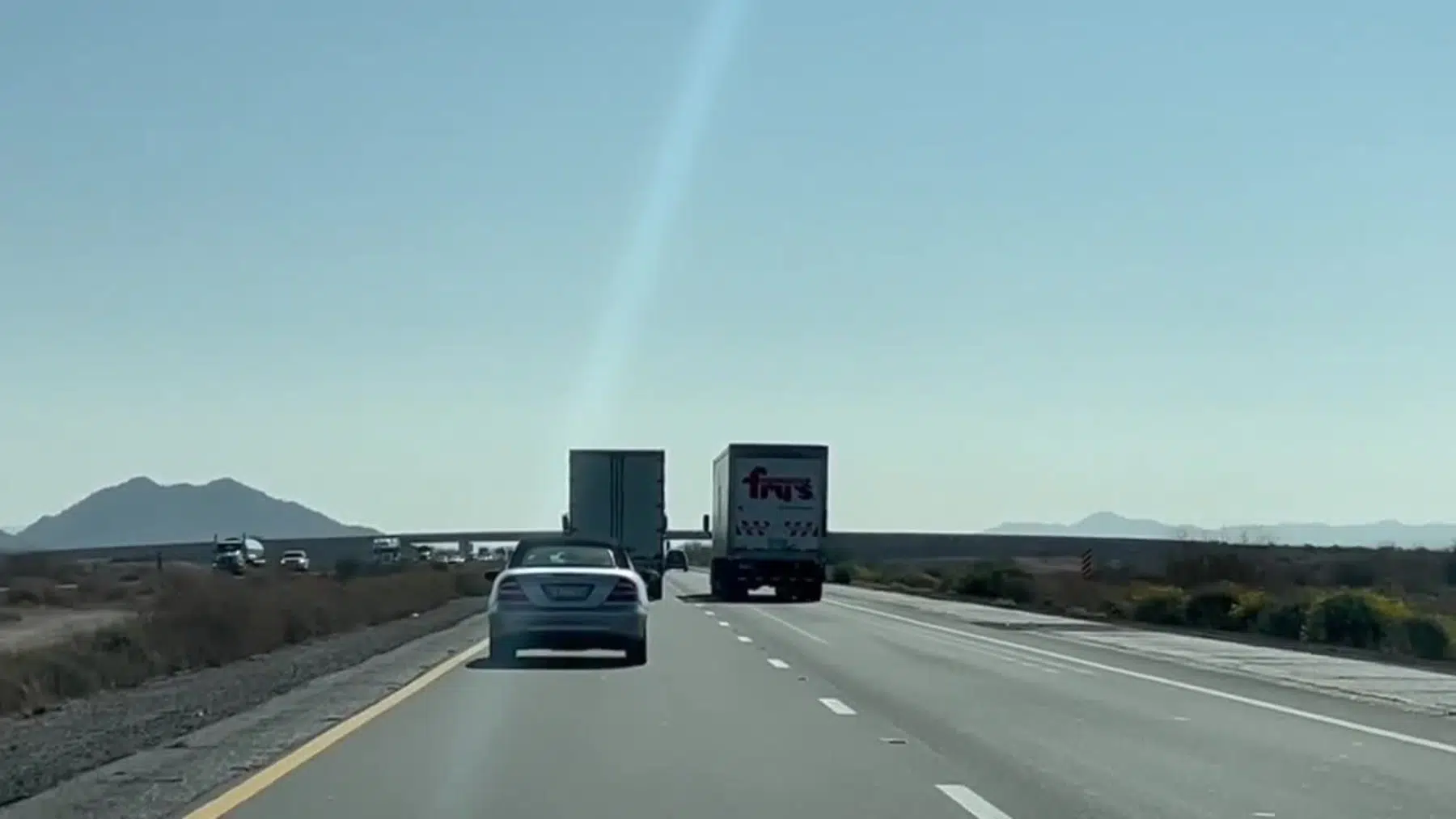
A new law is being tabled for drivers in Arizona that’s been nicknamed the “Slowpoke” Bill. It relates to the speed that drivers should maintain when traveling in the left-most lane of multi-lane highways, and if going too slowly, drivers could be fined $500 for affecting the flow of traffic.
There’s a similar new “Slowpoke” Law in South Carolina and drivers in this state can be issued a citation for not moving over to the right and keeping the left-hand lane as clear as possible. It’s important to stay well-informed about the rules of the road and the reasons behind them so that you can drive safely and avoid fines and citations for infractions you may not have been aware of.
Arizona’s “Slowpoke” Bill proposes motorists could be fined $500 for slow driving
Republican state representative Teresa Martinez is behind the Slowpoke Bill in Arizona and she wants drivers who slow down traffic to be punished. If passed, the bill would impose a minimum speed limit for traveling in the left-hand lane on multi-lane interstate highways.
Martinez lives in Casa Grande and has personally experienced the headaches caused by slow drivers while commuting up Interstate 10 to Phoenix. She explained her feelings on the matter:
“If you want to drive 70 mph on the right, beautiful, wonderful. If you want to drive 70 miles an hour on the left, no bueno.”
An amendment to the bill means it only applies to certain interstates and excludes the I-17. The law would be enforced on the I-8, I-10, and I-40.
Martinez says that the point of the law is to drive safer, not faster:
“You’ve got 5, 7, 10, 15 cars backed up… they’re getting frustrated. Then they pass on the right, speeding… that’s when you get accidents. We’re not writing a bill that says drive 85 miles per hour.”
It’s not clear yet how speeds will be assessed as “too slow,” but it’s expected that a minimum speed limit will be set to go along with the new bill.
There’s discussion in the US about a different safety concern. What does United States law say about how bright a vehicle’s headlights are allowed to be?
Arizona drivers had a chance to express views on the Slowpoke Bill
A number of drivers in the state were interviewed about their take on the Slowpoke Bill.
Tara Woodcock doesn’t understand the inconveniences and risks of driving too slowly:
“Fining people going too slow? That’s strange to me.”
Others can see the point of the bill but feel there should be a minimum speed imposed. Kim McDonough said:
“There should be some sort of limitations, like if someone is going 45 miles per hour, that is a definite hazard.”
Arizona motorists have an issue with the I-10
All drivers agree that the I-10 corridor between Phoenix and Tucson is an uncomfortable trip. Woodcock expressed her frustration:
“It sucks. It’s narrow.”
Mark Reese has a plan for the funds generated by fining slowpoke drivers:
“Take that $500 and build another left lane [on the I-10] and help everybody out.”
The expansion of the I-10 is an ongoing project that won’t be completed until 2028.
The status of the bill is that it’s been passed by the transportation committee and will now be sent to the House for approval.
South Carolina also has a “Slowpoke” Law
South Carolina has a law and drivers can receive citations for not moving out of the left lane after passing traffic on multi-lane roadways. The law is being referred to as the “Move Right” Law or “Slowpoke” Law, and slower drivers are starting to feel its effects.
The point of the law is to leave space for first responders’ vehicles in the event of an emergency. According to Cpl. Joe Hovis of the South Carolina Highway Patrol, it’s also intended to ease congestion, lower safety risks, and prevent road rage wherever possible.
“If you are traveling on a controlled access highway, you should stay out of the left hand lane unless you are passing or overtaking a car.”
Hovis reported that since the law came into effect in August 2024, 315 citations have been issued and 96 warnings have been delivered. This data covers only the period from November 13, as drivers were given some grace to get familiar with the new rule.
One of the main reasons for the implementation of the Slowpoke Law is research shows that when someone is traveling below the speed limit in the left lane and there are other vehicles around, the risk of an incident goes up. Hovis made it clearer for motorists to understand:
“Most people who are in that left lane, they’re going at least the speed limit and they can run up on you. There’s not any break light showing, no turn signals.”
The law doesn’t mean that motorists may speed instead. The normal speed limits still apply.
Hovis offered a last piece of advice:
“Keep your head on a swivel, drive defensively, be cognizant of the people that are around you.”
Remember to prioritize the safety of all on the roads, including yourself, other drivers, passengers, pedestrians, and first responders.
There are changes for drivers in New York as well. The Department of Motor Vehicles is reminding New Yorkers that they are required to upgrade their license or identification cards to REAL IDs before the deadline.
Read the whole thing?
Get the week's signal, not the noise
Our sharpest reporting on energy, climate and nature — free, once a week.


