It was clearly a wild and untamed time when our solar system first came together. Large masses were moving in chaotic orbits and clashing together frequently.
Eventually, in the midst of this early turbulence, an anomaly appeared that has raised just as many unanswered questions as answers.
What, specifically, was absent from this region of early planetary development?
The outer solar system was far from empty
The outer reaches of the early solar system were anything but peaceful and desolate.
The area contained numerous massive planetary embryos (large objects) and growing gas giants, all interacting through powerful gravitational forces. While some larger bodies migrated toward the center of the solar system, others drifted away from the Sun.
Many smaller bodies were also forced into entirely new trajectories.
In particular, perhaps the most enigmatic aspect is the seemingly “clean” removal of several regions of the solar system.
Uranus’ highly eccentric tilt of its satellite system is another example of an anomaly that does not conform to conventional models of satellite formation.

Can moons and orbits indicate something went wrong?
There are few clearer indicators of the problems that existed in the solar system than those found among satellites and orbital paths. For instance, many moons surrounding Uranus are tilted at extreme angles relative to predictions made using basic formation models.
Researchers have explored this in depth, including in the study “The fragility of the Uranian moons during the giant planet instability” published in Icarus.
For a broader look at how these massive bodies were ejected from the region, you can see further details in this report from Live Science.
There is little evidence to support the notion of neatly ordered well-aligned systems.
Instead, evidence suggests that many of these bodies were subjected to forces that resulted in them being scattered in unpredictable directions over time.
Similar irregularities can be found throughout orbital patterns farther out in the solar system. Several small bodies are travelling along paths that indicate they were either influenced by strong forces or had their trajectories altered long after their original creation.
However, it is uncertain whether any or all of these objects still exist somewhere in the universe or if they were removed altogether completely.
When instability shaped the solar system
Before settling into the configuration seen today, a much greater disturbance occurred within the solar system than simply planetary body migration due to gravity.
Specifically, both Jupiter and Saturn played major roles in shaping gravitational conditions in the outer reaches of the solar system via their immense mass.
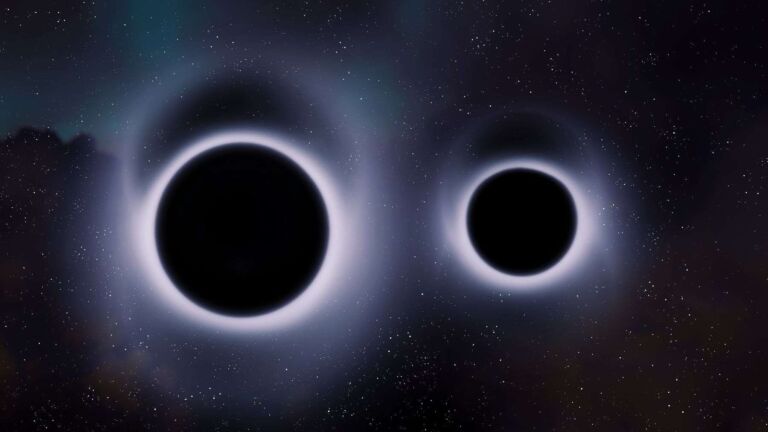
As a result of this instability, two Neptune-sized planetary embryo bodies experienced sufficient gravitational interaction with each other. Instead of continuing to orbit within the solar system, they were eventually ejected through chaotic forces.
They were sent into interstellar space, where they no longer revolve around any star.
The abnormal tilt pattern displayed by many of Uranus’ satellites represents a potential lasting remnant of that earlier instability.
Similarly, the random spatial arrangement existing among large bodies located outside of Jupiter’s path serves as another potential indicator of this past event.
With larger bodies removed from the solar system, it ultimately stabilized into the configuration observed today.
How did gravitational scattering finally reshape the outer solar system?
This process provides the answer and explains how these changes unfolded.
As Jupiter and Saturn transitioned their locations due to migration, their movements caused nearby large planetary bodies to become unstable.
This instability resulted in the eventual ejection of two Neptune-sized planetary worlds entirely from our solar system. What other hidden wounds from the early days of our solar system remain unseen today?
Read the whole thing?
Get the week's signal, not the noise
Our sharpest reporting on energy, climate and nature — free, once a week.