
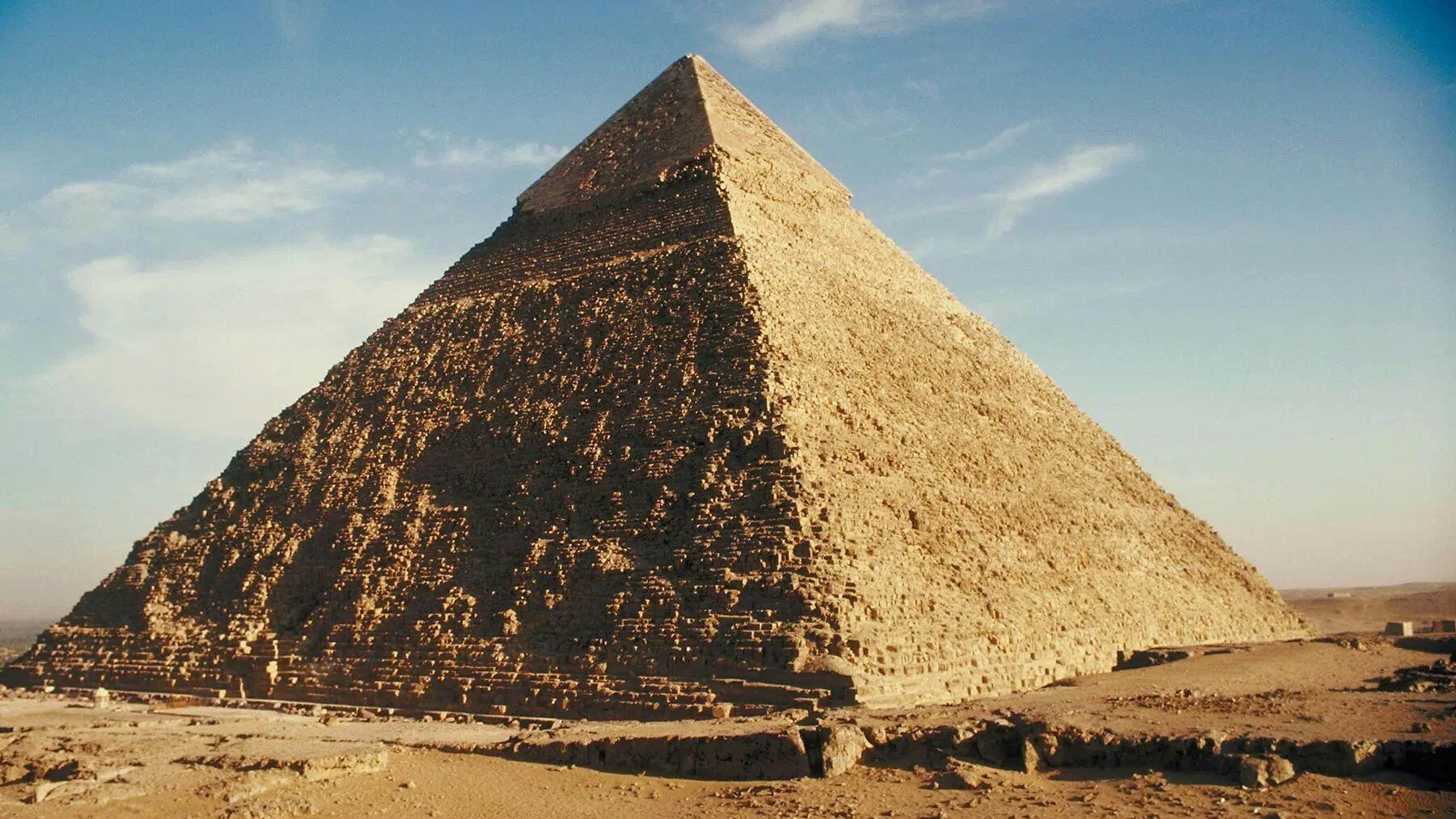
The pyramids are not just old buildings — they are heavy, precise, and almost impossible. More than 4,500 years ago, millions of stone blocks were stacked with accuracy that still challenges today’s engineers. No engines. No steel cranes. No electricity. And yet, they stand taller and stronger than many modern structures. For decades, we thought we understood how this was done. Now, researchers are suggesting we may have overlooked a powerful helper all along — and it could completely rewrite the story.
The old ideas that almost explained everything
For generations, historians and engineers have argued over one big question: how did ancient Egyptians move stones that weighed up to 2.5 tons each? The most popular answer has always been ramps. Long dirt ramps, spiral ramps, or zig-zag paths may have allowed workers to drag blocks upward on sleds.
Other theories suggest hidden internal ramps built inside the pyramids themselves. Some scans hint at unusual internal spaces, but nothing has been proven beyond doubt. There were also ideas involving wooden levers, ropes, or counterweights to slowly lift stones higher and higher.
One thing most experts now agree on is that the pyramids were not built by slaves. They were constructed by skilled workers, supported by food supplies, planning, and strong leadership. Still, even with all these ideas, something never quite added up.
The reveal: water may have done the lifting
A study by Dr. Xavier Landreau, CEO of Paleotechnic, and other researchers, has focused not the well-documented pyramids of the Middle and New Kingdoms, but rather the older, much bigger structures of the Old Kingdom pyramids, such as the Step Pyramid of Djoser in Saqqara, Egypt. Landreau talks about the more accepted ramp theories but believes these may not have applied to larger structures like this. For the bigger pyramids, he has, along with other experts, proposed:
“A complex water treatment system drawing upon local resources would have allowed for a water-powered elevator within the pyramid’s internal vertical shaft.”
The theory has some evidence that could back it up, such as water from ancient streams that could have flowed into deep-water trenches or a check dam to control and store water, which is thought to have been nearby. This supposed check dam was once thought to have been a fortress of sorts, but it has all the qualities consistent with water storage, and adds good evidence for this theory.
A hydraulic elevation mechanism in the Dsojer Pyramid
Today, Egypt is showing the world incredible advancements, and its innovation started thousands of years ago. This study also suggests a dry moat surrounding the area, as well as basins for settling and retention, and even a water purification system. All this evidence adds up to meet the technical requirements of a water treatment facility. This would have then held the water needed for a hydraulic elevation mechanism, as the study theorises.
It goes on to explain that inside the pyramid, the architecture of its granite boxes and its removable plug, as well as the limestone clay-bound blocks, actually suggest a water outlet mechanism, and concludes that:
“The northern shaft’s layout is consistent with a hydraulic lift mechanism to transport materials and build the pyramid.”
These researchers have presented a strong argument for the use of hydraulic power in the construction of at least this pyramid, and bring in an entire new theory for what occurred all those years ago. The ancient Egyptians were clearly ahead of their time, and new, amazing discoveries are proving this time and time again.
Read the whole thing?
Get the week's signal, not the noise
Our sharpest reporting on energy, climate and nature — free, once a week.


