The electricity grid will indeed change soon, as the American Southwest is preparing for a rather significant transformation. The SunZia Wind and Transmission project will be a renewable energy corridor that will link New Mexico to Arizona, meeting the growing power demand in the West. With the demand for electricity on the rise, the SunZia 3, which is a 3,650 MW wind farm, is permitting the integration of renewable energy generation on a large scale. SunZia will be the largest renewable energy project, which is set to provide power to over 1.2 million households.
A Western clean energy project to keep track of
This 3.5 MW wind farm will be located in central New Mexico and will consist of 916 turbines, 10 collection substations, 115 mi of overhead collection lines, and 130 mi of 345 kV AC generation. This surely is one of the largest wind installations throughout the United States.
The system is a rather huge engineering feat, with a transmission line set to carry power westward from Corona, New Mexico, and then to a converter station near Casa Grande, Arizona. SunZia can deliver more energy, which is far more stable power with fewer energy losses. There were over 80 organizations that contributed throughout the development timeline of this wind farm. With six years of construction and 17 years of permitting issues, the energy project posed a series of regulatory challenges that have been reflected throughout modern expansions.
The engineering challenge behind such a project
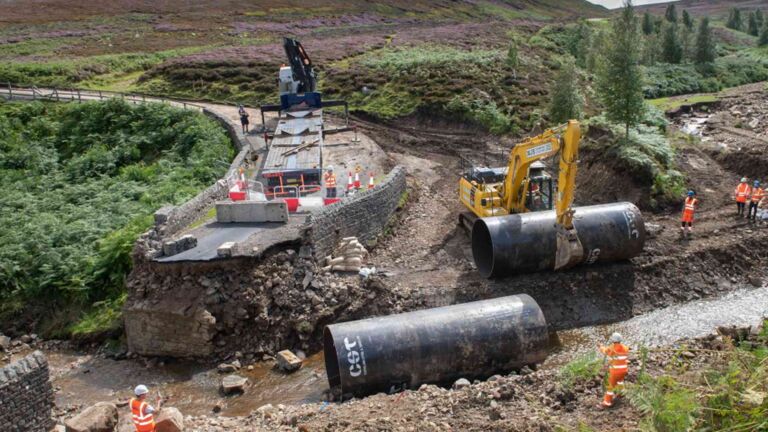
While the building of SunZia will resolve many technical problems along the way, there surely are engineering challenges to be dealt with. The transmission structures themselves are more than 2,000 structures, made from steel. A hybrid system was considered, where underground segments are used along with overhead construction lines. Overhead conductors can provide power to underground cables, resulting in savings of almost $45 million.
For this project, 2,000 workers and many helicopter fleets were called upon to handle the engineering challenge of such a project. These workers had to access difficult terrain as well; however, the jobs that were created included jobs for:
- Electrical engineers
- Studies and system planners
- Civil engineers
- Structural engineers
- Material manufacturing and testing engineers
- Geotechnical engineers
- Environmental engineers
The success of this project would signify that large-scale infrastructure can be designed and built in the U.S., and that too within a rather reasonable time period. As it stands, it will take five years for the completion of the wind farm and six years for the full completion of the HDVC line, along with two years of field construction.
SunZia is setting an entirely new benchmark for U.S. clean energy
The expected economic benefits gained from this project amount to more than $20.5 billion, including direct and indirect economic benefits. SunZia is setting the benchmark for clean energy infrastructure. This is surely a step in the right direction in terms of large-scale renewable generation and long-distance transmission that can be delivered within a manageable timeline. Many states, on their own, are looking to power all of America, and with this initiative, climate change issues and global warming will be somewhat reduced.
An investment ensuring that the energy grid will look different
With the U.S. electricity demand set to increase by 50% in 2050, the need for a project as massive as SunZia has become far more necessary. The project has arrived at the right time, showcasing strategic engineering, coordinated permitting, and a forward-thinking approach for the future. However, the electricity grid of the future will look considerably different from the electricity grid of the past. The hope is that we can look forward to a resilient, low-carbon grid for the Southwest. With 1,000 wind turbines and 3,500 MW for 3M people, this one state will power all of America.
Read the whole thing?
Get the week's signal, not the noise
Our sharpest reporting on energy, climate and nature — free, once a week.