At first, it didn’t make sense.
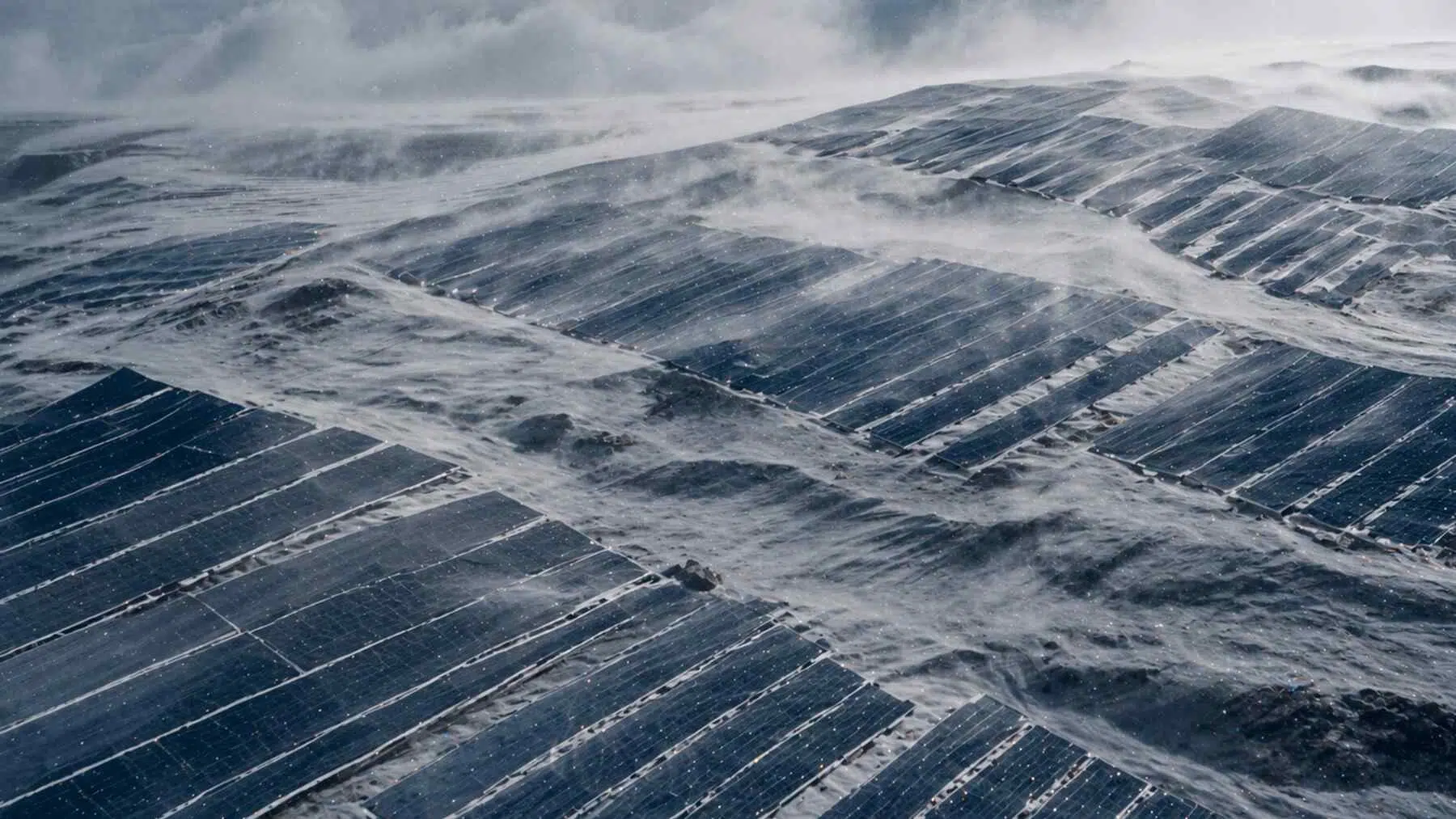
The wind above a solar farm wasn’t behaving the way it should. It wasn’t flowing smoothly across the landscape.
It was slowing down.
Shifting.
Sometimes even reversing in subtle ways.
For a while, it looked like a measurement error. A glitch in the data.
But the pattern kept repeating.
And when scientists took a closer look, they realized something unexpected was happening—something that doesn’t just affect the ground, but the air above it.
So what was really changing?
How solar farms quietly alter more than just the light form the sun
Solar panels are designed to absorb energy.
That’s their purpose.
But when you cover large areas of land with them, you don’t just change how much energy is captured—you change how that energy moves.
Natural land reflects and releases heat in a certain way.
Solar panels don’t.
They absorb more sunlight, store heat differently, and release it back into the environment at a different rate.
At small scales, that effect is not enough to write home about.
But across massive solar farms, it becomes noticeable.
Especially in the air.
A pattern in the wind that couldn’t be ignored
Researchers studying airflow over large solar installations began noticing something unusual.
Wind speeds actually dropped as air passed over the panels.
In some cases, turbulence increased.
The smooth, predictable flow of air became disrupted.
That raised a key question for consideration.
Why would a flat surface change wind behavior so significantly?
The answer wasn’t in the wind itself.
It was in temperature.
The hidden effect shaping the air above the panels
Solar panels heat up differently than the land around them.
They create patches of warmer air close to the surface.
That temperature difference alters pressure patterns locally.
And when pressure changes, wind responds.
Air moves from high-pressure areas to low-pressure ones. If solar panels create warmer, rising air, they effectively pull surrounding air toward them.
That movement disrupts the natural flow.
Creating microcurrents.
Small but measurable shifts in wind direction and speed. You wouldn’t think these would count much.
This is the hidden effect.
Not visible. Not obvious.
But persistent.
Why this matters beyond a single solar farm
At first, these changes seem localized.
A slight shift in wind. A small drop in speed. Minor, right?
But scale changes everything.
As solar farms expand, these micro-effects can combine.
Potentially influencing temperature distribution, moisture movement, and even cloud formation in surrounding areas.
In other words, solar farms don’t just sit in the environment.
They interact with it.
Continuously.
A subtle shift with larger implications
This doesn’t mean solar energy is harmful.
Far from it.
But it does highlight something important. And it’s relevant if we want to improve future operations.
Even clean energy systems have physical effects on their surroundings.
They change how heat moves.
How air flows.
How local climates behave—at least, on a small scale.
And as installations grow larger, those effects become more relevant, says the study “Wind pressure characterization on ground-mounted solar PV systems: A combined experimental and numerical study,” published in Case Studies in Thermal Engineering.
A reminder that small changes can reshape bigger systems
What started as a simple observation—wind behaving strangely—led to a deeper understanding of how these systems work.
Not of wind alone. But of how interconnected environmental systems really are.
If you change the surface, you change the air.
Change the air…
And over time, you may begin to change the climate around it.
It’s not dramatic.
Not immediate.
But it’s real.
And it’s something scientists are only beginning to fully understand.
Read the whole thing?
Get the week's signal, not the noise
Our sharpest reporting on energy, climate and nature — free, once a week.