We wonder what Albert Einstein would say if he knew that his most famous equation could be used to interpret a project’s power that would change our future forever? Hopefully, he will be proud to learn that Europe plans to rewrite energy by replicating the process of the Sun. With temperatures of 150 million °C and –270 °C, it proved that hydrogen is finished. The world of renewables is about to change soon, giving us a glimmer of hope for a better, greener future.
Changing the world of renewables
Our world has been transitioning to renewables for quite some time now, as awareness of climate change has grown and its dire effects have become a great concern. Renewables are a great alternative to burning fossil fuels, which result in greenhouse gas emissions and thus accelerate climate change. Beyond their environmental advantages, renewables also have great economic and societal advantages, as per IBM.
Economic and Societal Advantages
- Lowers energy expenses
- Operational costs are generally low due to no refueling needs
- Ensures energy security
- Renewables are abundant and regionally varied, thus decreasing reliance on fuel imports
- Job creation and growth stimulation
- Fosters economic development (especially in rural areas) and provides job opportunities
Within the renewable sector, challenges are not unfamiliar, such as excess energy storage and transportation of intermittent sources. This is where hydrogen plays a key role, as it can store excess energy for long periods and stabilize grids, as per ScienceDirect.com. However, hydrogen itself is not perfect, which is why Europe wants to rewrite energy.
This is how Europe plans to rewrite energy
Hydrogen, even when produced with renewable sources, is not a guaranteed sustainable solution. According to Development Aid, the renewable sector does not truly benefit from hydrogen for the following reasons:
- It has low energy by volume and requires vast storage space
- It’s highly flammable and poses significant safety risks
- Production from renewables and conversion to power results in extreme energy loss
- Extremely high production costs
- The majority of production is reliant on fossil fuel
This is why scientists have sought an alternative solution with cleaner and more efficient power. The answer was inspired by an energy that powers the sun, called fusion power. Europe has made a breakthrough in its progress as a key component of the International Thermonuclear Experimental Reactor (ITER) has been completed, according to Popular Mechanics.
The clean, green, climate change-fighting machine
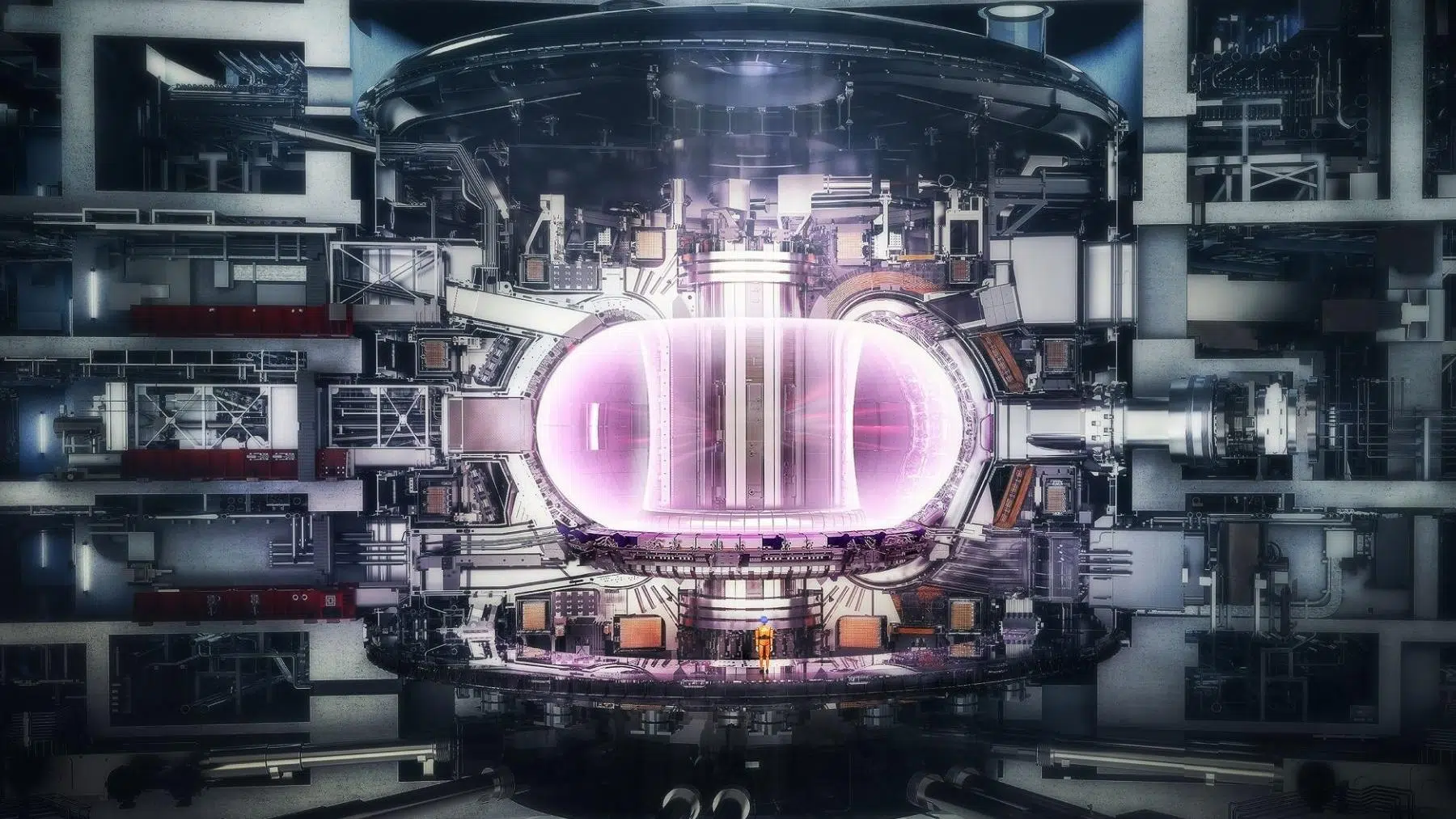
The ITER is a tokamak, or a machine, that can apply the power of the Sun’s proton-proton fusion chain reaction using isotopes of hydrogen, namely deuterium and tritium. These isotopes utilize quantum tunneling and fuse to help overcome electromagnetic repulsion. For decades, a team involving 35 countries has been developing the ITER, and now they have completed the last component of its “heart.”
The ITER contains a 3,000-ton magnet system that will act as a shield to contain the superheated plasma for the required time to initiate a fusion reaction. The last component of the magnetic system, the Central Solenoid, has finally been completed and will be assembled at the ITER facility in France. According to Popular Mechanics, once completed, it can resist temperatures 10 times higher than the Sun’s core (150 million °C) while maintaining component temperatures of –270 °C, the cryogenic temperature required for the magnet to become superconducting.
The team indicated that the ITER will have the ability to generate 500 MW of clean, sustainable power with just an input of 50 MW of heating power, proving its efficiency and stance over hydrogen. Unfortunately, we will have to wait another decade for this revolutionary power, as estimates indicate that the ITER’s first plasma is expected around 2035. The race is on, as China has made a major breakthrough in nuclear fusion as well. Who will be the leader in fusion power in the end?
Read the whole thing?
Get the week's signal, not the noise
Our sharpest reporting on energy, climate and nature — free, once a week.