


They expected silence.
At 12,000 feet below the surface, in complete darkness, the plan was simple: map old underwater volcanoes and document the terrain.
No sunlight. Crushing pressure. Almost no oxygen.
Not a place where you expect life to thrive.
But as the submarine descended and its cameras adjusted to the blackness, something unexpected began to appear.
First one shape.
Then another.
And then many more.
So what exactly was living down there?
How an exploration mission turned into something else
The expedition focused on a remote region off Australia’s coast, within the vast Coral Sea Marine Park.
Scientists aboard the research vessel RV Investigator spent weeks mapping deep-sea structures, including the Tasmantid Seamount Chain—ancient volcanic peaks rising thousands of feet from the ocean floor.
These seamounts are difficult to reach.
Most had never been explored in detail.
Using advanced tools—towed cameras, sampling equipment, and deep-sea imaging systems—the team began documenting what they expected to be a largely barren landscape.
Instead, they found movement.
Life, emerging slowly from the darkness.
At first, it seemed familiar.
But the deeper they went, the stranger it became.
A hidden ecosystem where nothing was supposed to exist
In environments like this, survival is difficult.
No sunlight means no photosynthesis. Food is scarce. Conditions are extreme.
And yet, these underwater volcanoes were anything but empty.
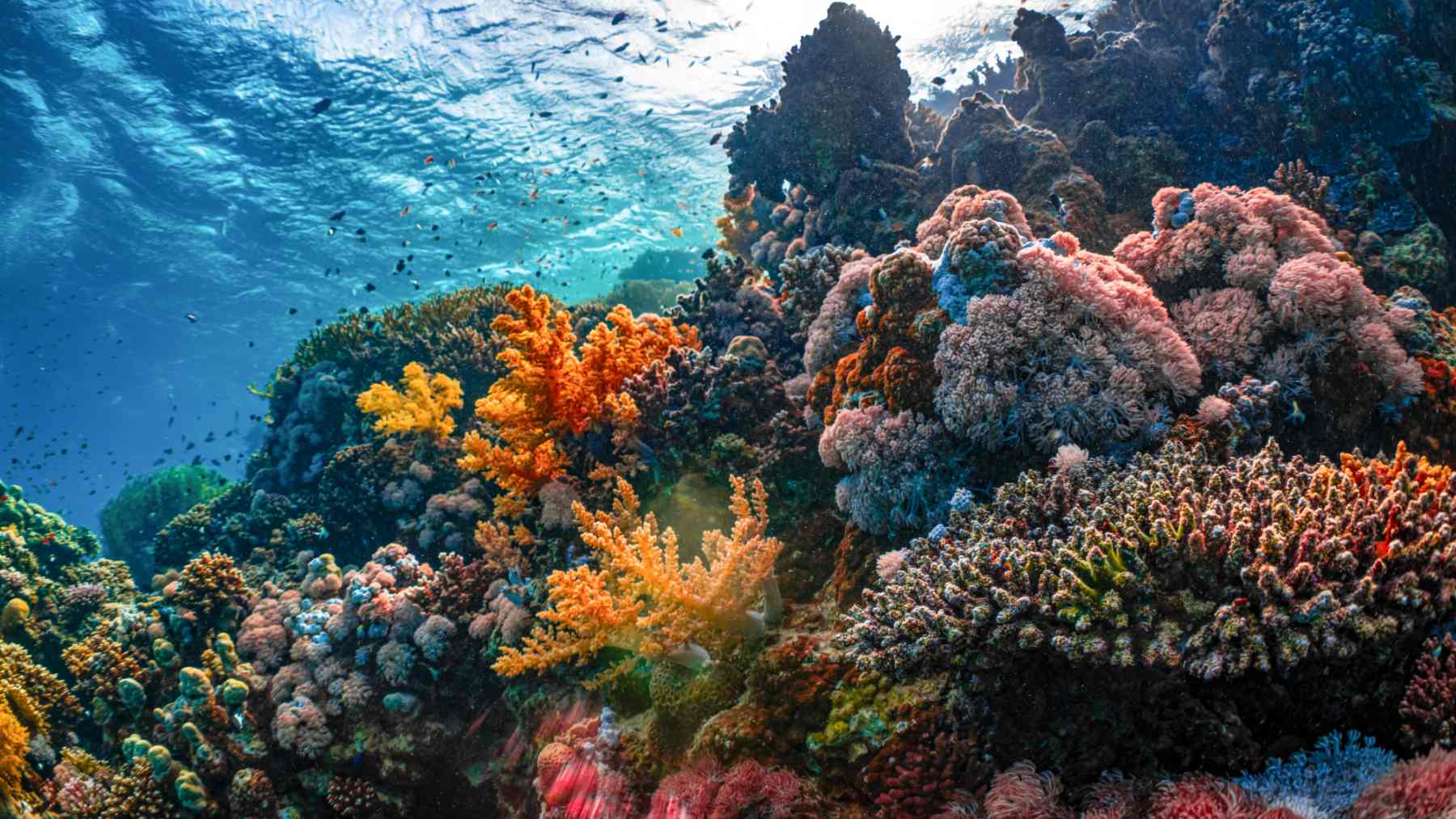
They acted like isolated islands on the ocean floor—places where species could evolve separately, adapting to conditions found nowhere else.
Cameras captured creatures moving along the slopes, clinging to rock surfaces, or drifting just above the seabed.
Some resembled known species.
Others didn’t.
At that point, the mission shifted.
This wasn’t just mapping anymore.
It was discovery.
What scientists actually found in the depths
The “strange creatures” were not a single species, CSIRO says.
They were hundreds.
After collecting samples and analyzing them back on land, researchers identified more than 110 species previously unknown to science—and believe the final number could exceed 200.
Among them were several standout discoveries.
Ocean Census reports a new species of deepwater catshark, pale and adapted to life in near-total darkness.
Previously undocumented rays.
A new type of chimaera—an ancient, ghost-like fish related to sharks.
But it didn’t stop there.
Researchers also found brittlestars, which resemble starfish but move with long, flexible arms across the seabed.
Crabs, sea anemones, and sponges living along volcanic slopes where almost no light reaches.
Each one adapted to survive in isolation.
Each one part of a system that had gone unnoticed for centuries.
Why underwater volcanoes create life, not just destruction
Volcanoes are often associated with destruction.
But beneath the ocean, they can create something else entirely.
Energy.
Even when dormant, these seamounts influence currents, trap nutrients, and provide structure in an otherwise flat environment.
That combination turns them into hotspots for biodiversity.
Life gathers around them.
Evolves around them.
And in many cases, becomes completely unique to that location.
Because these environments are so isolated, species develop traits that are rarely seen elsewhere.
That’s why so many discoveries came from a single expedition.
Not because the ocean suddenly changed.
But because we finally looked closely enough.
A reminder of how much remains unseen
This mission revealed something simple—but profound.
We still know very little about the deep ocean.
Even in 2026, entire ecosystems exist beyond our awareness, hidden in places that are difficult to reach and easy to overlook.
What scientists found wasn’t an anomaly.
It was a glimpse.
A small window into a much larger, unexplored world.
And it raises a question that lingers long after the expedition ends. If hundreds of new species can be found in just one remote region…
How much more is still waiting in the darkness?