

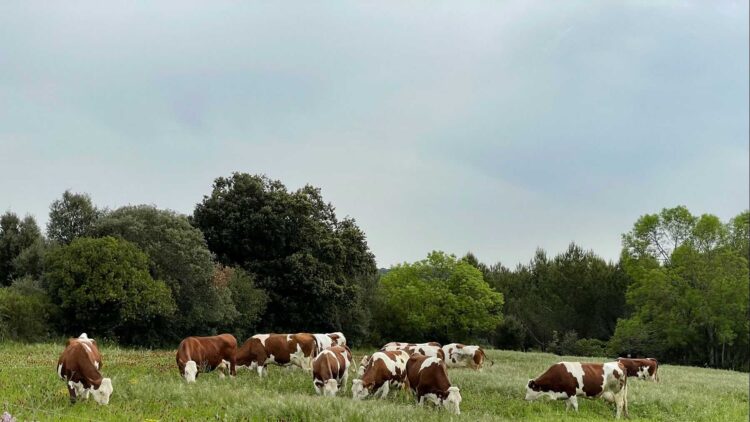
Across 245 million acres of public land stretching through the American West, ranchers have spent the last three decades working under grazing rules written before smartphones, before widespread drought cycles reshaped the range, and before a generation of land managers had ever set foot on the territory they now oversee.
The regulations governing how livestock graze on Bureau of Land Management land have not seen a meaningful update since 1995. A revision attempted in 2006 was blocked in court, leaving ranchers and federal agencies locked in a regulatory framework that many say no longer fits the land — or the times.
Now, for the first time in roughly 30 years, that framework may be about to change.
Thirty years of regulatory standstill
The BLM oversees roughly 245 million acres of public land, most of it spread across 12 western states, including Alaska. That is an enormous portfolio — and for the people who work it, the rules governing livestock grazing have remained essentially frozen since the Clinton administration.
The 1995 regulations were a significant update at the time. But the land has changed, the climate has changed, and the communities that depend on ranching have changed too. When the agency attempted a revision in 2006, a court blocked it. The rules stayed put, and the legal setback left ranchers and land managers operating under a framework critics say no longer reflects current conditions on the ground.
Drought cycles have intensified. New generations of land managers have come up through the ranks. The regulatory language, meanwhile, has not kept pace — producing a kind of institutional friction where rules designed for one era get applied to a very different one.
What the proposed rule actually changes
The Department of the Interior’s proposal centers on two major actions: streamlined grazing administration and expanded rangeland health standards.
On the administrative side, the BLM plans to update definitions, simplify processes, and clarify regulatory language. The stated goal is practical — make it easier for ranchers to respond quickly when conditions on the land shift. Drought, fire, and seasonal variation all demand flexibility, and outdated or cumbersome language can slow that response considerably.
The rangeland health standards change is arguably the broader shift. For decades, those standards were applied primarily in the context of grazing. Under the proposed rule, they would extend to cover all programs managed by the BLM — not just livestock-related ones. That expansion signals a different approach to land health assessment, treating consistent standards as a framework for the full range of BLM-managed activities rather than using grazing as the primary evaluative lens.
Secretary of the Interior Doug Burgum framed the proposal directly. “For too long, ranchers and land managers have been forced to work under outdated rules that do not match today’s challenges,” he said in a statement. The administration has described the changes as part of a broader effort to reduce unnecessary regulatory burdens while keeping public lands productive.
A broader shift in federal land policy
The proposed grazing rule does not exist in isolation. It arrives alongside another significant policy move: the rescission of the 2024 Public Lands Rule, formally known as the Conservation and Landscape Health Rule.
That rule, finalized under the previous administration, had elevated conservation — described by critics as a “no use” designation — to the same standing as other permitted uses under the Federal Land Policy and Management Act. Those uses include grazing, energy development, timber production, and recreation. Rescinding it signals a clear reorientation of BLM priorities toward multiple-use access, local decision-making, and responsible resource development.
The Federal Land Policy and Management Act already establishes multiple use as a guiding principle for public land management. The policy debate, then, is not really about whether multiple uses are permitted — they are — but about how those uses get weighted against each other when they compete. The administration’s position is that the balance had tilted too far toward restriction, and these two moves together represent an effort to recalibrate it.
Public input and what comes next
The proposed rule is now in a 60-day public comment period, closing July 13, 2026. For anyone who wants to understand the specifics before weighing in, the BLM has scheduled a virtual information session on June 11, 2026, from 5 to 7 p.m. Mountain Time, hosted via Microsoft Teams.
Public comment periods are standard in federal rulemaking, but they carry real weight here. Past attempts to revise grazing regulations — including the 2006 effort — were ultimately derailed in court, partly because of procedural challenges. How thoroughly the agency documents its process this time could matter significantly if the rule faces legal scrutiny down the road.
Expect a wide range of voices. Ranching communities and rural economies have a direct stake in how the final rule is written. Conservation groups, who pushed for the now-rescinded 2024 rule, are likely to challenge provisions they see as weakening environmental protections, and state and local governments across the West will be watching closely throughout.
What emerges from the comment period — and how the BLM responds to it — will shape whether this overhaul holds up over time. After 30 years of regulatory standstill, the next few months may finally determine what the rules of the range look like for the decades ahead.