
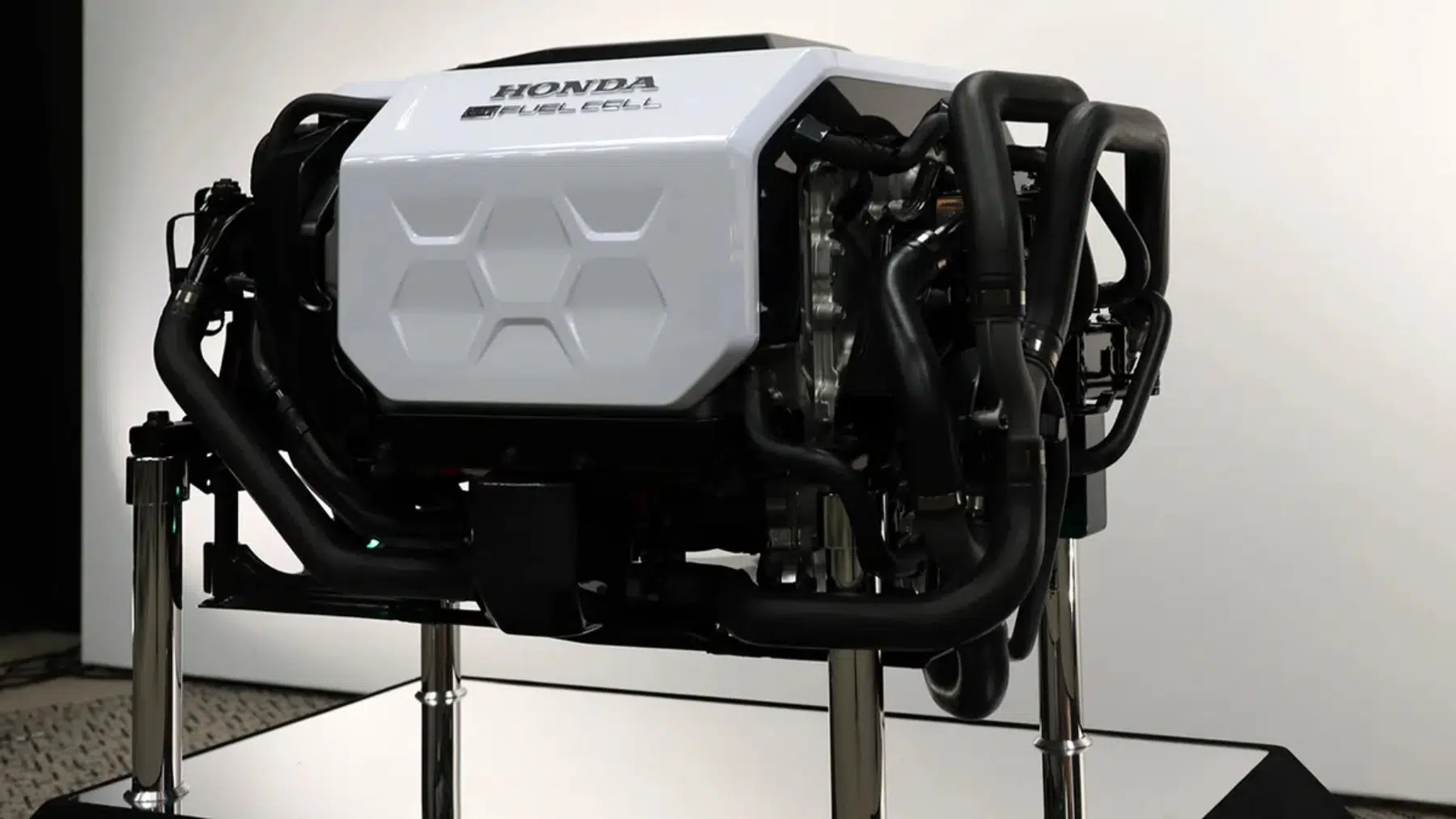
This historic Japanese marque has been around for almost eight decades, with its first venture being technical research. It later established itself in the motorcycle industry and reached global success. In the 1960s, automobiles became the next venture. Now, they have finally embraced hydrogen as their core drive. We know what you’re thinking, and no, it’s not Toyota, and it’s not Kia.
The automaker who’s in it for the long haul
As the world transitions to renewable energies, hydrogen is becoming increasingly popular as an alternative fuel to fossil fuels. One slight challenge within the automobile industry is the lack of supporting infrastructure for hydrogen fuel cell vehicles. However, this Japanese automaker decided to risk it to get the biscuit.
The automaker is in it for the long haul, its main goal being to sell zero-emission vehicles by 2040 only. These vehicles will include an entire fleet of battery-electric and fuel-cell vehicles. Further along the line, the automaker also plans on committing to being a zero-emission company across all its facilities and products by 2050.
The historic Japanese marque to embrace this new venture is none other than Honda, and this year it will showcase its latest hydrogen fuel cell electric vehicle (FCEV), which will soon be available in California. Is it crazy to launch such an FCEV in a country with almost no infrastructure? Yes. Why is Honda still doing it? The company believes hydrogen demand will theoretically grow and encourage improved infrastructure since the second-generation fuel cell has four applications:
- Consumer fuel cell vehicles
- Commercial fuel cell vehicles
- Stationary power stations
- Construction machinery
The features of the new hydrogen powertrain
The Honda CR-V crossover will be the lucky winner of showcasing Honda’s new FCEV venture. The CR-V will be powered by hydrogen, but it will also include a 17.7 kWh battery for an extended all-electric range of 29 miles. That’s right, the CR-V will be a fuel cell plug-in hybrid, with the hydrogen fuel cell replacing the traditional internal combustion engine. The plug-in will ease drivers’ unnecessary concerns over fuel, and it will provide drivers with more efficient driving.
According to Honda, Clarity Fuel Cell owners typically drive short distances of five to ten miles, with the fuel cell not being the most efficient for these short trips. Electrons from a small battery are thus a more obvious approach. Beyond fuel and driving efficiency, the 2025 Honda CR-V will sport these features as well:
- Electric motor with 174 HP and 229 pound-feet of torque
- A range of 270 miles (when it is fully powered up)
- Option to choose between EV-only or hybrid (when more torque is required)
- The battery can be charged on the go
- The battery’s power can be utilized later on
- Economic, Normal, Snow, and Sport mode options
Honda’s plans with hydrogen
Honda has been around the block when it comes to hydrogen fuel cells. The fleet-only FCX became the first fuel cell vehicle to be launched by Honda back in 2002, and the FCX Clarity was introduced later. In 2016, Honda introduced the Clarity Fuel Cell to the world. Now, there may be some uncertainty about the future of hydrogen, particularly due to the lack of supplies and rising prices, but this is why hybrid models are the obvious choice for automakers right now.
Honda is also seeking out other hydrogen ventures, with testing underway. Its North American headquarters in Torrance, California, presently uses a 576 kW hydrogen-powered generator as a “plan B” for the grid and solar-powered data center. The US will also soon be seeing a Class 8 fuel cell semi-truck as a proof-of-concept.
In spite of all the remaining challenges of hydrogen fuel cells, including hydrogen being polluting in one country and clean in another, Honda is still in it for the long haul.
Disclaimer: Our coverage of events affecting companies is purely informative and descriptive. Under no circumstances does it seek to promote an opinion or create a trend, nor can it be taken as investment advice or a recommendation of any kind.
Read the whole thing?
Get the week's signal, not the noise
Our sharpest reporting on energy, climate and nature — free, once a week.


