
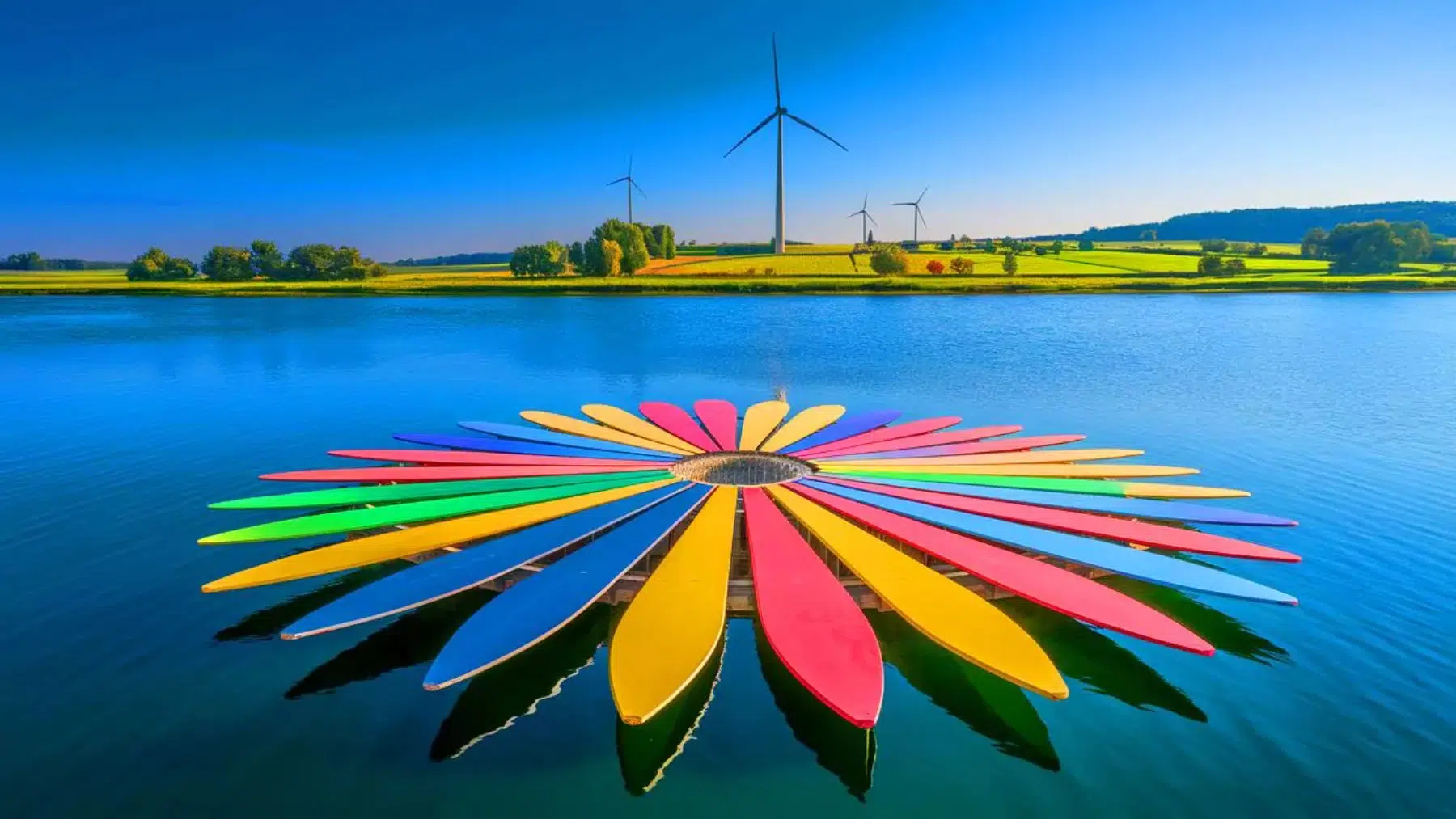
This colourful waterlily is becoming the face of a sustainable revolution. In ancient Egypt, the waterlily, also known as a lotus flower, symbolized rebirth and creation, a symbol we believe is most befitting for this Finnish company’s innovative approach to using old wind turbine blades for sustainable energy solutions.
The brilliant minds behind this colourful waterlily
Wind turbines are a prominent symbol of the green energy movement, but their giant mostly-fiberglass blades typically have to be replaced every 20 to 30 years, and they are not biodegradable. Usually, the blades are crushed and burned down in kilns to their basic elements, a process that produces a large amount of greenhouse gases. The process is also extremely energy-intensive. Kind of defeats the purpose, does it not? Even worse, due to its limited recycling options, the blades simply end up buried in landfills.
Enter Reverlast, a company founded by alumni of Aalto University’s schools of technology, art, and commerce in Finland. This Finnish startup addressed the management issue concerning the expiration of wind turbine blades.
Reverlast’s innovative and creative rebirth of the wind turbine blade
Reverlast discovered a creative and sustainable way to repurpose old wind turbine blades. The durable fiberglass blades, which can be up to 6cm thick, are cut into shorter pieces and then filled with expanded polystyrene foam, resulting in glossy, steady pontoons. The pontoons are then utilized as durable and stylish floating docks due to their buoyancy. Reverlast has revealed that they plan on replacing the polystyrene foam with fiberglass caps, enhancing the pontoons’ sustainability.
Not only are their end products durable and buoyant, but they also reduce the dependence on conventional materials like concrete and polyethylene plastic in customary pontoon production, lowering the carbon footprint even more.
An example of their innovative work includes the project for Aalto University. Reverlast has been tasked with building a floatable community sauna. The structure makes use of pontoons cut from the midsection of four wind turbine blades. Every polystyrene-filled pontoon tips the scales at over 300 kg (661 lb) – the planned non-foam-filled pontoons should be considerably lighter.
The positive environmental impact of Reverlast’s approach
Revolutionary in waste management and environmental conservation, Reverlast’s approach to repurposing old wind turbine blades significantly reduces the carbon emissions typically involved in producing new dock materials. A single prototype dock approximately prevents 2.6 tons of carbon dioxide emissions, demonstrating the potential positive environmental impact of this innovative recycling method.
“We repurpose turbine blades to build floating docks and pontoon structures. This reduces the need for traditional pontoon materials like concrete and polyethylene plastic, making the solution even more environmentally friendly. Our prototype dock prevents roughly 2.6 tons [2.4 tonnes] of carbon dioxide emissions, and the larger and more numerous the docks we build, the greater the impact.” – Ossi Heiskala, Reverlast Co-founder.
Over and above that, their approach significantly reduces the need for energy-intensive crushing and greenhouse gas-emitting kiln burning. Reverlast’s practical and sustainable alternative accords with the circular economy, ensuring that no product goes to waste, but is repurposed instead.
New business opportunities could soon knock on their door, as the scope of products and solutions available is quite broad. The company is exploring various applications for different parts of the turbine blades. Alternative uses include using the blades in asphalt, stand-up paddle boards, and even gummy bears have been proposed.
So practical, yet so effective. Not only is the future green, but it is also becoming even more colourful. While Reverlast is making sure that our futures are staying afloat, we look forward to seeing more of their upcoming diverse and colourful marine and waterfront applications.
Read the whole thing?
Get the week's signal, not the noise
Our sharpest reporting on energy, climate and nature — free, once a week.


