
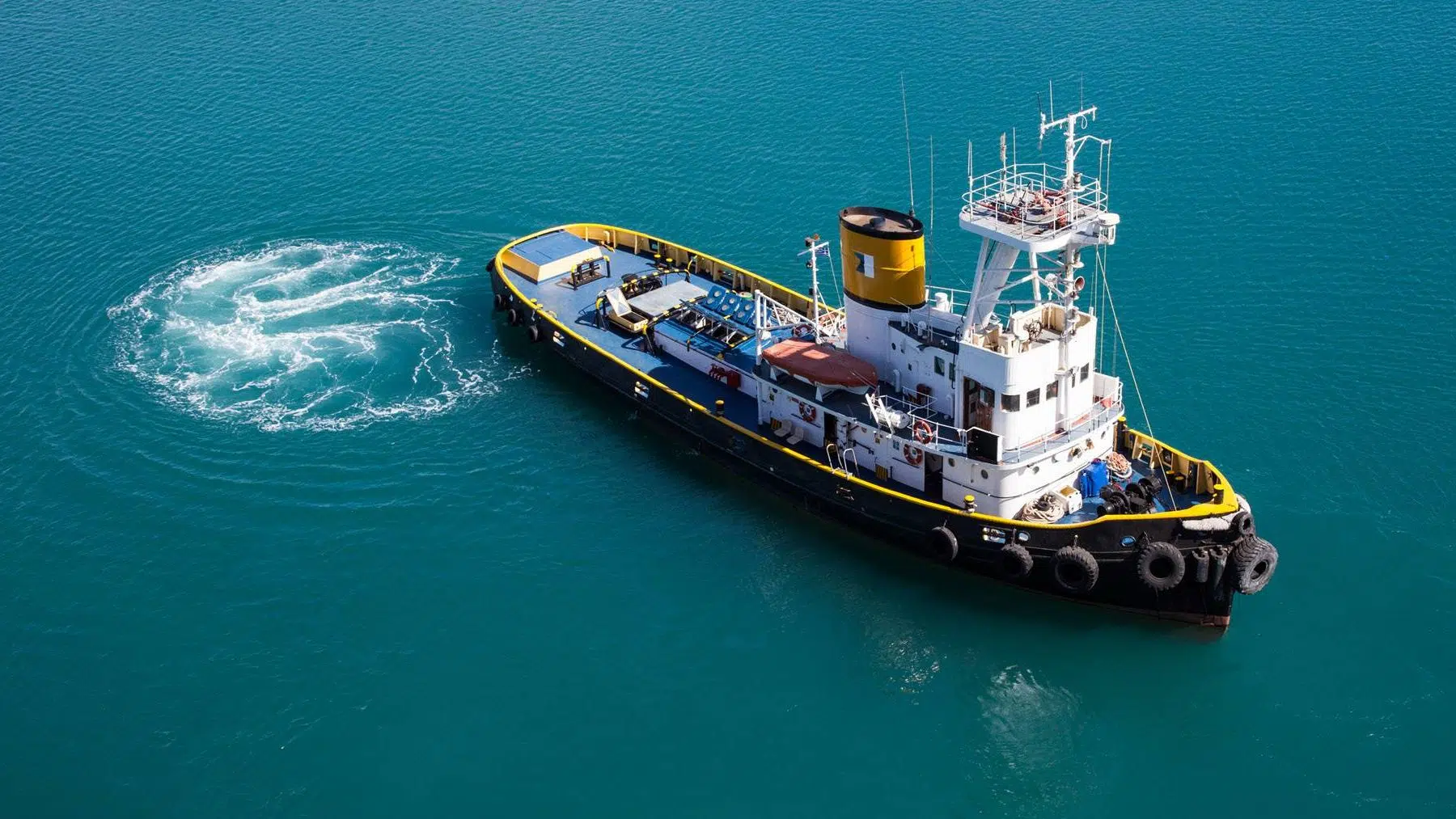
The ocean will soon be home to tugboats powered by green engines, as an American giant in construction and engineering is building a dual-fuel motor that runs on both diesel and methanol. Ships at sea are responsible for a great deal of the carbon emissions that countries across the globe are desperate to reduce. With that in mind, a greener alternative could be an industry first set to hit the market in 2026, and it could change everything.
Green engines on the deep blue sea
Caterpillar, a Texas-based world leader in construction and mining, is also known for their capabilities in engineering some of the best engines on the market. The multinational company is about to turn 100 years old and, unsurprisingly, has a plan to make waves in the renewable energy space by introducing green engines.
Back in 2018, the World Economic Forum published an article titled “If shipping were a country, it would be the world’s sixth-biggest greenhouse gas emitter,“ and it wasn’t clickbait. An estimated 3.1% of the world’s carbon emissions are produced by shipping vessels. That’s around 1 billion metric tons of carbon dioxide annually.
Enter Caterpillar, which has unveiled their methanol dual-fuel CAT 3500E marine engines, which will find their way into shipping vessels as soon as 2026. They made the grand reveal at the 27th International Tug & Salvage Convention, Exhibition & Awards 2024 in Dubai, United Arab Emirates.
Caterpillar is spreading its green wings
The CAT 3500E comes in two standard configurations: the 12-cylinder (commonly found in cargo ships and large cruise lines) and the 16-cylinder (typically found in passenger ferries and sometimes navy and coast guard ships). There isn’t any drop-off in quality either; the engine can match existing 3500 diesel engines.
Brad Johnson, the vice president and general manager of Caterpillar Marine, stated, “We’re leveraging our deep dual-fuel expertise to help reduce emissions in the maritime industry. We look forward to putting the first Cat 3500E demonstration engines in the water with Damen Shipyards in 2026.”
The new 3500Es could be an industry first, but Cat has competition from MAN Energy Solutions and A.P. Moller-Maersk. All three are in a race to get their engines on the water by next year. Caterpillar is arguably the most trusted brand among the three, and either way, in the fight against climate change, this is healthy competition.
The green marine dream
Will Watson, global product director at Caterpillar Marine, reflected on the engine’s capabilities, stating:
“For example, a 28-meter tug transiting at 8 knots requiring only 600 kilowatts (kW) of propulsion power would target to achieve a methanol substitution on an energy basis above 70%. This will enable operators to reduce greenhouse gas emissions while experiencing the power and performance they’re accustomed to.”
While Caterpillar’s work is extremely important, there are still ways to go before activities at sea are fully transitioned to being clean and green. Just 0.89% of commercial vessels (3.37% of gross tonnage) at sea can operate using alternative fuels like hydrogen or methanol.
The uphill becomes even steeper when you realize that even among the new fleets being commissioned, only 17.43% (43.86% in gross tonnage) will be run on alternative fuels. Additionally, the methanol itself needs to be green, as conventional methanol is produced using the same fossil fuels that we need to avoid.
The seven seas are in desperate need of cleaning
The harsh reality is that while Caterpillar is taking a step in the right direction, there are still thousands of steps left to take before a greener future can be achieved. Thankfully, some major engineering players are joining the clean energy game and are looking to power their fleets with alternative fuel sources. It’s a massive mountain to climb, but Caterpillar can be the blueprint for the industry to aggressively change their ways.
Read the whole thing?
Get the week's signal, not the noise
Our sharpest reporting on energy, climate and nature — free, once a week.


