America has tapped into the most interesting part of engineering and exploration. The first-ever underwater car is called the Deepsea Challenger submersible. It was designed to reach a depth under the sea of up to 11,000 meters. This just changed everything we know about ocean mobility and the ocean’s mysterious regions that are believed to be dark and associated with alien dwellings.
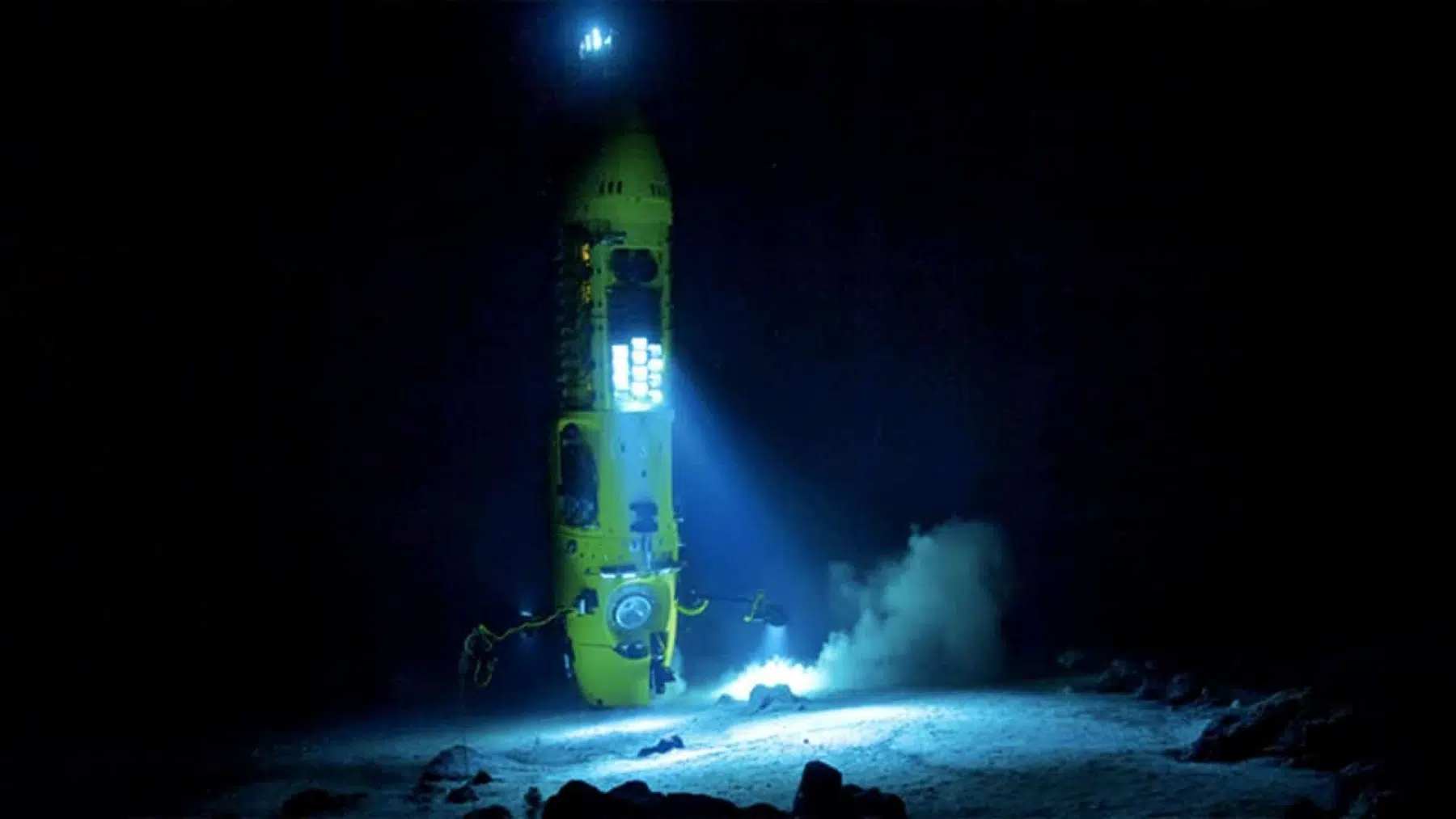
The DEEPSEA CHALLENGER is a one-person submersible that can go to the depths of the ocean. Acheron Project Pty., Ltd. constructed it in Sydney, Australia, and on March 26, 2012, James Cameron piloted it to Challenger Deep, the world’s deepest ocean location. According to National Geographic, the sub has “cruise control,” which allows the pilot to glide through the water at a steady speed or hover precisely where he wants to, just like a car.
The ‘underwater car’ revolutionises deep-sea exploration
The Deepsea Challenger’s purpose is to navigate the deepest and darkest parts of the seas. It has earned its nickname “underwater car” because of its ability to cruise through the pressures of the water and still keep intact. The pilot’s sphere was made of steel with walls that were 64 mm thick to withstand the tremendous pressures found at great depths. During its historic dives, this design guaranteed the vessel’s operation and safety.
For a while, scientists have desired to go under the deep seas to search for anything they can find and just to understand more about Earth’s mysterious oceans. With technology advancing, they would use tools or machines that are dropped down to explore. However, now that the underwater car was engineered specifically for these kinds of explorations, it just changed the way we see the earth and technology as a whole.
James Cameron broke the record by diving alone to the lowest place on Earth
James Cameron successfully piloted the DEEPSEA CHALLENGER to the Challenger Deep in the Mariana Trench on March 26, 2012, setting a new record for the deepest solo dive on Earth. The dive was approximately seven miles (11 km) deep. The scientific examination of the expedition’s results is the second phase of the Deepsea Challenge. This solo trip marked how bold and committed Cameron is.
The Deepsea Challenger gathered important scientific data and photos during the voyage, offering previously unheard-of insights into the mainly uncharted deep-sea ecology. By collecting samples and high-definition video, the submersible’s sophisticated technology greatly increased our knowledge of life in these harsh environments.
Additionally, water vapour from the pilot’s perspiration and breath condenses on the icy metal sphere before draining into a plastic bag. The pilot can drink it in case of an emergency. Because a sphere is the best shape for withstanding pressure, the pilot chamber is shaped like a sphere; if the pilot were seated in a cylinder, the walls would have to be three times thicker.
Legacy and impact: Opening the path for upcoming ocean research
The success of this Deepsea Challenger opens the door for more explorations into other parts of the ocean and the earth at large. Parts of the ocean that were thought to be unreachable are now just something we talk about. This marks the importance of technological advancement, where scientists are able to further their findings and understand the natural patterns that happen in our ecosystem.
This successful mission has also pushed for more explorations, as mentioned above, just to stretch it a little more and cross those boundaries to see what else we can discover. Scientists and explorers are not restricted anymore to embark on future missions because there is already an open path for ocean research. This has served the human curiosity.
Read the whole thing?
Get the week's signal, not the noise
Our sharpest reporting on energy, climate and nature — free, once a week.