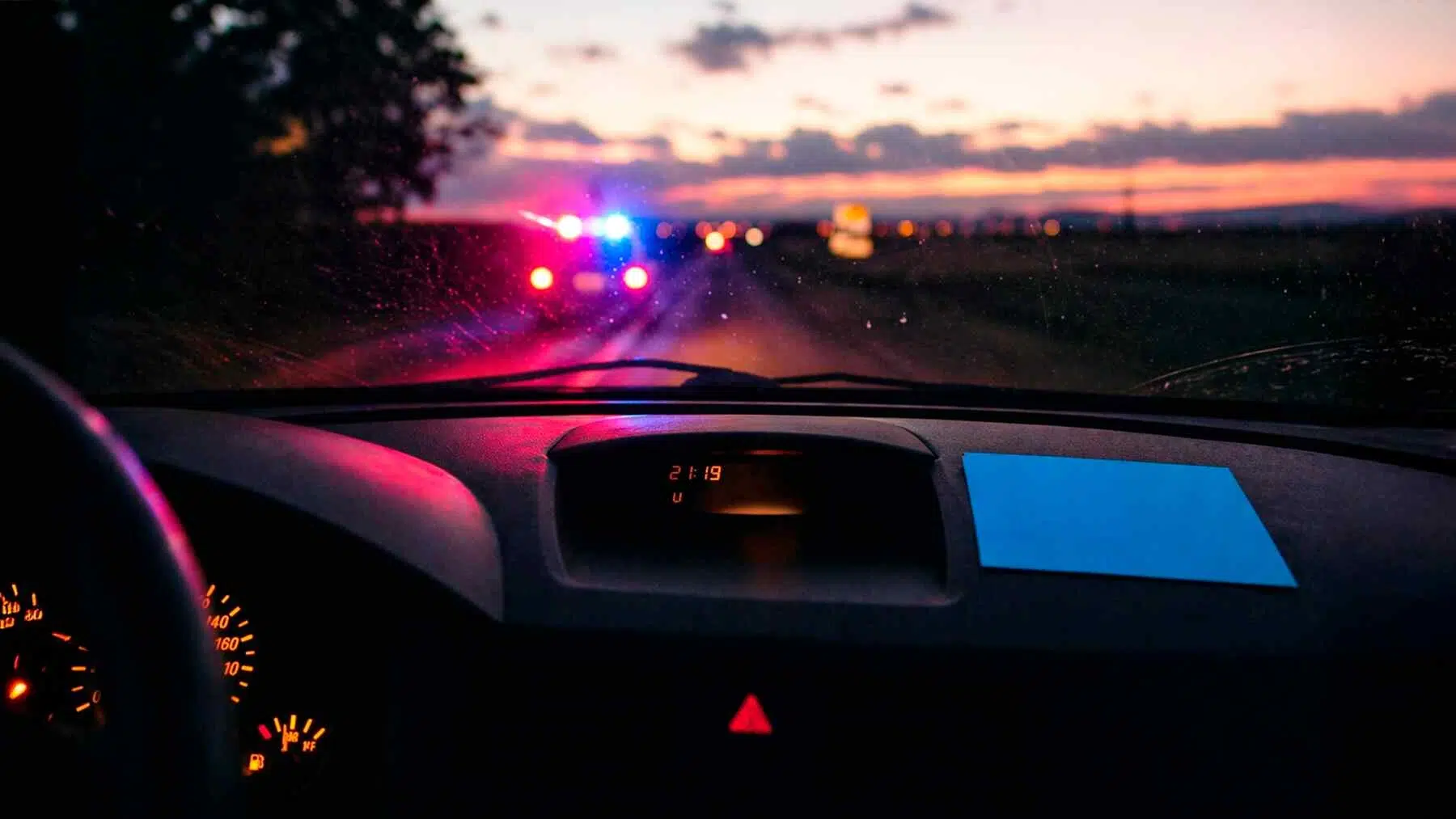
Some Florida drivers may be forced to keep a blue certificate nearby.
During traffic stops, a bright blue document will be needed for some individuals in Florida.
Police in the Sunshine State have been trained to identify this new blue certificate.
The goal is to make roadside encounters with police safer for all. But how? And why now?
What has led to this significant shift in policy in Florida?
How one blue certificate may change how drivers and police behave
Traffic stops can be stressful for any of us.
The flashing blue light, unexpected questions, and rapid instructions can leave many in shock.
And misunderstandings can take place in seconds.
With fears over police reacting the wrong way increasing, what could be done?
Lawmakers in the Sunshine State aimed to address this reality.
Some drivers may be able to present a new blue certificate at traffic stops.
This is not special treatment, far from it in fact. It is a warning that the next communication needs a softer touch.
What exactly has this new blue certificate changed in Florida?
Traffic stops often create the wrong kind of tension for drivers and police
Traffic stops by police rely heavily on quick and precise communication.
For some violations, states have turned to automated tech to enhance enforcement.
But what happens when a driver has special needs? How do police deal with a driver who is autistic?
For those on the spectrum, police can raise anxiety, even if the intention is not to do so.
Autistic people often avoid eye contact and give delayed responses to questions.
Naturally, this might be misunderstood by law enforcement. Which could raise the stakes for drivers and police alike.
Some cities have implemented new initiatives to increase road safety.
But those do not address the issue of dealing with a special needs driver.
According to data from the CDC, Florida has one of the highest autism rates in the nation. With roughly 329,000 adults being affected by the disorder.
State officials have aimed to make traffic stops for these people safer.
How, you may ask?
By introducing a new law brought forth in the Florida Senate.
The law states that some drivers will need to have a blue certificate. What does this new blue document state?
Florida introduces new Blue Envelope and Blue Card program for drivers
The law introduces a new future for some drivers in the state.
One where law enforcement has a far more pragmatic approach to traffic stops.
Senate Bill 418 is designed for individuals with autism spectrum disorder.
The Blue Card program is just one of two major changes.
The Blue Envelope is the other major change in the Sunshine State.
The Blue Envelope holds all the key driving documents for those with autism.
Documents like driver’s license, registration, proof of insurance, and even emergency contact details.
But it is far more than just a set of documents. It is a proper way of communicating with those who have autism.
The Blue Card is the second option for drivers who have autism spectrum disorder.
Both indicate to the police that the person has autism.
They both include a communication guideline for law enforcement. The Blue Card is as small as a driver’s license, and can fit into most wallets.
From January 1st, 2027, drivers can now signal important information about themselves before even speaking.
State officials need to offer both to drivers by the start of next year.
And drivers can request either from the Department of Highway Safety and Motor Vehicles.
Training needs to be completed to make the document legally binding.
This shows that the change is about far more than just making the roads safer.
It is meant to make traffic stops more manageable. And sometimes, the safest traffic stop starts without saying a word.
Read the whole thing?
Get the week's signal, not the noise
Our sharpest reporting on energy, climate and nature — free, once a week.