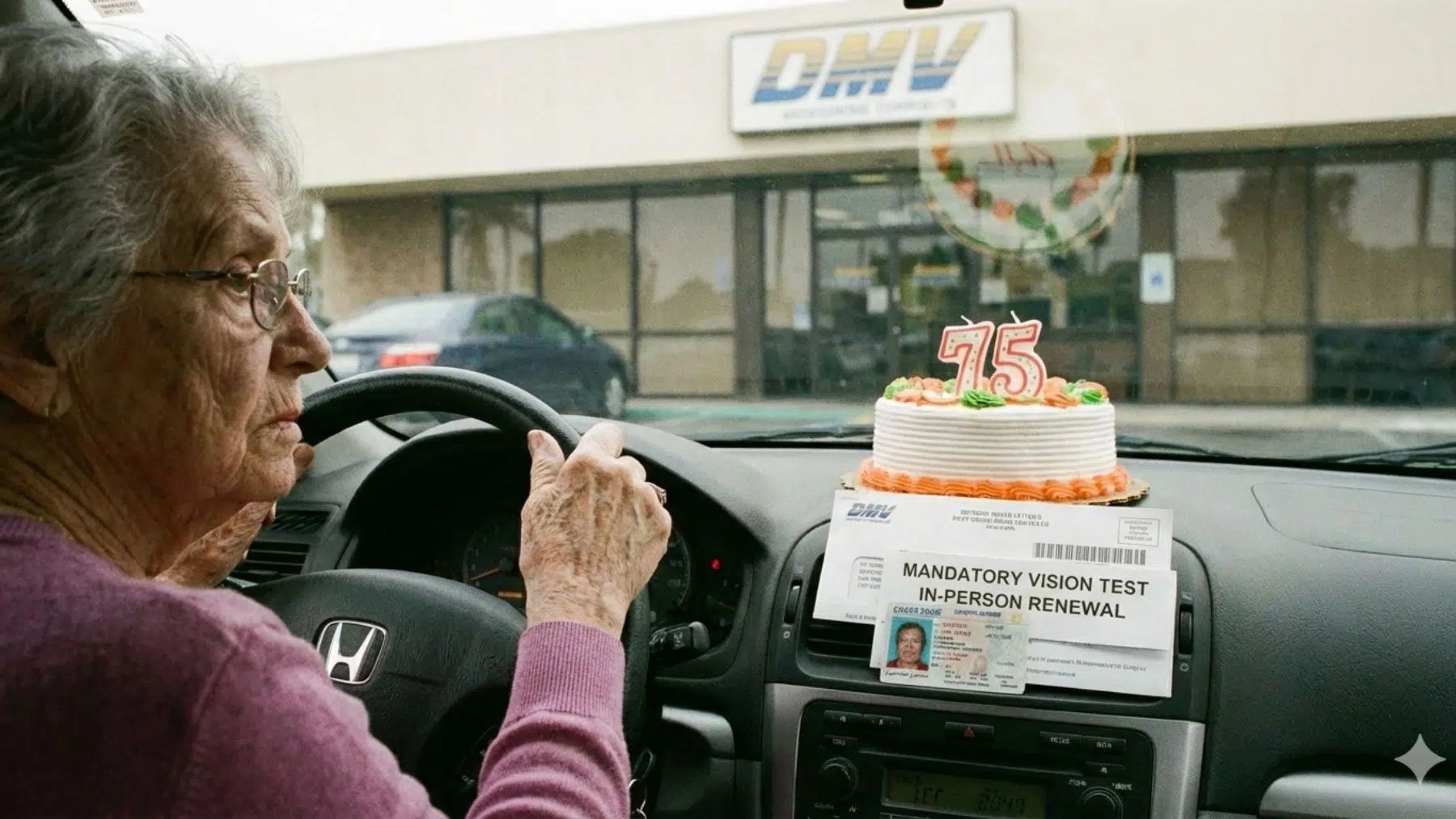
There’s a birthday most people don’t talk about. No party, no cake, no celebration. On the surface, nothing changes at all. You still drive the same roads and follow the same routine. But quietly, that birthday flips a switch — and suddenly, an extra stop becomes part of your life. You don’t get a choice, and ignoring it isn’t an option.
When a simple license quietly becomes a bigger deal
For a long time, a driver’s license was just a card you renewed and forgot about. But over the past year, many drivers realized that this little card now comes with bigger expectations. The arrival of the long-delayed REAL ID deadline made license renewal feel less like routine paperwork and more like a moment you couldn’t ignore.
What used to be simple suddenly mattered more. Fly domestically? Enter certain buildings? That small gold star became important. And while the idea was to bring consistency across states, it also reminded drivers that rules can change — even if no one is celebrating them.
Why states start paying closer attention with age
Beyond federal rules, states still decide how driving works as people get older. The idea isn’t punishment — it’s prevention. As years pass, states quietly add more checks, all under the umbrella of road safety.
Most drivers don’t notice these changes at first. The roads feel the same. The car feels the same. But behind the scenes, the rules are already shifting.
The moment Florida drivers feel the change
Florida is one of the states where that uncelebrated birthday matters. According to the Florida Highway Safety and Motor Vehicles (FLHSMV), there may come a time when driving is no longer the safest option. When that time arrives, drivers are encouraged to give up their license and move to a state ID card instead.
This isn’t announced loudly. There’s no letter warning you years in advance. It simply appears — right when you hit a certain age.
In Florida, drivers under 80 renew their licenses every eight years. But once a driver turns 80 years old, the routine changes. Renewal must happen in person every six years, and it now includes a mandatory vision test.
Balancing freedom, safety, and growing older
Florida isn’t alone in this approach. Illinois, for example, requires drivers over 87 to complete a road test to renew their license.
These rules often divide opinion. Some say older drivers are among the safest on the road and that extra testing limits independence. Others argue that vision and reaction times change naturally with age and should be checked to protect public safety.
For now, Florida has chosen a middle road. Driving isn’t taken away — but after a certain birthday, staying behind the wheel comes with one unavoidable reality: a little more time at the DMV.
Read the whole thing?
Get the week's signal, not the noise
Our sharpest reporting on energy, climate and nature — free, once a week.