
Everyone knows Ford as the company that helped pave the world with cars.
But on a stretch of Michigan riverbank, its most famous factory is doing something almost no one expects.
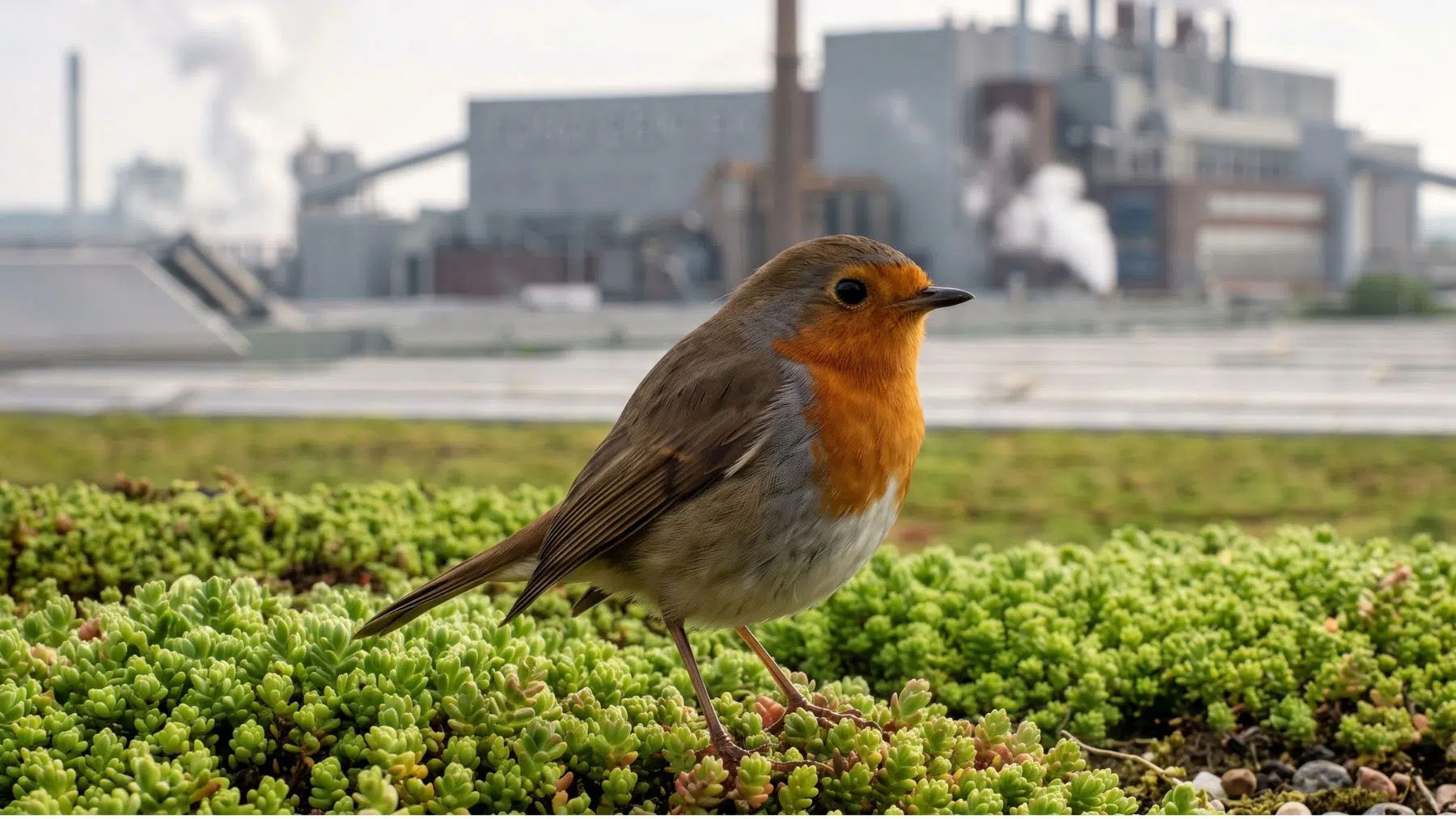
Birds are nesting on its roof, and butterflies drift over the assembly line below.
Stranger still, the land it stands on was meant for the birds all along.
It is one of the strangest turns in the story of American industry.
The company that symbolized the machine age keeps ending up back in the hands of nature.
The factory built on a broken promise to the birds
In 1915, Henry Ford bought around 2,000 acres of low riverbank land outside Detroit.
He had made his fortune on the Model T, and he wanted room to build without limits.
His first idea for it was not a factory at all, but a bird sanctuary.
Then the First World War arrived, the Navy needed boats, and the marsh became a shipyard instead.
The war effort let Ford dredge the river deep enough for ore ships to sail right up to his door.
From there it grew into the Rouge, finished in 1928, the largest factory on Earth.
Ninety three buildings, sixteen million square feet of floor, its own steel mill, docks and railroads.
By the 1930s more than 100,000 people worked there, and a finished car left the line roughly every minute.
A cathedral of American industry
For decades the Rouge was the beating heart of American manufacturing.
Raw iron ore went in one end, and finished cars rolled out the other.
It made its own steel, its own glass, even its own electricity.
At its peak it was the most productive factory the world had ever seen.
Some of the country’s most beloved machines were built inside it, including the Mustang.
It is still the oldest working car plant in the United States, turning out trucks to this day.
Charlie Chaplin toured it, and the painter Diego Rivera turned it into a famous set of murals.
But by the end of the century, the giant had also become a symbol of decades of pollution.
Why Ford tore up its own blueprint
Around the year 2000, Ford decided to remake the aging complex from the ground up.
Bill Ford and the architect William McDonough led a two billion dollar overhaul.
The old plant had taken in raw materials at one end and left polluted soil behind for decades.
Ford wanted to prove that a dirty industrial site could be healed rather than abandoned.
One of the hardest problems was rainwater, which kept washing pollution off the vast roofs and lots.
Instead of burying the site in pipes and tanks, they tried something almost nobody had done at that scale.
It was a gamble on an idea most engineers had never tried at that size.
They decided to plant the roof.
The 10 acre roof where the birds came back
Here is the part that still surprises people.
The truck plant was topped with a 10 acre living roof, a thick carpet of low green sedum, the largest of its kind in the world at the time.
The green roof was no small gesture, covering an area the size of eight football fields.
Within five days of the plants going down, killdeer birds had already nested and laid their eggs up there.
Today songbirds nest on the roof while workers build trucks below, and butterflies, dragonflies and bees fill the air.
Ford even keeps 20,000 honeybees in hives on the grounds.
It soaks up rain, cools the building and cleans the air around it by a noticeable margin.
Most of the plants first laid down are still thriving up there decades later.
Ford now describes its legendary factory, without irony, as home to wildlife.
The bird sanctuary Henry Ford dreamed of a century ago had finally arrived, on the roof of his own factory.
What it means as Ford’s old world empties out
That lesson matters more than ever right now.
Ford has just left its famous Glass House headquarters near Detroit after nearly seventy years, moving staff into a brand new campus.
Around 100 acres of prime land will open up as the old tower comes down.
What fills empty land, it turns out, is rarely what anyone plans.
Detroit has already watched emptied ground fill back in with foxes, hawks and pheasants where pavement used to be.
The Rouge proved that even the heaviest industry can turn green and living again, the same twist behind a solar farm that gives back to the land beneath it, and a wind farm that filled with wild animals.
The most radical thing a car factory ever did may be handing the birds their roof back.
Read the whole thing?
Get the week's signal, not the noise
Our sharpest reporting on energy, climate and nature — free, once a week.


